Sage Intacct Review in 2026 With Full Pricing Breakdown
Home
/
Blog
/
Sage vs Eleven for Multi-Entity Teams in 2026
Sage vs Eleven for Multi-Entity Teams in 2026
Written by
Reviewed by
Compare Sage 50, Sage Intacct, and Eleven on features, consolidation, pricing, and suitability for multi-entity accounting teams.
Sage 50, Sage Intacct, and Eleven serve different accounting needs. This comparison examines their multi-entity capabilities, consolidation workflows, automation, inventory features, and US pricing in 2026. It also compares subscription costs for teams managing up to 100 entities and explains what firms should consider when migrating from Sage to Eleven, including data reconciliation and historical record retention.
Sage vs Eleven isn't a one-to-one comparison, because "Sage" usually means one of two very different products.
Sage 50 is accounting software for small businesses, and Sage Intacct is a mid-market financial platform with native consolidation. Eleven is a cloud platform built for accounting firms and family offices that keep the books for many entities.
This guide compares all three on features, 2026 US pricing, and what it costs at 10 to 100 entities, so you can see which one fits the work you actually do.
Before we start: Eleven publishes this comparison. We've stuck to Sage's own pricing pages and documentation, and we say plainly where Sage is the better choice.
How we researched this: We used Sage's US pricing pages, Sage support documentation, published estimates from Sage Intacct implementation partners, and public user and third-party reviews. All information is accurate as of October 2026.
How Do Sage and Eleven Compare?
Sage 50 suits small businesses, Sage Intacct suits finance teams running a corporate group, and Eleven suits CPA firms and family offices managing many separate sets of books. The side-by-side:
One important distinction for international businesses: the US edition of Sage 50 doesn't offer native multi-currency accounting, regardless of edition. Don't confuse it with Sage 50 Canada, which supports foreign currencies.
The question is whether you're keeping books for many unrelated clients or producing consolidated accounts for one group.
Forty independent client ledgers need efficient bookkeeping. Forty companies in one group may also need eliminations, ownership accounting, and consolidated statements.
Which Sage Product Are You Comparing Against Eleven?
In the US, it's either Sage 50 or Sage Intacct.
Sage Business Cloud Accounting was retired in the US on December 31, 2024, with access ending January 31, 2025, though it still exists in markets like the UK.
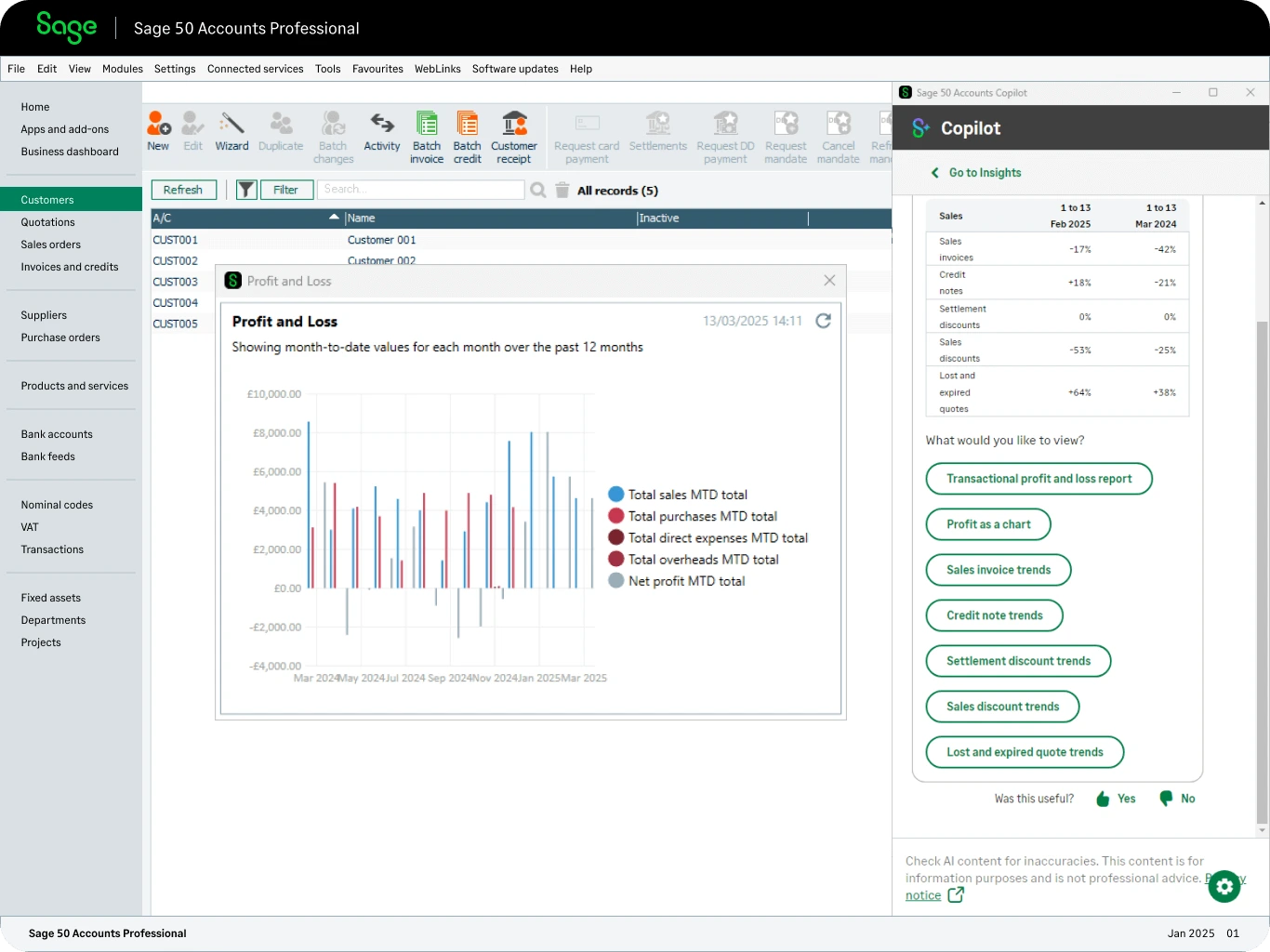
What Is Sage 50?
Sage 50 is small-business accounting software with invoicing, a general ledger, inventory, job costing, and reporting.
It comes as Sage 50 Desktop (installed locally) or Sage 50 Cloud (hosted by Sage, with remote access and managed backups), each in Pro, Premium, and Quantum editions.
It's a good fit for businesses that need inventory or job costing, or teams that know Sage 50 well and don't want to change systems.
What Is Sage Intacct?
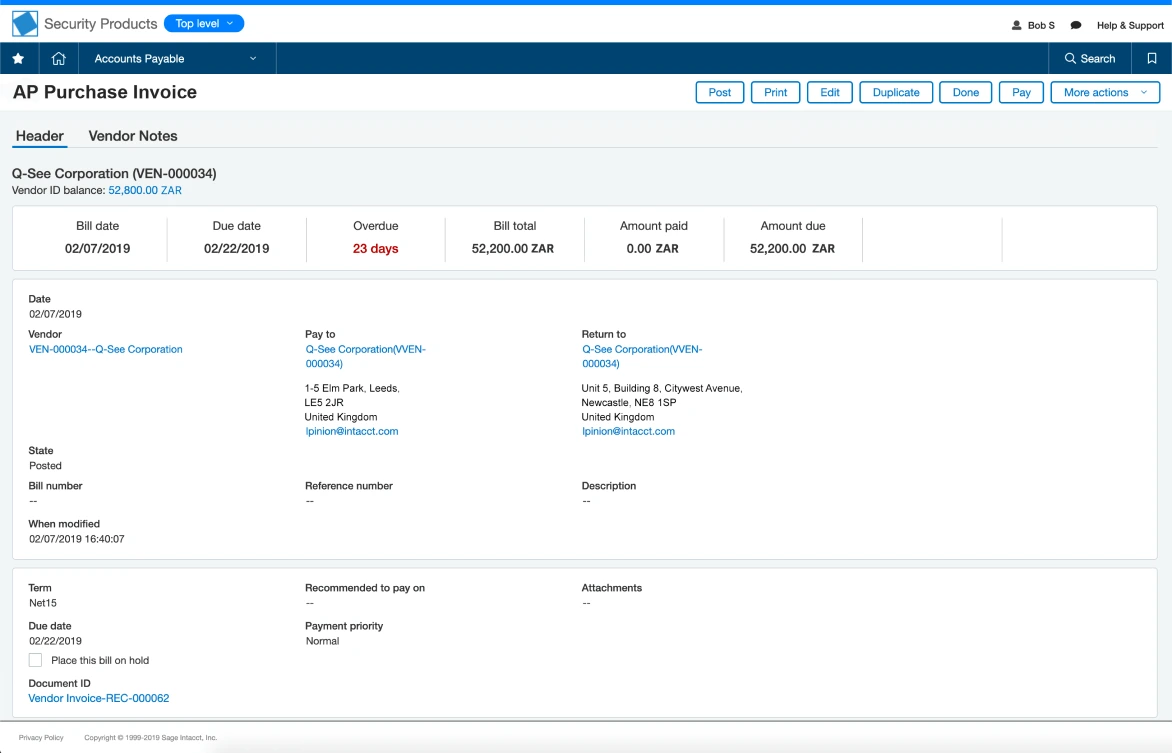
Sage Intacct is a cloud financial management platform for more complex operations, with multi-entity management, advanced reporting, and add-on applications for revenue recognition and project accounting. Its consolidation goes well beyond Sage 50's.
It isn't only for internal finance teams, either. Sage runs a Sage Intacct Accountants Program for firms that provide outsourced finance and advisory services.
How Do Sage and Eleven Handle Multiple Companies?
Sage 50 keeps each company in its own file, Sage Intacct runs entities inside one system, and Eleven keeps a separate ledger for every entity under one login.
Sage 50 lets you work across company files, depending on your edition and license. Premium and Quantum can combine compatible companies into a separate consolidated company, but only if the source companies share compatible accounting methods, fiscal periods, and account structures, and you have to refresh it as the books change. For a business with a handful of related companies, that can be enough.
Sage Intacct configures multiple entities in one system with shared structures and controlled access, which suits a single corporate group.
Eleven is built for portfolios. Say your firm handles 35 businesses, each with its own transactions, bank accounts, and reporting. In Eleven, all 35 ledgers live in one platform, and your team moves between them without separate logins or subscriptions. Every plan includes unlimited users, so hiring another accountant doesn't raise your bill.
Can Sage and Eleven Produce Consolidated Reports?
Yes, but in very different ways. Sage Intacct consolidates natively, Sage 50 builds a consolidated company file, and Eleven gives you API access to any or all entities so you consolidate in your own reporting tool.
Sage 50 Premium and Quantum combine compatible company files into a consolidated reporting company. Sage's current US documentation doesn't describe a full automated intercompany elimination process, so complex intercompany balances need a manual review and adjustment step.
Depending on your subscription and setup, Sage Intacct supports:
- Domestic consolidation for groups with a common base currency
- Global consolidation with currency translation
- Advanced ownership consolidation for complex structures
- Automated eliminations for configured intercompany accounts
These consolidation applications may cost extra, and automation still depends on correct setup and review.
Eleven produces financial reports for each entity and lets you pull data from one or many entities through its API into Excel, Power BI, Tableau, Metabase, or Google Sheets. That gives you full control over how group reports look.
Eleven doesn't currently automate consolidated statements or intercompany eliminations, so if you need formal consolidated accounts, your reporting workflow handles the mapping, eliminations, and currency translation.
Note: Multi-entity accounting and consolidation aren't the same thing. If your group needs formal consolidated statements with intercompany eliminations and non-controlling interests, Sage Intacct has the stronger built-in capabilities. If you're mainly keeping books for separate clients, you may not need a consolidation engine at all.
How Do Sage and Eleven Compare on Automation?
Both Eleven and Sage offer AI document capture, but Eleven is built around processing many client ledgers at once.
Eleven extracts data from invoices and bank statements automatically and keeps supporting documents alongside each entity's books.
Alpadis reported that its accountants processed invoices 78% faster after ten months on Eleven. That's one firm's result, not a guarantee, but it shows the kind of repetitive work Eleven targets.
Sage 50's 2026.1 update added AI Document Capture (availability varies by edition), and Sage Intacct has broader automation across its modules. The difference is focus: automation inside one business's accounting, across an ERP-style workflow, or across a portfolio of client ledgers.
Which Is Better for Inventory and Job Costing, Sage or Eleven?
Currently, Sage is better for inventory and job costing. Sage 50 includes inventory and job management, with more advanced features on Premium and Quantum, and Sage Intacct adds more through modules.
Eleven focuses on core accounting, multi-entity bookkeeping, document processing, and reporting access, so it isn't a replacement for inventory-heavy or project-costing operations.
If your firm mainly maintains general ledgers, handles payables and receivables, reconciles bank accounts, and prepares client reports, Eleven's narrower focus is an advantage rather than a gap.
How Much Do Sage 50, Sage Intacct, and Eleven Cost in 2026?
Sage 50 publishes prices by edition and user count, Sage Intacct is quote-only, and Eleven publishes per-entity prices with volume discounts.
How Much Does Sage 50 Cost?
Sage 50 costs $737 to $2,841 a year for one user, depending on edition and whether you choose Desktop or Cloud. These are annual-payment prices:
Sources: Sage 50 Desktop and Sage 50 Cloud pricing pages, checked October 2026. Excludes tax and additional services.
More users cost more: five-user Sage 50 Premium runs $2,835 a year on Desktop and $5,358 on Cloud.
Monthly billing is available but still carries Sage's minimum one-year commitment, and it costs more than paying annually.
How Much Does Sage Intacct Cost?
Sage doesn't publish Intacct prices, so your quote depends on users, entities, modules, consolidation needs, and implementation.
Independent implementation partners publish planning estimates (these aren't official Sage prices):
- RKL eSolutions describes entry-level subscriptions around $12,000 a year.
- Rand Group estimates around $20,000 a year for smaller implementations.
- Cargas says its customers typically spend $25,000 to $35,000 a year.
Implementation adds a lot. In RKL's example of three entities, five business users, and ten employee users, software runs about $33,000 a year and implementation an estimated $35,000 to $50,000, putting year one at $68,000 to $83,000.
That's one partner's example, not a standard package.
How Much Does Eleven Cost?
Eleven costs $35 per entity per month on Standard and $40 on Professional, with unlimited users on every plan. Enterprise is quoted.
Professional and Enterprise include implementation and migration; Standard charges for them separately.
The per-entity price drops as your portfolio grows, and the discount applies to every entity at that tier:
Note: This assumes that all entities are on the same plan under an annual agreement and excludes external reporting tools. Discounts reach 40% at 200+ entities.
Because you pay per entity rather than per seat, you can work out your bill from your entity count alone.
Is Sage or Eleven Cheaper for 20 or 50 Entities?
It depends on which Sage and what you're paying for, so compare like for like before deciding.
Take a firm with five accountants and 20 client companies:
- Sage 50 Premium Desktop for five users costs $2,835 a year.
- Eleven Professional for 20 entities costs $8,160 a year. On subscription alone, Sage 50 is cheaper.
But the two figures cover different things. The Sage price is a five-user Desktop license; it doesn't include Sage's hosted Cloud version, and your team still manages 20 separate company files.
The Eleven price covers 20 entities with unlimited users, cloud access, AI document capture, and implementation and migration included on Professional. At 50 entities, Eleven Professional costs $19,200 a year.
Against Sage Intacct, the math flips. Intacct's subscription plus implementation can run several times Eleven's annual cost, but it includes native consolidation that Eleven doesn't. That comparison only makes sense once you know whether you need a consolidation engine.
How Hard Is It to Switch From Sage to Eleven?
Migrating from Sage to Eleven is a structured project rather than a data dump, and Eleven includes implementation and migration on Professional and Enterprise.
A sensible order looks like this:
1. Review your existing records
Check your Sage company files and decide which transactions, documents, and historical reports need to move.
2. Map the accounts and contacts
Match your chart of accounts, customers, suppliers, and reporting categories to the new structure.
3. Compare trial balances
Agree on a cutover date and compare each company's trial balance in Sage with the opening balances in Eleven. Investigate any differences before signing off.
4. Carry over open invoices and bills
Bring outstanding receivables and payables across individually, rather than relying on lump-sum balances. Check that the totals match the closing records in Sage.
5. Check contractor payments
If you're switching mid-year, use Sage's 1099 Vendor Report to preserve payment totals for each contractor. You'll need to account for reportable payments from both systems when preparing that year's 1099s.
6. Plan access to your old records
Back up your Sage 50 company files, including attachments, and export the financial and transaction reports your clients may need later.
Confirm that you'll still be able to open those files with a compatible Sage 50 installation.
7. Test before moving everyone
Start with one or two representative entities, check the workflows your team uses most, and migrate the remaining companies once the results are satisfactory.
Your team still needs to review the mappings and approve the migrated balances. Agree on the scope of historical data and documents before starting, especially if clients have several years of records to preserve.
Should You Choose Sage or Eleven?
Choose based on the work you do, not the number of entities on a price list:
An accounting firm processing invoices for 50 unrelated businesses doesn't need an expensive group consolidation engine.
A multinational with five subsidiaries might. For more on firm setups, see our guides to accounting software for CPA firms and family office accounting software.
Juggling Client Books Across Sage Company Files? Move Them Into One Eleven Login
If you're keeping the books for many clients or a family office's entities in Sage 50, every company file is another place to open, back up, and keep in sync.
We recommend testing Eleven with one or two of your busiest entities and seeing how much of that juggling disappears.
Eleven puts every client entity in one cloud login, each with its own ledger, so your whole team works from one place.
Get unlimited users, AI capture for invoices and bank statements, 170+ currencies with automatic revaluation, and published per-entity pricing, and free migration and implementation from Sage on Professional.
Frequently Asked Questions (FAQs)
Does Sage 50 support multiple companies?
Yes. Sage 50 works with multiple company files, and Premium and Quantum can consolidate compatible files into a separate consolidated company, as long as they share accounting methods, fiscal periods, and account structures.
Does Eleven replace Sage Intacct?
For firms that mainly need multi-entity bookkeeping, document processing, and reporting access, it can. If your group relies on Intacct's native consolidation and broader financial modules, Eleven would need an external reporting workflow to cover that.
Does Eleven offer consolidated reporting?
Eleven gives you reports for each entity and API access to one or many entities, so you can build group reports in Excel, Power BI, or another tool. It doesn't currently automate consolidated statements or intercompany eliminations.
Is Sage 50 cheaper than Eleven?
It can be. A small Sage 50 team may pay less in subscription fees than a large Eleven portfolio. Compare license entitlements, hosting, reporting needs, and admin work before deciding.
Is Sage Accounting still available in the US?
No. Sage Business Cloud Accounting was retired in the US on December 31, 2024, with access ending January 31, 2025.
Sage 50 and Sage Intacct are still sold in the US, and Sage Accounting continues in other markets, including the UK.
Was this article helpful?
Thank you! Your feedback has been received!
Oops! Something went wrong while submitting the form.