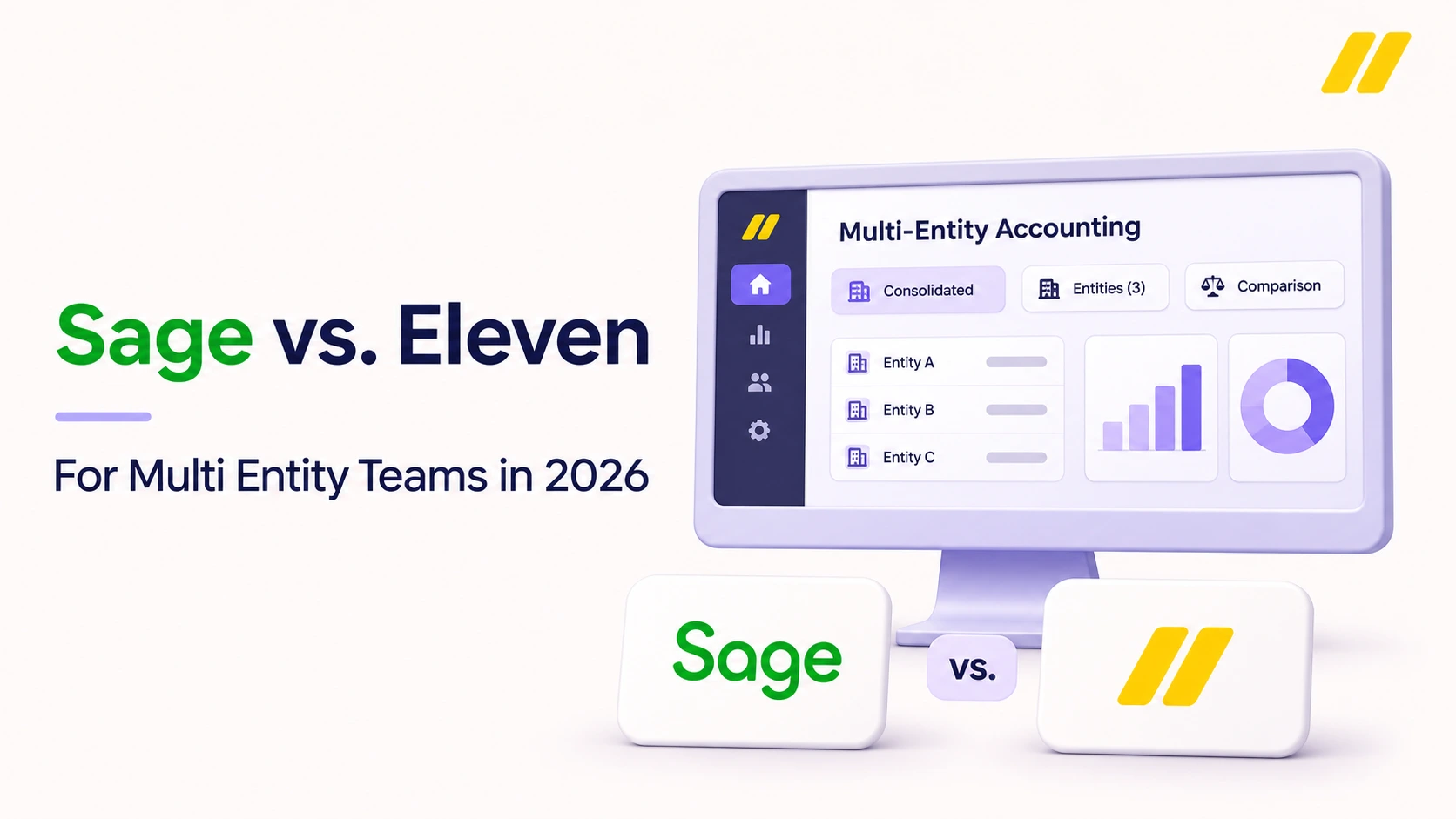
Sage vs Eleven for Multi-Entity Teams in 2026
Home
/
Blog
/
Best Financial Consolidation and Reporting Software in 2026
Best Financial Consolidation and Reporting Software in 2026
Written by
Reviewed by
A side-by-side comparison of 10 consolidation tools, their accounting capabilities, pricing, and suitability for multi-entity teams.
This guide compares 10 financial consolidation and reporting tools for accounting firms, family offices, and multi-entity groups. It covers reporting add-ons, accounting platforms, and enterprise suites, examining their support for intercompany eliminations, currency translation, ownership accounting, and adjustments. A 10-entity cost comparison helps readers assess the full expense of each setup.
Financial consolidation and reporting software helps you turn separate entity books into a useful group view.
The right choice depends on whether you want to keep your existing accounting systems or bring the books into one platform.
This guide compares 10 tools by their consolidation capabilities and subscription costs, including a practical example for a group with 10 entities.
Disclosure: Eleven publishes this guide and is included in the comparison. We used vendor documentation and published prices, alongside selected user reviews.
What Are the Types of Financial Consolidation Software?
Start with the accounting systems you already use. A reporting add-on and a replacement ERP solve different problems, even when both advertise consolidation.
These are practical categories, rather than rigid product boundaries. Some suites cover several roles, and a product's reporting label doesn't establish which consolidation adjustments it handles.
- If your books work well today, an add-on may be enough.
- If maintaining separate systems is part of the problem, consider whether changing the accounting platform would solve more of it.
“A small group with straightforward transactions may be able to prepare its reports using separate ledgers and a controlled spreadsheet. The need for dedicated consolidation software usually grows with intercompany activity, foreign currencies, ownership complexity, and reporting requirements, not simply the number of entities.”
Carl Nnaji, CPA | Founder, Kiwi Consulting Group & Expert Reviewer at Eleven
Which Financial Consolidation Features Are Important?
Consolidation brings a parent and its subsidiaries together as an economic group.
Under IFRS 10 and US GAAP's ASC 810, control generally determines which entities belong in consolidated financial statements, although the tests and exceptions differ. Qualifying investment entities or investment companies may instead measure certain investments at fair value rather than consolidate them.
For family offices, it's important to establish the accounting treatment of each holding before choosing software. A useful demonstration should go beyond adding trial balances together.
For example, a loan between two group entities shouldn't remain as both a group receivable and a group payable. Different source currencies introduce another set of requirements.
Entity-level FX revaluation is a separate capability from translating financial statements for group reporting. Check both if you need both.
For the bookkeeping foundations, see our guide to multi-entity accounting.
10 Best Financial Consolidation Software Compared
The table separates published entry prices from each product's consolidation scope.
Prices are vendor-reported US dollar amounts checked on October 16, 2026.
One-company prices are entry points, not prices for a complete multi-entity group.
The 10-entity example below includes the accounting subscriptions required by the add-on setups. Each entry links to supporting product documentation or pricing.
Accounting Platforms With Group Reporting
These platforms provide the entity books as well as group reporting.
Their consolidation scope differs, so moving the ledger doesn't remove the need to check eliminations and ownership requirements.
1. Eleven
We built Eleven for accounting firms and family offices managing multiple entities. Each entity keeps separate books, while your team works within one platform with unlimited users on every plan.
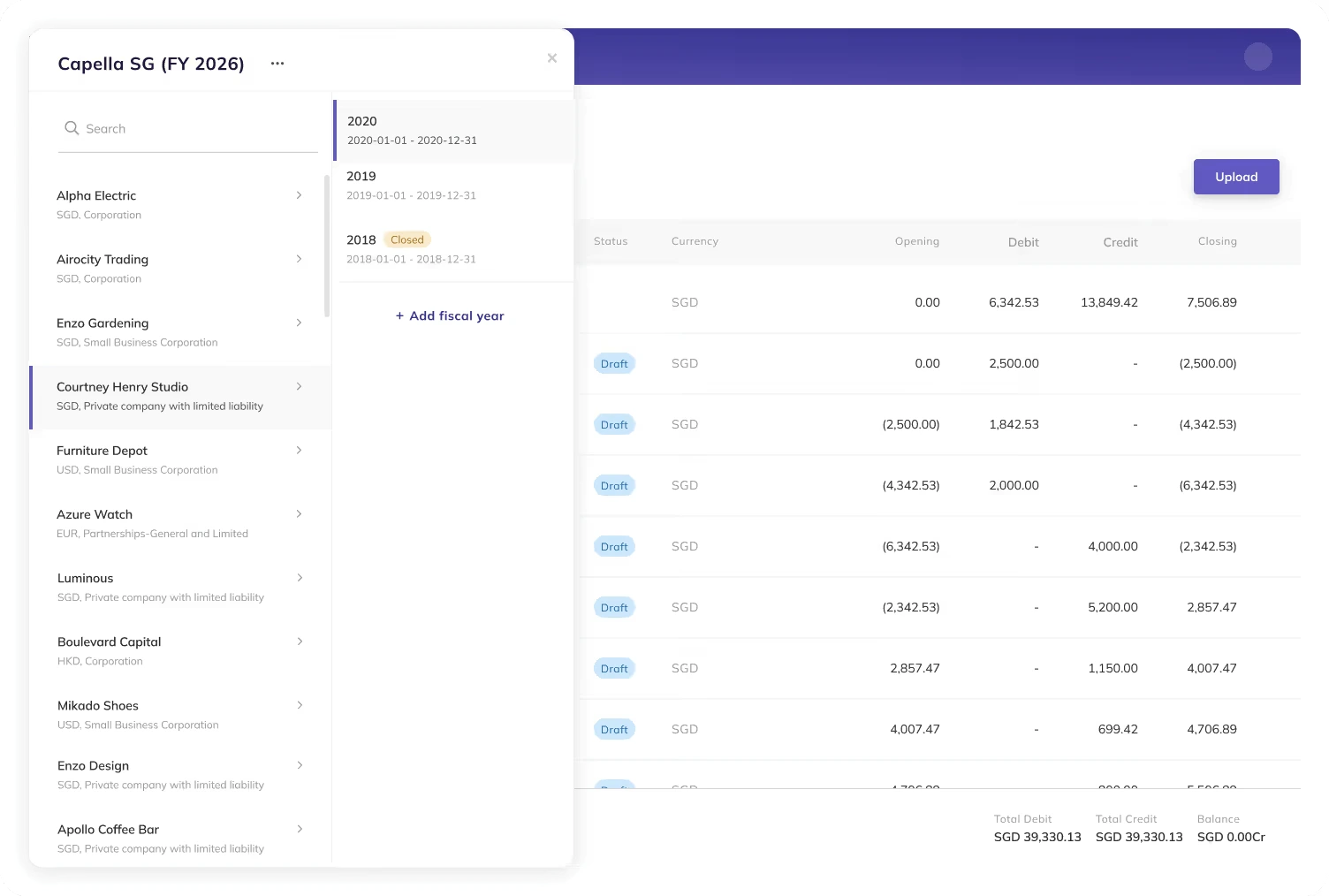
Multi-currency accounting is included from Standard, covering 170+ currencies. Our FX revaluation workflow applies closing rates to monetary accounts at period-end and prepares draft unrealized gain or loss journals for an accountant to approve. That handles an important part of the entity close; translating a subsidiary's financial statements for group reporting is a separate task.
Professional adds consolidated reporting and a custom report builder. In group setup, you can organize companies into groups and subgroups, record ownership percentages, and choose a reporting currency. Those settings describe the group structure; entering an ownership percentage doesn't establish automated non-controlling-interest calculations.
We don't currently automate group consolidation, including intercompany eliminations or consolidated financial statements.
For formal consolidation, teams can build the final statements in Excel using ledger data from Eleven's API, as explained in our reporting documentation.
The Professional plan's “consolidated reporting” label should be read within that scope. To learn more, read our complete Eleven review.
Our current prices are based on annual agreements.
- Discounts begin at 10 entities.
- A 10-entity Professional subscription is $360/month equivalent, or $4,320 per year, after the 10% discount.
- Month-to-month plans add $10 per entity per month. Standard implementation and migration are chargeable.
Best for: firms and family offices that want their entity bookkeeping in one place and are comfortable handling formal consolidation separately.
2. NetSuite OneWorld
NetSuite OneWorld adds global entity management to NetSuite's ERP. Oracle describes real-time consolidation and support for more than 190 currencies, a vendor-reported figure.
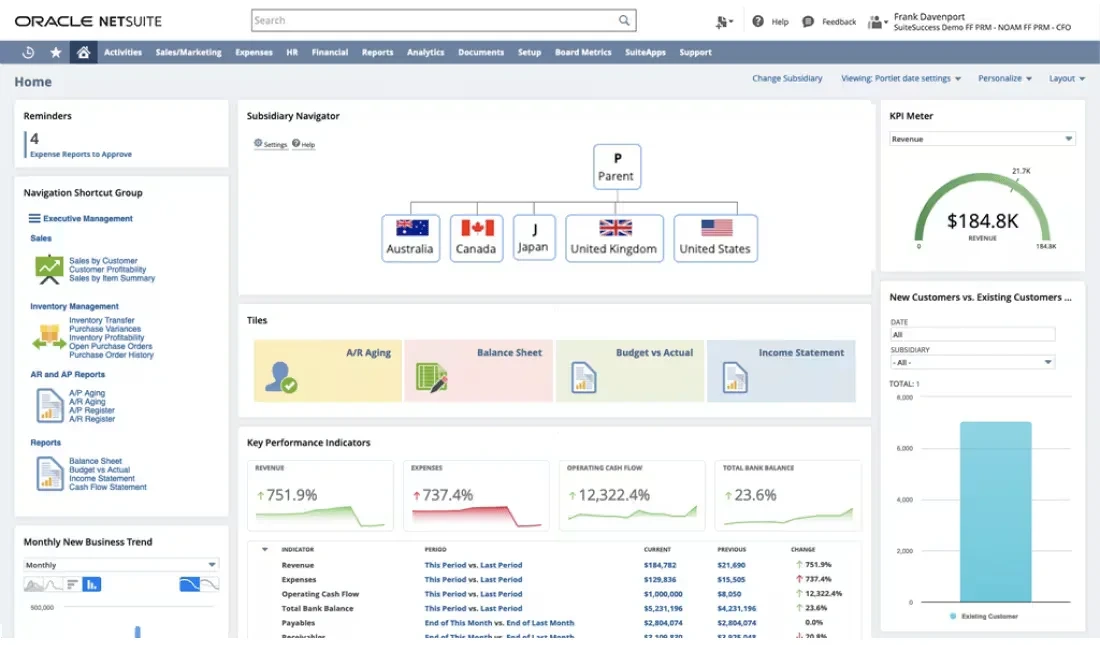
Its Automated Intercompany Management documentation explains how marked intercompany lines generate elimination entries during the close.
That gives buyers a more concrete workflow to evaluate than a generic promise of automated consolidation.
Oracle publishes an annual subscription structure based on the core platform, optional modules, and users, with a one-time implementation fee. Exact prices require a quote.
Our NetSuite review explores the wider platform.
Best for: corporate groups wanting broader ERP functionality alongside consolidation.
3. Sage Intacct
Sage Intacct combines multi-entity accounting with dimensional reporting. Its global capabilities include currency translation and group reporting.
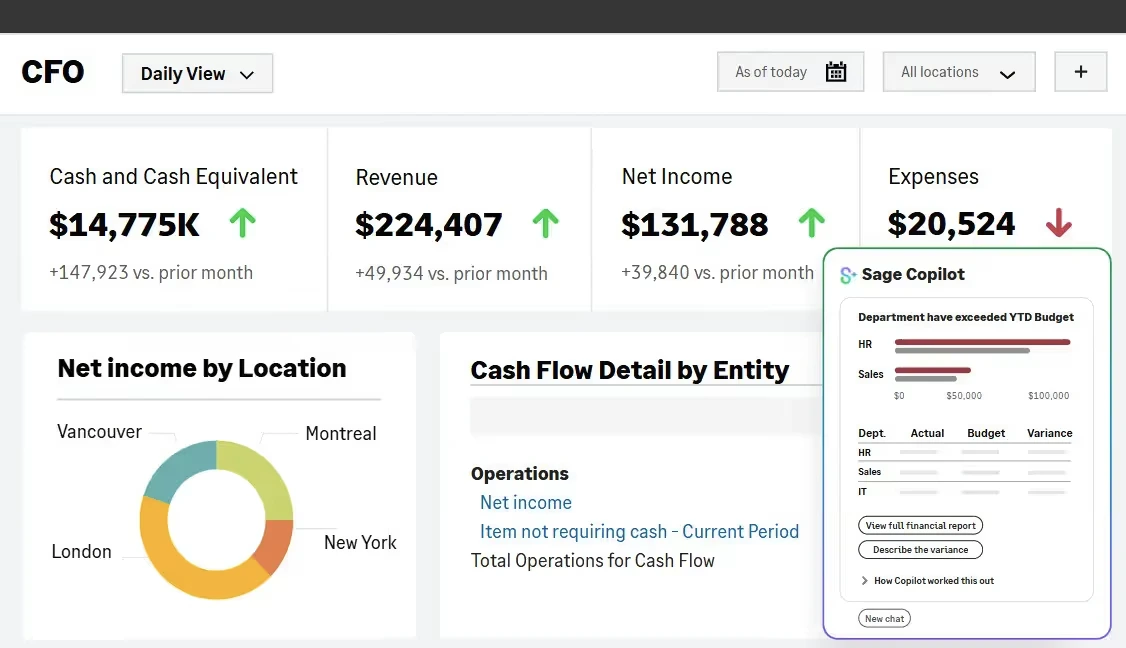
Sage's documentation says automatic eliminations apply to mapped inter-entity receivable and payable balances.
Automatic elimination isn’t a promise that every intragroup adjustment happens without configuration.
Its dimensions include standard and user-defined options, so you can organize reporting around the business without treating a fixed count of standard fields as the system's limit.
The Sage Intacct Accountants Program gives accounting firms a route to deliver outsourced finance services.
US subscription pricing is tailored to the organization. Confirm the modules and onboarding services in the proposal.
Our Sage Intacct review covers the broader product.
Best for: finance teams and outsourced accounting providers needing dimensional reporting with multi-entity accounting.
4. Intuit Enterprise Suite
Intuit Enterprise Suite is a separate offering from ordinary QuickBooks Online plans and QuickBooks Desktop Enterprise.
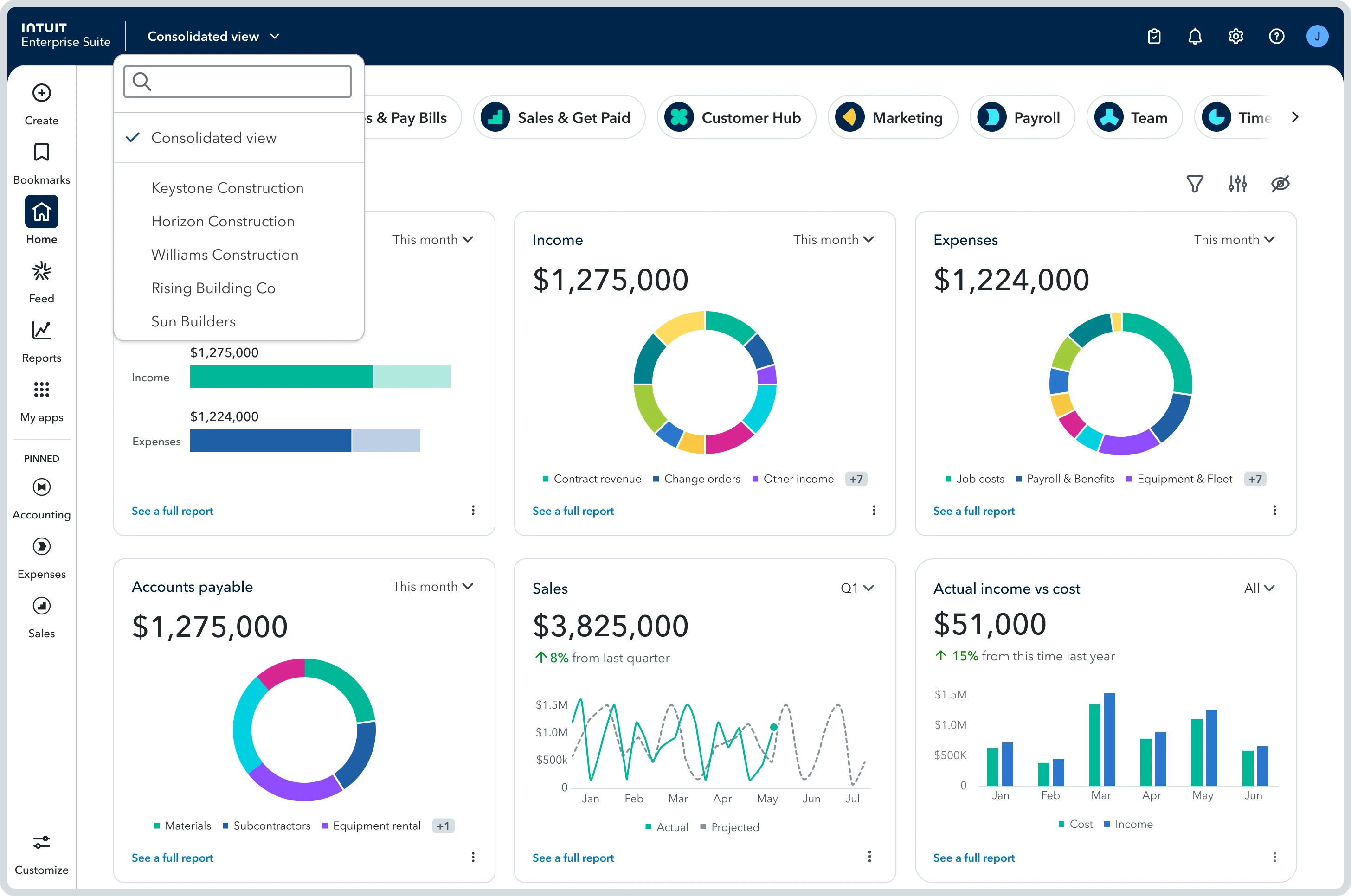
Its accounting capabilities include multi-entity reporting and intercompany transactions with automatic eliminations.
Intuit's support documentation also explains elimination accounts and intercompany journal entries.
For a group already using QuickBooks, it’s something to evaluate before changing software ecosystems.
Intuit's multi-currency functionality is in beta and available in the US. During the beta, every company must use USD as its functional currency, although foreign-currency transactions and accounts are supported. Groups with subsidiaries using different functional currencies should confirm how they'll handle the required group translation until broader support becomes available.
Intuit tailors your bundle, so ask which capabilities are generally available and what the proposed subscription includes.
Best for: growing QuickBooks-based groups exploring a more integrated multi-entity setup.
Consolidation Add-Ons for QuickBooks and Xero
These tools work above your existing accounting software. Your team keeps the source books and uses the add-on to assemble group reports.
5. Joiin
Joiin connects to Xero and QuickBooks Online, with other supported accounting sources including Sage and FreeAgent. Its multi-client setup is useful for a bookkeeper working across several client groups.
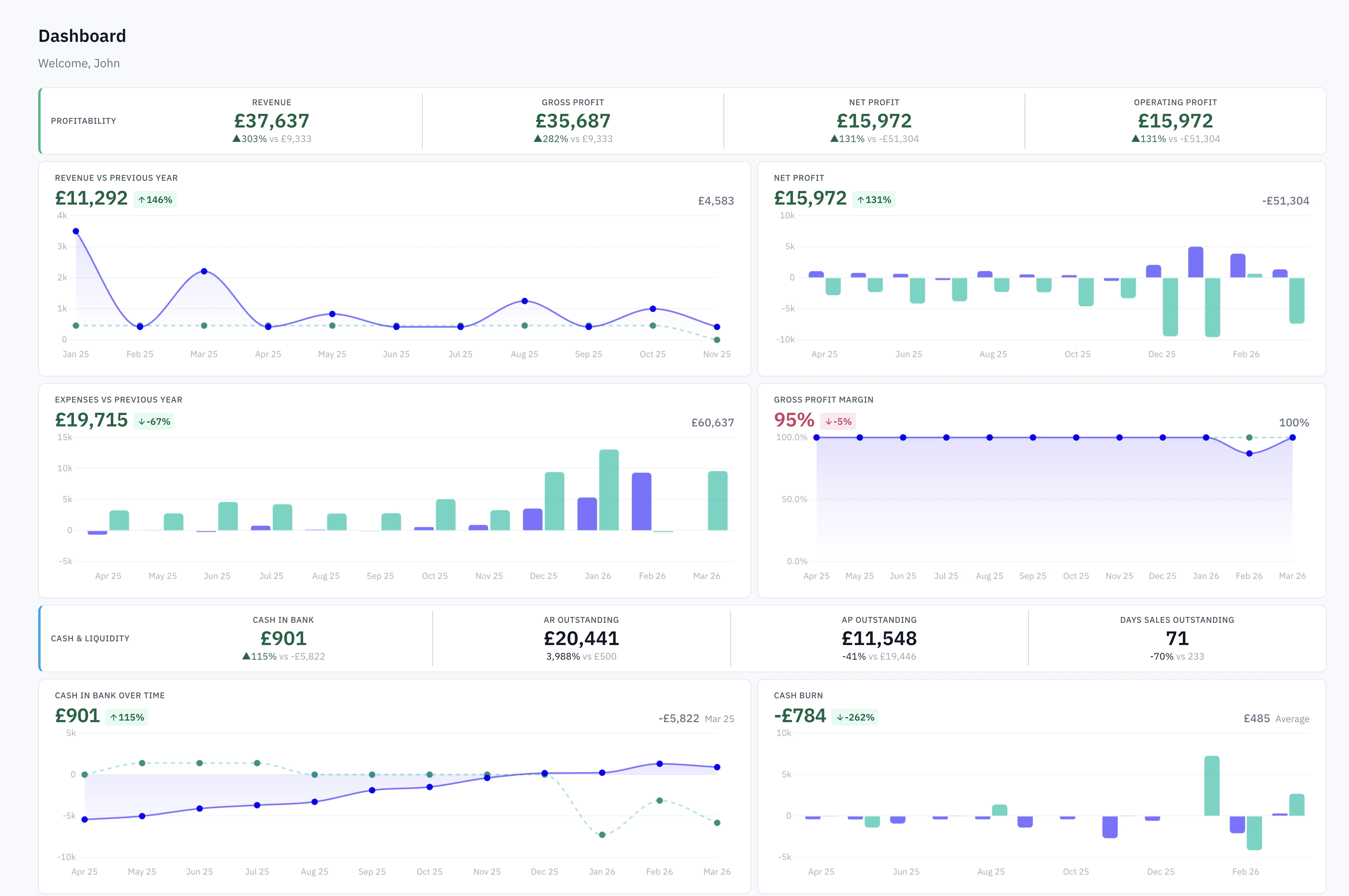
Eliminations by account, contact, or transactions are features the vendor documents. These methods have different effects: contact-based eliminations don't adjust financial-report account balances.
The current plan matrix places multi-currency reporting on Pro and Max, with custom FX rates on Max. Joiin also documents budget-versus-actual and forecast reporting, so you can compare the group's results with its plans.
“For the price point that you get with Joiin, this is an excellent product” but “The issues with Joiin are more around set-up time, requiring you to make sure everything is coded correctly in Xero first. It is also super sensitive to changes, and breaks quite easily if you make changes on the COA. This then requires active management and feel like the intelligence could allow for more advanced notifications”
— Verified User in Financial Services, Small-Business, G2
Note that Joiin responded to this user’s review and noted that some of his suggestions are part of their roadmap.
The live USD pricing calculator shows these monthly equivalents on annual billing.
Monthly billing costs more. For 10 companies, Core is $122/month and Pro is $130/month.
Best for: bookkeepers and smaller groups that want consolidated management reports while keeping their current ledgers.
6. Fathom
Fathom combines management reporting with forecasting. Its integrations include Xero, QuickBooks Online and Desktop, with additional accounting connections and spreadsheet imports.
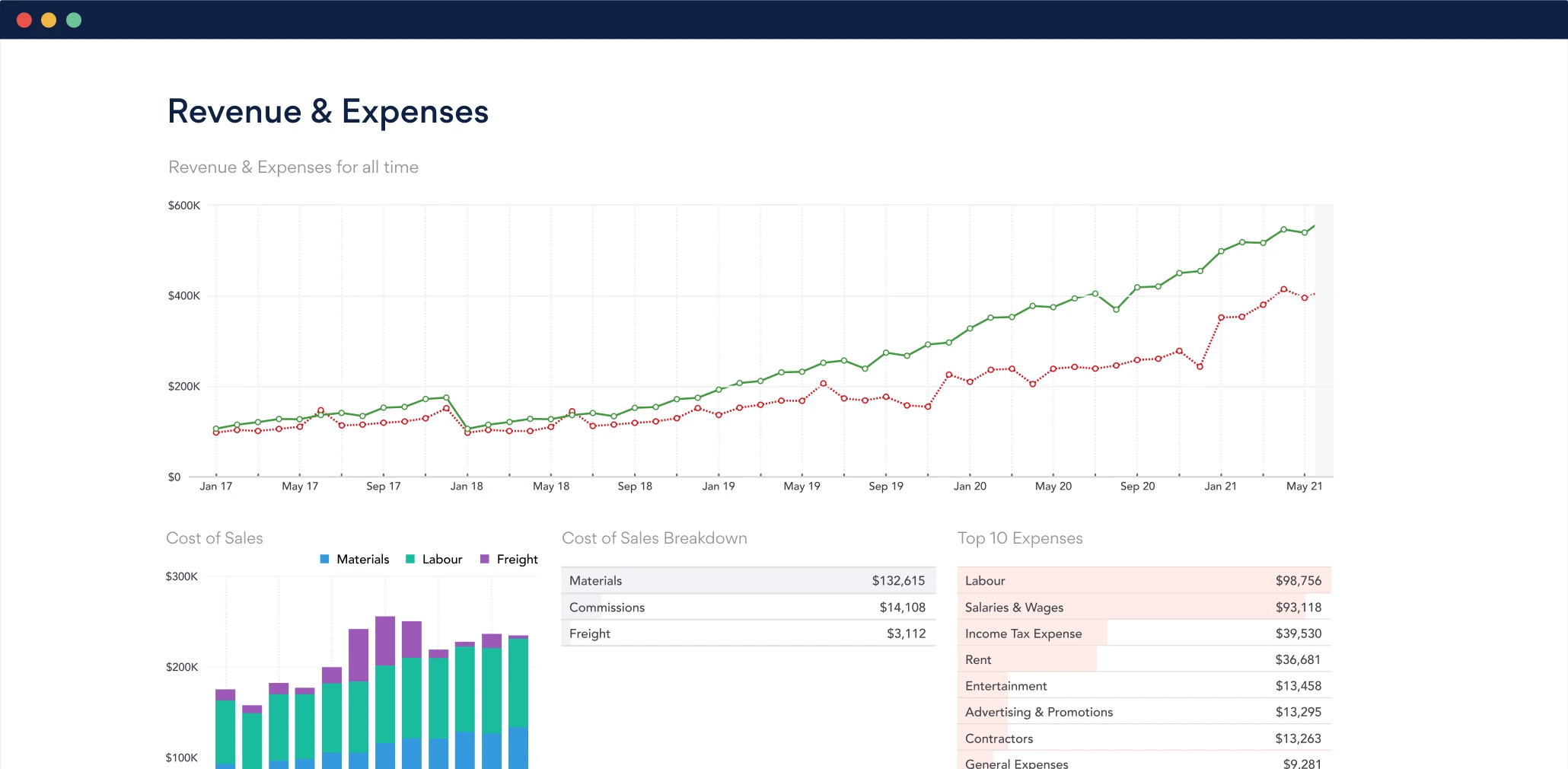
The vendor supports whole-account eliminations or specific-value adjustments and conversion into a presentation currency.
Fathom is designed for management reporting rather than statutory reporting. Partial ownership and minority interests aren’t natively supported.
A financial-services reviewer in August 2026 described incorporating non-controlling interest into reports with support's help.
That experience may be useful, but a configured workaround doesn't establish a native ownership-accounting engine.
“The most helpful item in Fathom is its reporting feature, I can make a customized report (i.e. contribution margin P&L) and it automatically updates each month with the new data” but “Fathom is restricting with its customization. For example, I cannot compare a rolling 12 month period with its prior period. My company's use is more FP&A focused and we need as much customization as possible. Also, I don't like that I cannot have customer level data, only class level data. “
— Danilo G., Senior Accountant, G2
Based on Danilo’s experience, we recommend that you bring your own comparison periods to the demonstration.
Fathom's published Pro pricing is tiered by company count.
Intermediate counts can have additional company charges. The cheaper Portfolio product doesn't include consolidation; the companies being consolidated must be on Pro.
Best for: advisors and groups prioritizing management reports and cash flow forecasts.
7. Spotlight Reporting
Spotlight Reporting imports data from accounting systems including Xero, QuickBooks, MYOB, and Sage 50.
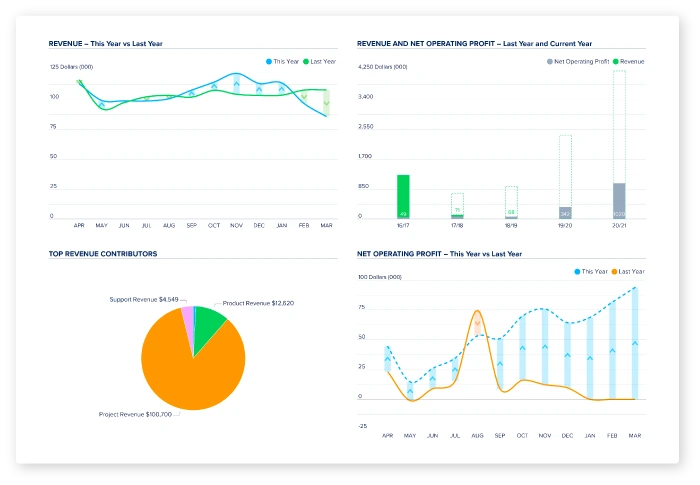
Its features automatic multi-currency consolidation and exclusion of inter-entity balances.
It’s worth considering when the report pack itself is an important deliverable. You can present group results alongside entity comparisons rather than sending stakeholders several separate exports.
An investment-management reviewer in June 2023 described using it for monthly family-office reporting. That’s a specific example, not evidence that the product is broadly popular with family offices.
“It works great for consolidating small group companies but went the group consol becomes large eg more than 5 companies and in multiple countries it really becomes difficult to use. Especially finding the accounts that were not eliminated with the intercompany transaction eliminations. Also you cant to partial eliminations.”
— Christiaan J., Mid-Market, G2
Given this rating’s age, use that feedback to guide testing rather than declare a current feature absence.
The US Business page and US Advisor page publish these regular prices, excluding sales tax.
Best for: advisors and businesses needing group reporting together with budgeting and forecasting.
Enterprise Consolidation and Planning Suites
OneStream, Prophix, and Planful connect to source accounting systems rather than requiring every entity to adopt their own transactional ledger.
They suit evaluations where consolidation is part of a wider finance-system project.
8. OneStream
OneStream brings consolidation into an enterprise performance-management platform.
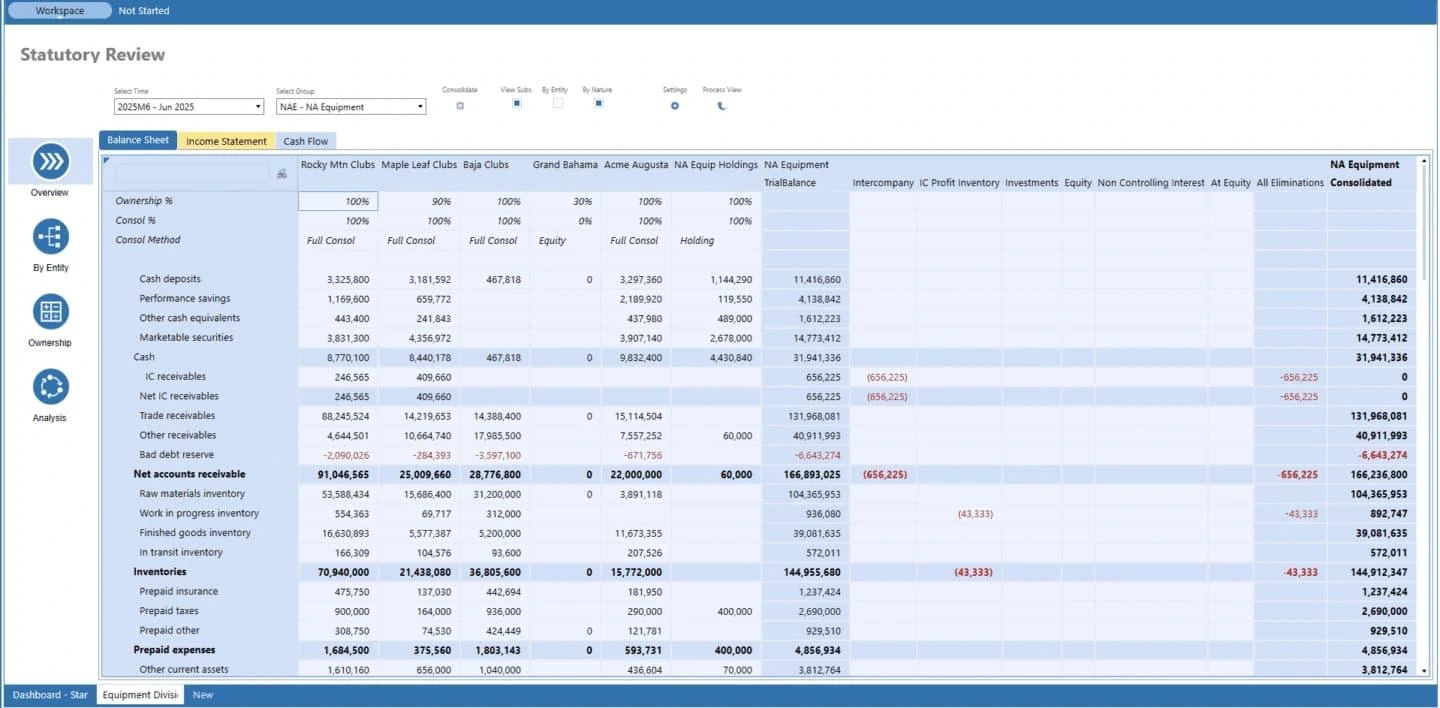
It features intercompany eliminations and currency translation within its financial close offering.
Its integration documentation names Oracle, SAP, and Microsoft Dynamics among source GL/ERP connections.
“upside above hfm is that it is a unified platform, and everything is in one place, there is one source of truth,” but “The coding is more difficult than hfm, so it helps to have new tools that are making it easier and faster top develop such as Genesis.”
Mark M., OneStream Architect, G2
This is one practitioner's comparison, but a useful reason to ask who will maintain your rules.
OneStream doesn’t publicly publish their pricing.
Best for: groups with several source ERPs and a dedicated finance-systems team.
9. Prophix
Prophix offers financial consolidation alongside its wider financial-performance platform.
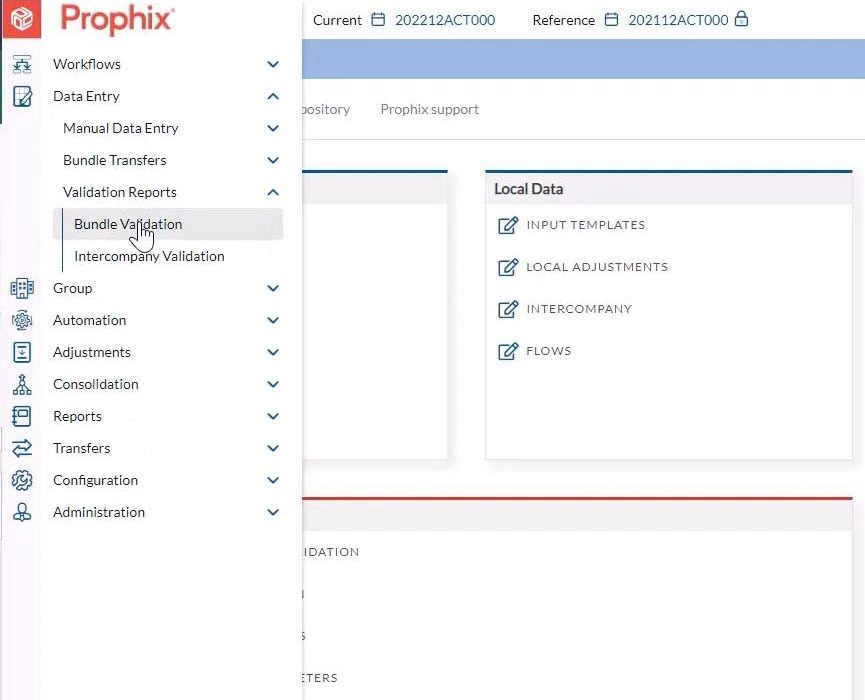
It features configurable intercompany processes and multi-currency translation, including support for more complex ownership structures.
It can also connect to systems such as NetSuite, SAP, and Microsoft Dynamics.
"I like Prophix Software for its overall product functionality and excellent support team” but “The product is complex to learn up front and takes an investment by the team to get a handle on it.“
— Corey H., CFO, G2
Some users report that the platform can be slow at times.
“It’s very versatile, with the ability to slice and dice data however I need.” but “Performance can be slow at times, especially when working with large volumes of data that depend on nested formulas. It’s also relatively expensive compared with other products.”
— Verified User in Airlines/Aviation, Mid-Market, G2
Prophix’ pricing isn’t publicly published on its pricing page; it’s quote-based.
Best for: finance teams evaluating consolidation together with planning and performance management.
10. Planful
Planful lets users eliminate entries at parent levels and translate entity balances into a reporting currency.
The system works above source accounting data. Its can connect to ERPs like SAP, NetSuite, and Oracle.
“More customisation to dashboards and reports would be a welcome feature for those who do not want to take their data into a BI solution or back into Excel for more bespoke reporting.
The Consolidation engine works well for a simple consolidation setup however Consol Premium will be required (purchased separately) for more challenging consolidation processes.”
— Atanas J., Group Finance Consolidation and Reporting Lead, G2
Other others note that the platform isn't as strong as it could be.
“Implementation can take a long time. Some of the tools aren’t as strong as they could be—for example, the Marketing module isn’t integrated with the main finance platform. We also need consulting support on a regular basis to keep things running smoothly. “
— Verified User in Consumer Goods, Enterprise, G2
Planful doesn’t publicize its subscription price. To receive a quote, request an itemized proposal.
Best for: groups wanting consolidated actuals to feed their planning and reporting processes.
Consolidation Software Costs for 10 Entities
The cost of an add-on is only part of the picture if you’re also paying for each entity's ledger.
The illustration below uses 10 QuickBooks Online Essentials subscriptions at the regular US price of $85/month each.
It also shows eligible ProAdvisor firm-billed subscriptions at $59.50 each.
These figures cover different services.
- The QuickBooks setups combine entity ledgers with a reporting add-on.
- Eleven's price covers Professional, with formal consolidation handled separately. It excludes any external consolidation software, integration work, or accountant time, so the difference isn’t a like-for-like consolidation saving.
Joiin Pro on monthly billing would bring the first row to $980 at QuickBooks list rates, or $725 with eligible firm billing.
The current QuickBooks acquisition offer also advertises 50% off for the first three months. For 10 eligible Essentials subscriptions, that reduces the ledger portion to $425/month before returning to $850. Add-on charges are separate, so don't combine this introductory offer with the ProAdvisor discount in your calculation.
For a single client with several companies, QuickBooks also has a Multi-Company Offer.
Eligible US accounting firms can buy one QuickBooks Online Plus subscription at the ProAdvisor firm-billed rate and add up to 10 more for $45 each per month for two years. At the currently published $98 ProAdvisor rate for Plus, 10 company subscriptions would cost $503/month before a consolidation add-on. The additional subscriptions must be purchased together, and the offer can't be combined with other Intuit promotions.
All figures exclude applicable taxes and other services. The ProAdvisor ongoing discount and Multi-Company Offer depend on eligibility, and prices can change. Existing subscriptions or mixed plans can produce different totals.
For the other platforms, compare written proposals covering the necessary modules and implementation and check that a required consolidation capability hasn’t been left outside the quote.
Bring Your Entity Books Together With Eleven
If moving between separate books is slowing your team down, bring that work into Eleven. Keep each entity's records distinct while giving your accountants one platform to work in.
Professional includes unlimited users, with implementation and migration included. At 10 entities, our annual-agreement price is $360/month equivalent. For teams preparing formal group accounts, Eleven supplies the underlying entity books while the final consolidation remains a separate workflow.
See how your team can use Eleven for everyday bookkeeping, from AI document capture to reviewing the entries behind a report.
See Eleven in action with a walkthrough built around your firm's bookkeeping workflow.
Frequently Asked Questions (FAQs)
Do You Need a Consolidation Add-On for Xero or QuickBooks?
Only if your reporting requirements call for it. Owning several entities doesn't automatically mean they all belong in consolidated financial statements.
If you need group accounts, check whether your current setup produces the required adjustments. An add-on may be sufficient; replacing the source ledgers is a separate decision.
What Is the Difference Between Combined and Consolidated Reporting?
Consolidated financial statements present a parent and its subsidiaries as a single economic group. Combined financial statements are typically used when several entities share common ownership or control but no parent company sits above them.
For example, a family might directly own several businesses without holding them through a single parent entity.
Both approaches can require intercompany eliminations and accounting adjustments. Simply adding entity balances together doesn't necessarily produce compliant financial statements, so check what the software actually handles rather than relying on its reporting labels.
Can You Keep Your Existing Accounting Software?
Yes. Reporting add-ons import from supported ledgers, and enterprise performance-management suites can connect to existing ERPs.
A trial should show how new accounts and corrected balances flow into the group reports. That ongoing maintenance matters as much as the first successful import.
Does Multi-Currency Accounting Include Group Currency Translation?
Not necessarily. Recording foreign-currency transactions and revaluing balances within an entity are different from translating an entity's statements into the group's presentation currency.
Ask the vendor to demonstrate the group translation process and its resulting adjustments.
Was this article helpful?
Thank you! Your feedback has been received!
Oops! Something went wrong while submitting the form.