Most cloud accounting platforms were designed for small business owners managing their own books, with multi-entity workflows added on top. Eleven was built the other way around: a platform designed from the ground up for organisations managing many entities, with the workflows, pricing, and scale that complex structures actually need.


Most cloud accounting platforms were built to help small business owners manage their own books. The interface, the workflows, the pricing all reflect that audience.
Many of them added multi-entity dashboards on top. It works when each entity is simple and independent. It strains when an organisation manages many entities at once.
Eleven was built for that second job specifically. Designed from the ground up for organisations managing many entities, with the workflows, pricing, and scale that complex structures actually need.
Most cloud accounting platforms charge per organisation. Each entity is its own subscription, often at full list price. Software cost scales linearly with entity count.
Eleven charges per entity, with volume discounts as you add more. The per-entity cost goes down as your portfolio grows.
The point: Eleven's pricing model rewards consolidating onto one platform. Per-organisation subscription pricing punishes it.

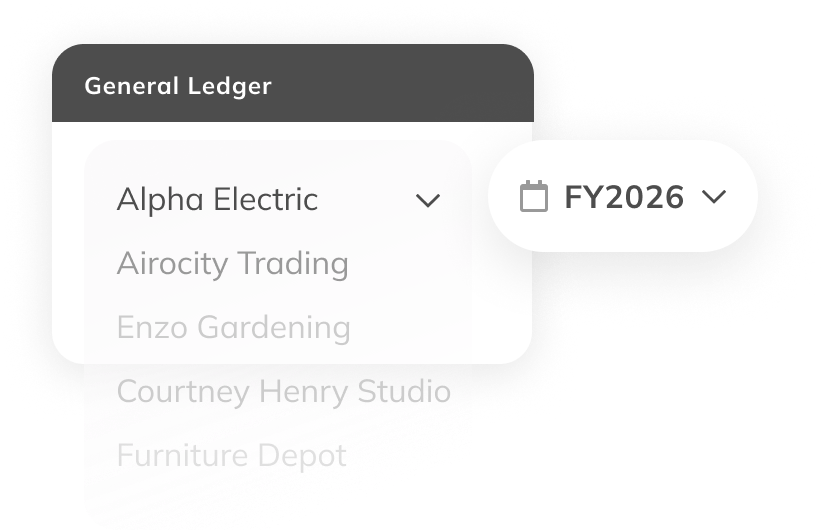
Most accounting tools treat each entity as a separate workspace. To switch entities, you switch context, sessions, sometimes logins.
Eleven holds every entity on one platform. Users move between entities without context-switching.
Settings, charts of accounts, and access controls can be applied consistently across your portfolio, or configured per entity where needed.
For teams working across multiple entities daily, this changes the rhythm of the work.
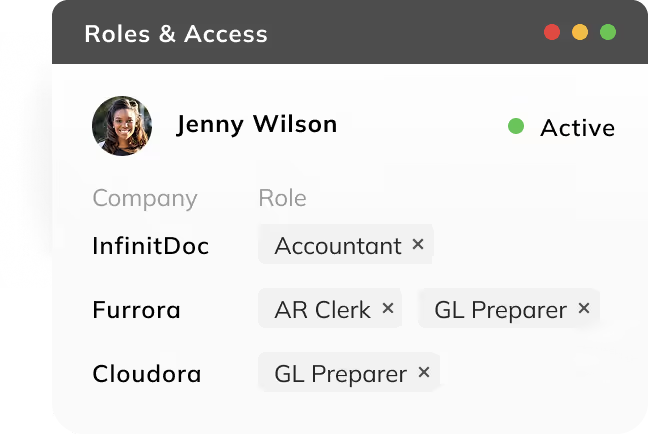
In most accounting platforms, a user has one role across the whole platform.
In Eleven, roles are assigned per entity. The same person can be a GL Preparer on one entity, a Financial Controller on another, an External Auditor on a third, all from one login.
This matters as the portfolio grows. Controlling who sees what across dozens of entities is a real governance concern.
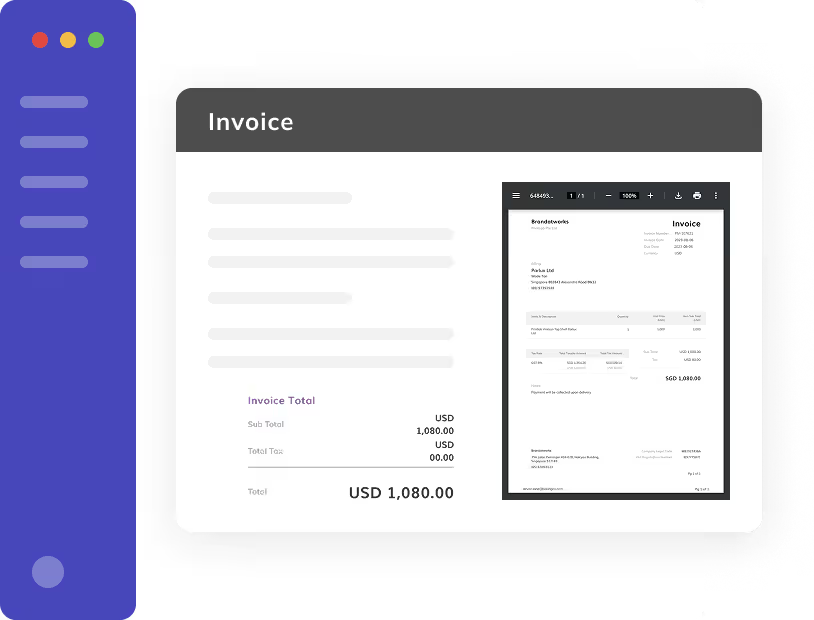
Upload an invoice as PDF, image, or email. Eleven's AI extracts the data and creates a draft invoice record. Vendor, amount, date, tax, line items: parsed and ready for review.
The AI handles the transcription. Accountants handle the judgment.
Nothing posts to the ledger without explicit accountant approval.
Import a bank statement. Eleven proposes which posted transactions match which bank lines, based on amount, date, payee, and historical patterns.
Users review and confirm. Exceptions are flagged for closer attention.
Suggestion-based by design, bank reconciliation has too many edge cases for full automation to be safe.
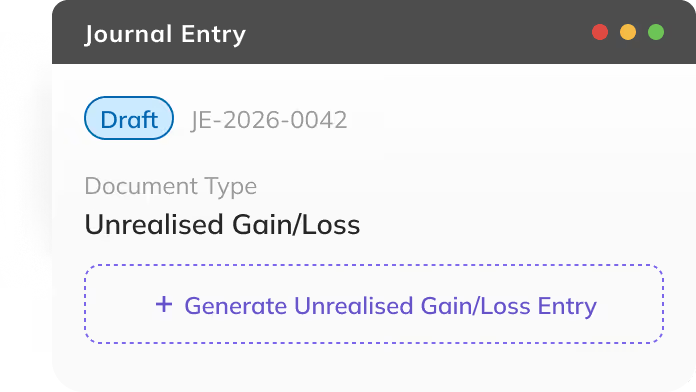
Period-end FX revaluation is one of the most error-prone closing tasks in multi-currency accounting.
Eleven identifies monetary accounts, applies closing rates, and generates draft unrealised gain/loss journals for review. Hours of manual work become minutes.
Particularly relevant for family offices with global holdings and firms serving international clients.
VAT, GST, US sales tax, withholding tax, reverse charge, tax-inclusive pricing.
Eleven's tax engine handles the scenarios that force teams on lighter platforms to build Excel workarounds. Tax data is captured at the transaction level with full audit trail.

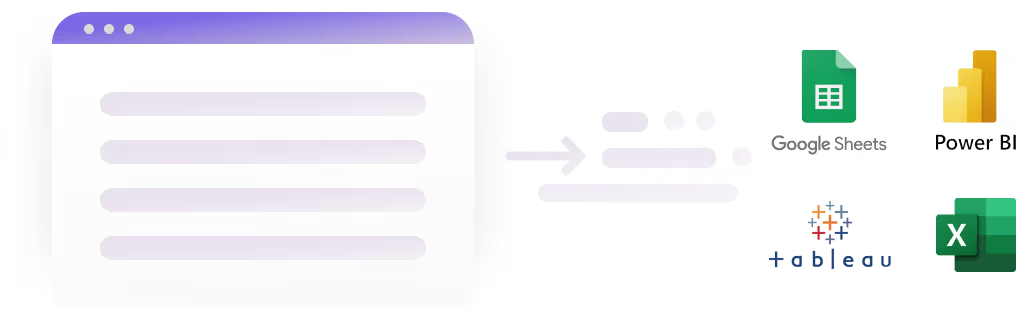
Instead of trying to be a BI tool, Eleven exposes the general ledger through an API.
Analysts connect Excel, Google Sheets, or Power BI directly. They pull live ledger data into the templates they already maintain.
A deliberate design choice: let teams keep the tools they already use, and feed them live data.
Every entry, every edit, every approval is logged with timestamp and user.
This isn't a feature you turn on. It's how the platform works.
Eleven is built for organisations managing multiple entities at scale.
Two main audiences:






We are using cookies. Learn more.


