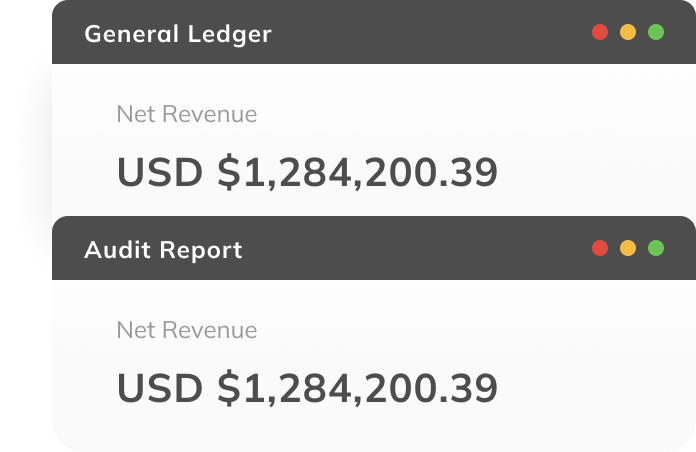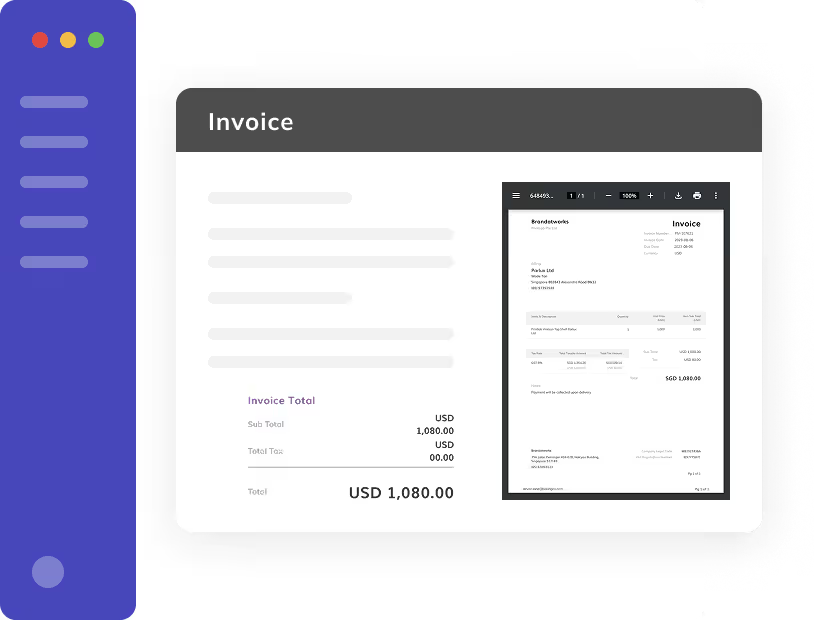
Multi-entity financial reporting, API-driven BI, and analytical accounting, built for accounting firms and family offices managing complex client portfolios.

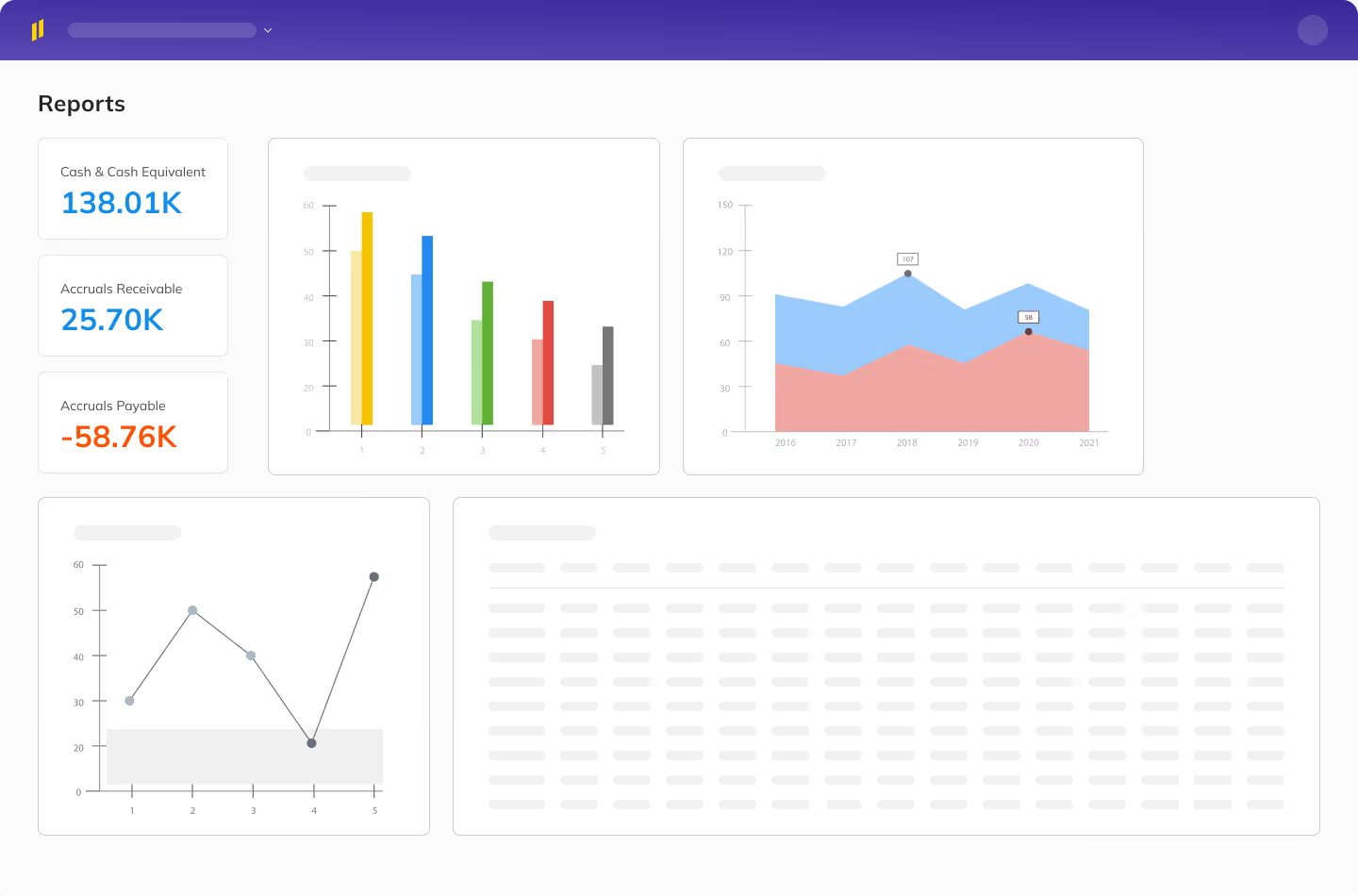
Most accounting platforms generate reports. Few generate insight.
Eleven's reporting engine is built around a structural assumption that single-entity tools don't make: that real financial analysis happens across entities, across currencies, and across dimensions that don't fit into a chart of accounts. Whether you're closing books for a single client or building a management pack for a family office, the same reporting layer covers it , without exports, spreadsheets, or version-mismatched workbooks.
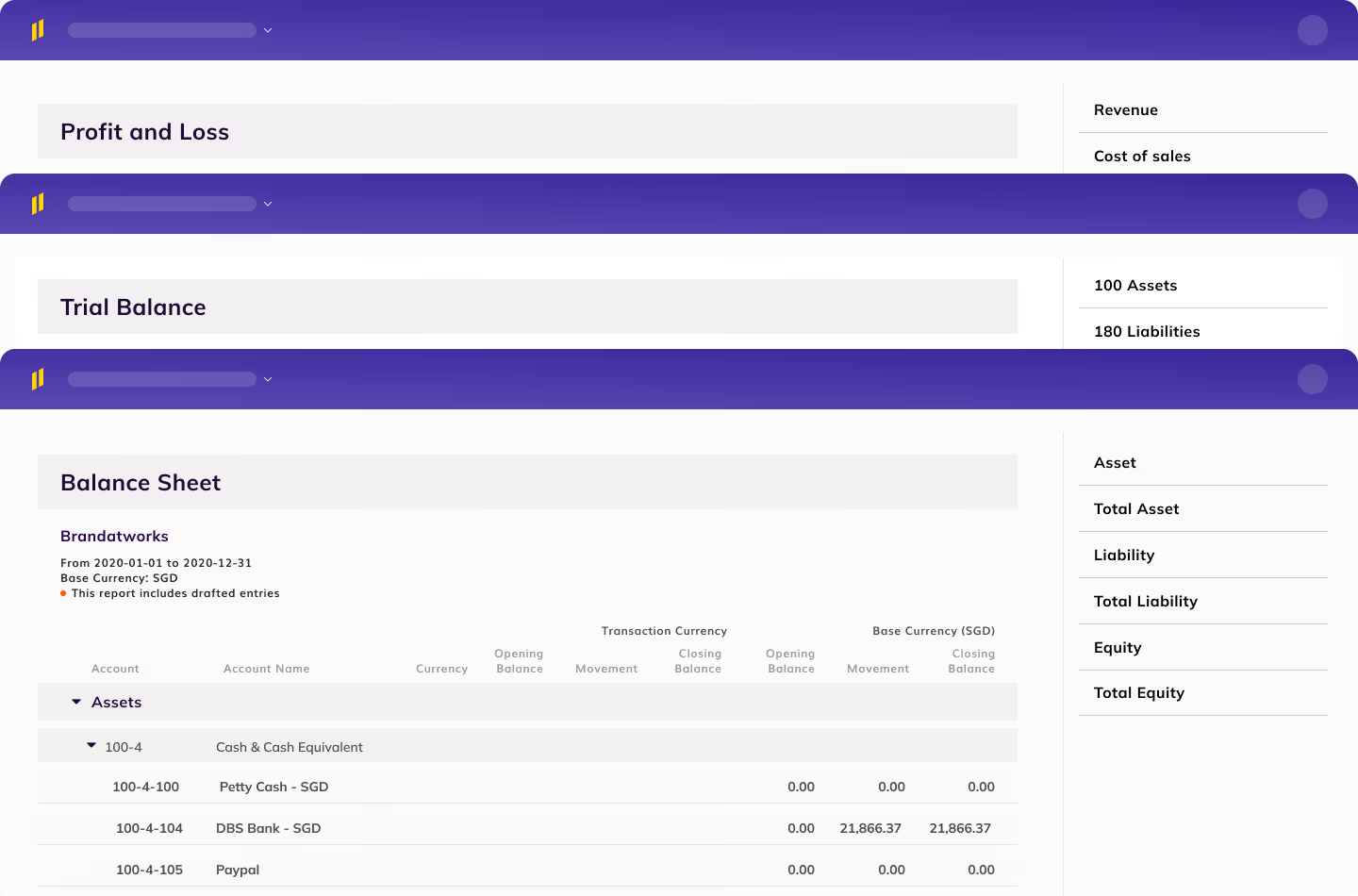
Every financial close ends in the same set of reports, Balance Sheet, P&L, Trial Balance, General Ledger, Cash Flow. Most firms generate them by exporting raw data, formatting in Excel, and reconciling versions across team members. Eleven produces all of them directly from the ledger, structured and ready to share.
Reports are generated against live data, with full drill-down to the underlying transactions. Every figure on a Balance Sheet traces back to the journal entries that produced it, no spreadsheet intermediaries, no version mismatch between what's shown to clients and what's in the books. Period comparisons (month, quarter, year) are built in, as are comparative views across periods.
Output formats include PDF and Excel; reports can be shared with view-only access or exported for distribution.

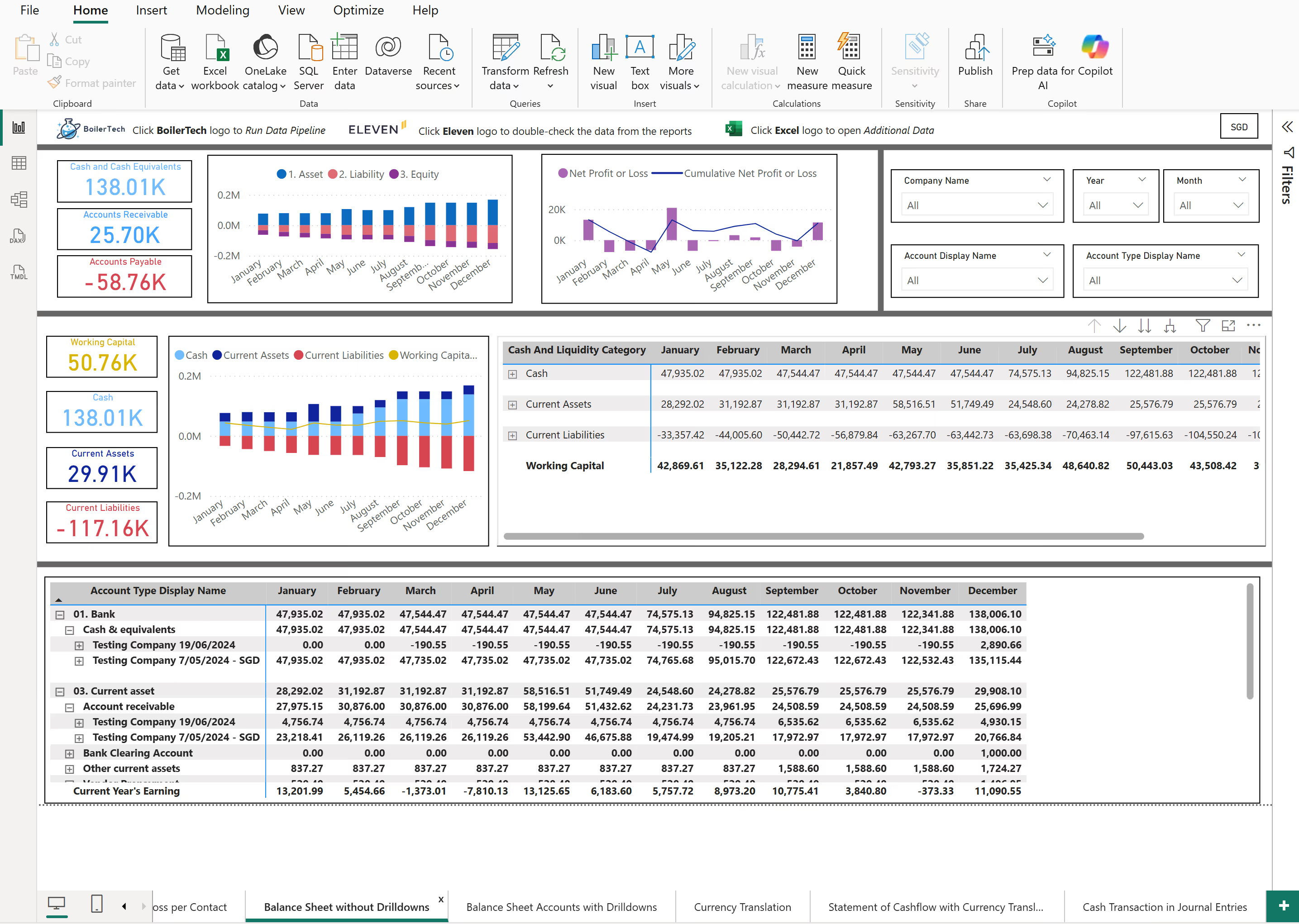
Standardized reports cover compliance. Custom reports cover the questions that don't fit a template, profitability by service line, gross margin by category, revenue concentration by customer, expense trends by department.
Eleven takes a different approach than most accounting platforms here. Rather than locking custom reporting inside a proprietary report builder, Eleven exposes the underlying General Ledger through an API. Firms connect Excel, or their existing BI tool, directly to Eleven, pull live ledger data, and build templates in the environment their analysts already work in.

The limit of standard accounting reports is the chart of accounts. If you want to track profitability by project, by cost center, by client engagement, or by geography, the conventional approach is to bloat the COA with hundreds of sub-accounts, which makes consolidation harder and the books less readable.
Analytical accounting solves this without expanding the COA. Transactions are tagged with structured dimensions, cost centers, projects, departments, revenue streams, anything you define, and reports can be sliced by any combination of those dimensions. The chart of accounts stays clean; the analytical layer carries the granularity.
For accounting firms, this means generating management reports that look nothing like the statutory ones, from the same underlying data. For family offices, it means tracking performance across asset classes, geographies, or family branches without restructuring the ledger. Budget-versus-actual comparisons run against the same dimensional structure.
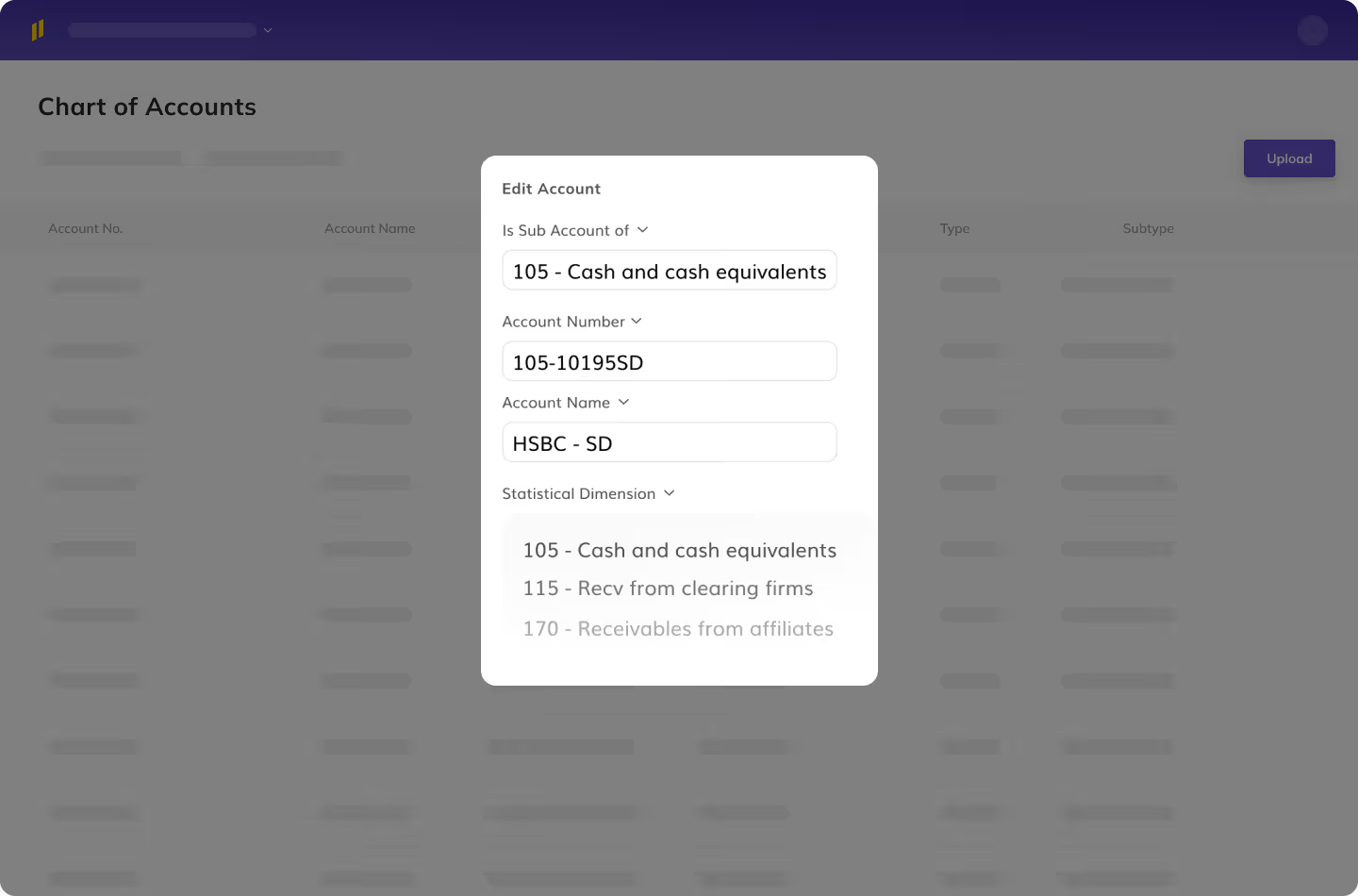
Analysis dimensions are the building blocks of Eleven's analytical reporting. Where most platforms offer one or two analytical fields (typically a cost center and a project code), Eleven lets you define an arbitrary number of dimensions and assign multiple values per transaction.
A single invoice might be tagged with a cost center, a project, a geography, a campaign, and a custom client-specific dimension, all without modifying the chart of accounts. Reports can then filter or pivot on any of those dimensions independently or in combination.
This matters most for multi-entity companies that have outgrown QuickBooks or Xero and need richer cost and revenue center allocation. Each entity can track the dimensions that matter to its business, instead of being forced into a single rigid structure. Eleven keeps that flexibility while still allowing clean consolidated reporting across the whole portfolio.

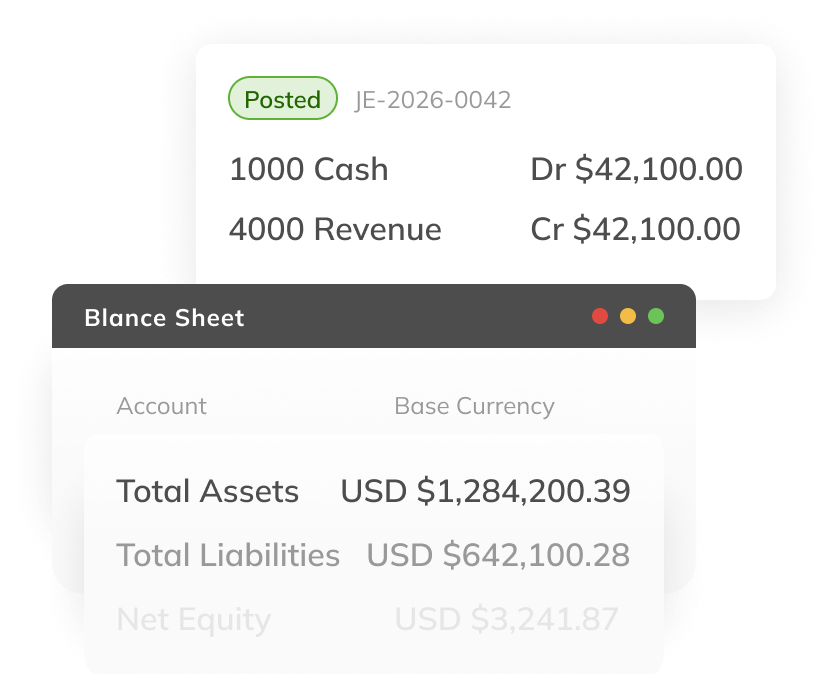
A balance sheet generated at 3pm reflects journal entries posted at 2:59pm.
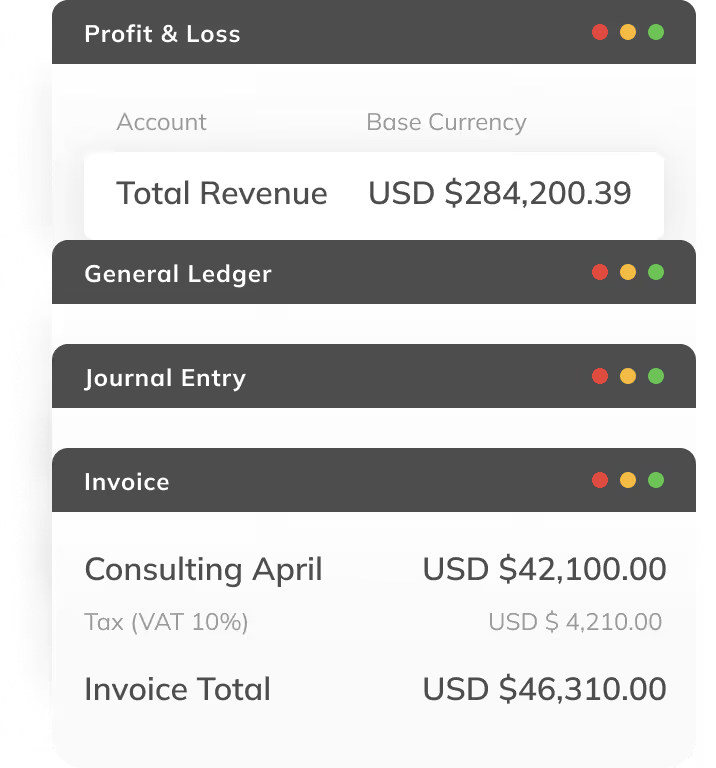
A figure on a P&L traces through to the journal entry that produced it, and from there to the source document.