Full Xero Review With Updated US Pricing and Features (2026)
Home
/
Blog
/
7 Best Accounting Software for CPA Firms in 2026
7 Best Accounting Software for CPA Firms in 2026
Written by
Reviewed by
Dedicated accounting software for CPA firms can guarantee to make your firm more efficient, accurate, offer more comprehensive reporting, without the risks of breaking tax laws or regulations.

The best accounting software for CPA firms isn't the same as the best software for a small business. CPA firms manage other people's finances across multiple clients, entities, and jurisdictions, with compliance, security, and audit-readiness requirements that general tools weren't built to handle. This guide profiles 7 of the most widely used tools and explains where each one fits.
Generic accounting platforms handle bookkeeping and payroll well enough. But as client complexity grows to account for multi-entity structures, international operations, and changing tax obligations across jurisdictions, manual processes become a liability.
The right account software for CPA firms automates the workflows that eat your time, keeps compliance current, and lets you show up to client conversations with analysis rather than just numbers.
What Are The Must-Have Features in Accounting Software for CPA Firms?
These are the capabilities that separate a tool suited to a CPA environment from one that'll create workarounds down the line.
Security and Encryption
Client financial data is among the most sensitive information there is. A breach can lead to identity theft, financial loss for your clients, and compliance exposure for your firm.
Look for built-in encryption, role-based access controls, and geographically distributed backups. These should be part of the core architecture, not add-ons.
Automated Tax Calculation
Manual tax recalculation for every client is one of the biggest time sinks in a CPA practice. Automated tax handling covers payroll deductions, sales tax, and complex business calculations with precision.
When you're preparing quarterly filings for a business with 50 employees, the software handles payroll taxes, retirement contributions, and deductions automatically.
Multi-Currency Support
If any of your clients operate internationally, this isn't optional. A proper multi-currency setup automates FX adjustments and keeps you compliant with international reporting standards.
Working with a Canadian client means automatically reconciling USD and CAD transactions, applying real-time exchange rates, and producing reports that satisfy both US GAAP and IFRS without manual conversions.
Universal Tax engine
Tax laws change constantly, and if your clients operate across states or countries, maintaining separate spreadsheets for each jurisdiction isn't realistic.
A universal tax engine applies the correct rules automatically, reducing noncompliance risk and saving hours of manual review.
Document Management
A built-in DMS centralizes everything in one secure, searchable location. Client scan upload directly to an encrypted portal, and you can find what you need in seconds.
Beyond time savings, a proper DMS keeps you compliant with privacy regulations and makes document sharing straightforward for both your team and your clients.
Reporting Depth
Your clients want more than accurate numbers. They want forecasts, compliance summaries, and analysis they can act on.
When a client needs a cash flow forecast ahead of a loan application, you should be able to have a detailed, data-backed report ready in minutes, not days.
7 Best Accounting Software Options for CPA Firms
There are many types of accounting tools. Some are meant for finance teams, some for accounting and bookkeeping firms, and some are better suited for CPA firms. These profiles focus on how each tool fits the CPA firm context specifically, not just what the software does in general.
1. Eleven
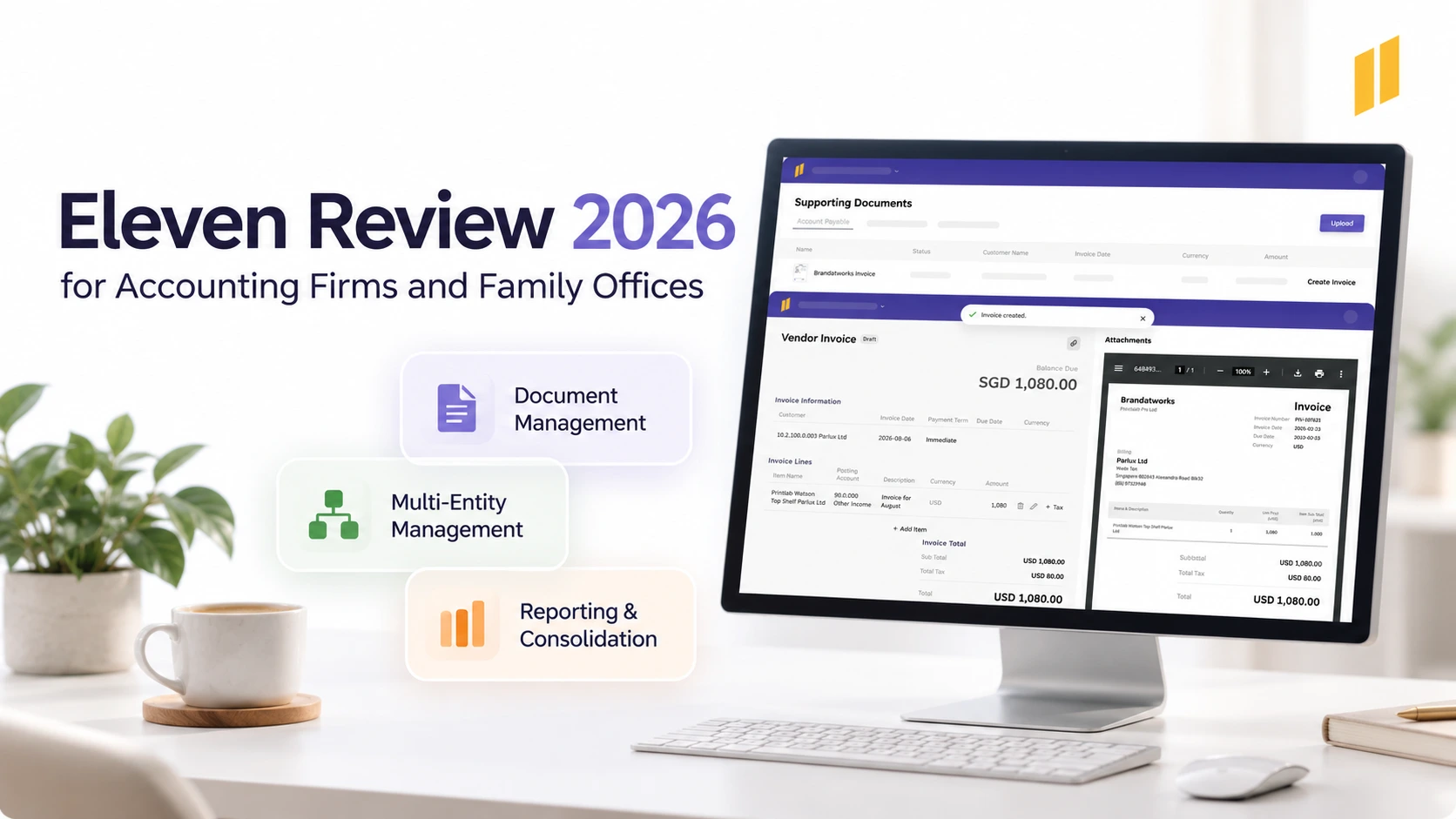
Eleven is built specifically for CPA firms and family offices, not adapted from a small business tool. It combines multi-entity financial management with compliance-grade security and a built-in DMS, so client data, tax documents, and compliance files live in one encrypted,centralized environment.
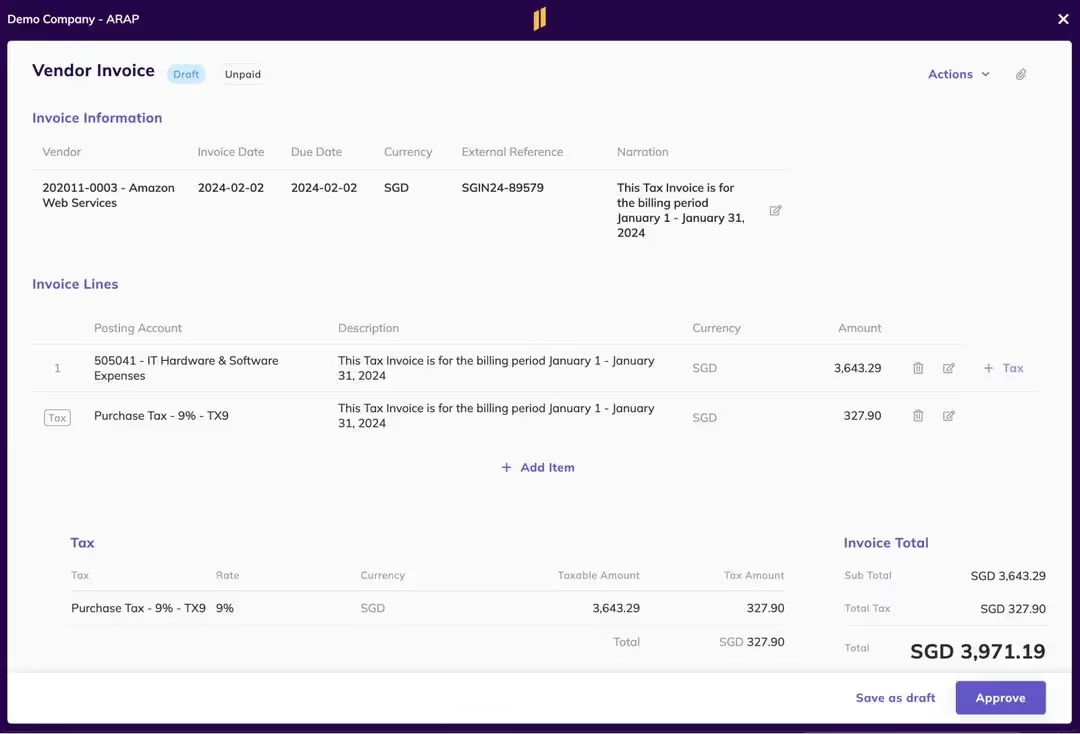
The workflows it supports (multi-entity accounting, tax filing, financial reporting, and client collaboration) are designed for professional-grade security and auditability from the ground up.
Key CPA Firm Features
- Encrypted DMS built for CPA environments
- Secure client portals
- Universal tax engine
- Multi-currency and multi-entity support (170+ currencies)
- Analysis dimensions for complex reporting
- Custom reporting and business intelligence
Pros
- ✅ Purpose-built security and compliance architecture
- ✅ Built-in DMS removes reliance on insecure general storage
- ✅ Automated workflows integrating tax, compliance,and client management
Cons
- ❌ Requires a transition period for firms moving from general tools
- ❌ More specialized than a general business needs
CPA firms, tax professionals, and accounting practices managing large volumes of confidential financial data across multiple entities or clients. Particularly valuable for firms moving away from general cloud storage toward a system with compliance built into the architecture.
2. Deltek
Deltek is an enterprise-level platform that integrates accounting with project management features, covering time tracking, billing, resource allocation, and compliance monitoring in one system.
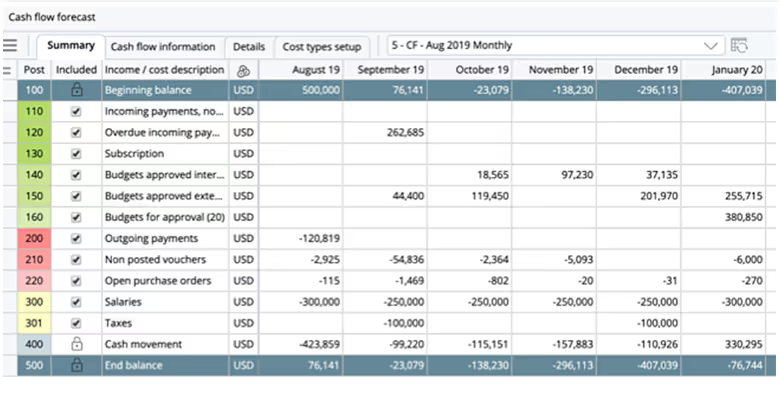
It's a practical fit for CPA firms managing large,multi-phase client engagements rather than purely tax and compliance work. The interface and setup require more onboarding time than lighter accounting tools.
Key CPA Firm Features
- Project accounting with real-time cost tracking
- Automated invoicing and revenue recognition
- Compliance tracking
- Resource planning and allocation
- Reporting and analytics
Pros
- ✅ Comprehensive project and financial management in one platform
- ✅ Strong time-tracking and billing features
- ✅ Scales well for larger CPA firms
Cons
- ❌ Steeper learning curve compared to simpler CPA-focused platforms
- ❌ Higher cost, making it less practical for smaller firms
- ❌ Features may feel excessive for firms focused solely on tax or audit
Deltek is best for CPA firms that handle project-based work or services beyond tax and audit. Large firms needing both project management and financial tracking in one environment.
3. UltraTax CS
UltraTaxCS, part of the Thomson Reuters CS Professional Suite, is a tax compliance platform built specifically for CPA and tax-focused firms.
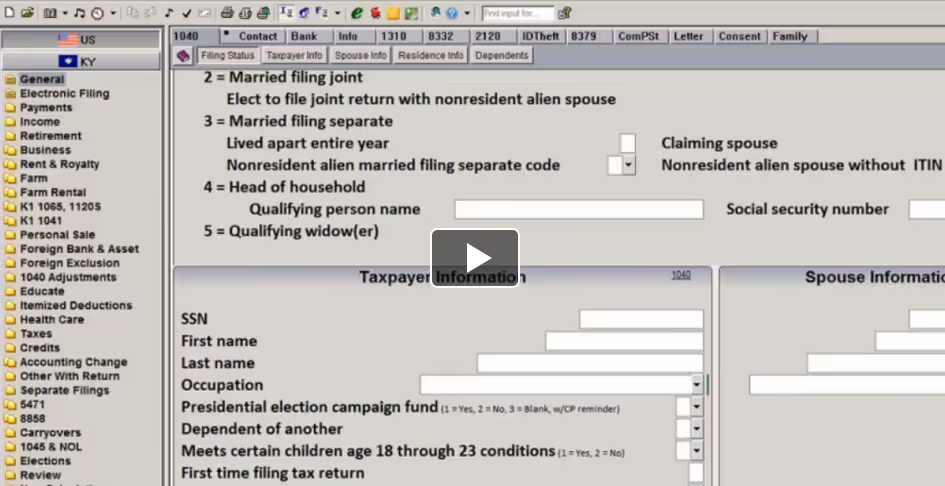
It handles deep tax compliance, diagnostics, and electronic filing across a wide range of return types, with direct integration into other CS Suite tools. A cloud-hosted version, Virtual Office CS, extends the platform to remote access.
Key CPA Firm Features
- Deep tax compliance and diagnostics
- Electronic filing across multiple return types
- Seamless integration with the CS Professional Suite
- Cloud hosting via Virtual Office CS
- Multi-entity and multi-jurisdiction filing support
Pros
- ✅ Comprehensive tax compliance coverage
- ✅ Strong integration with Thomson Reuters ecosystem
- ✅ Reliable e-filing and diagnostic tools
Cons
- ❌ Expensive relative to lighter tax tools
- ❌ Steeper learning curve
- ❌ May be excessive for smaller firms with simpler tax preparation needs
UltraTax CS is best for mid-sized to large CPA firms where tax compliance is the primary workload, especially those with complex multi-entity client bases and high filing volumes.
4. Sage Intacct
Sage Intacct is a cloud-based financial management platform for mid-sized to large organizations that need scalable accounting, multi-entity support, and strong reporting.
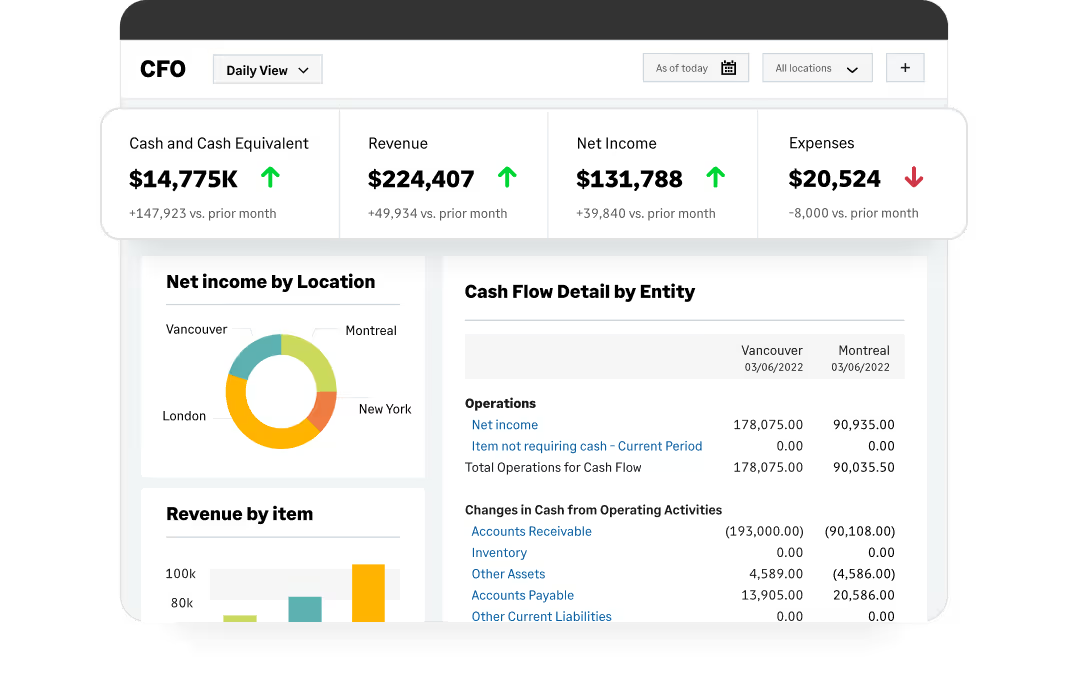
It's a robust accounting system with solid integrations and a mature feature set. However, it isn't a dedicated tax tool and typically needs integrations for tax-specific workflows.
Key CPA Firm Features
- Strong financial management and reporting
- Multi-entity and multi-location accounting
- Broad integration ecosystem
- Scalable for growing firms
Pros
- ✅ Strong core accounting and financial reporting
- ✅ Scales well as firm or client complexity grows
- ✅ Good multi-entity support
Cons
- ❌ Not a dedicated CPA or tax compliance tool
- ❌ Pricing varies by product tier and add-ons, which can make total costs difficult to predict. Budget carefully before committing
- ❌ Requires third-party integrations for full CPA workflows
Sage Intacct is best for small-to-mid-sized CPA firms where bookkeeping and payroll are the primary services. Firms moving into tax compliance, audit, or multi-entity work will typically need to supplement it.
5. QuickBooks Online
QuickBooks Online is the most widely adopted cloud accounting platform for small businesses and bookkeeping-focused practices.
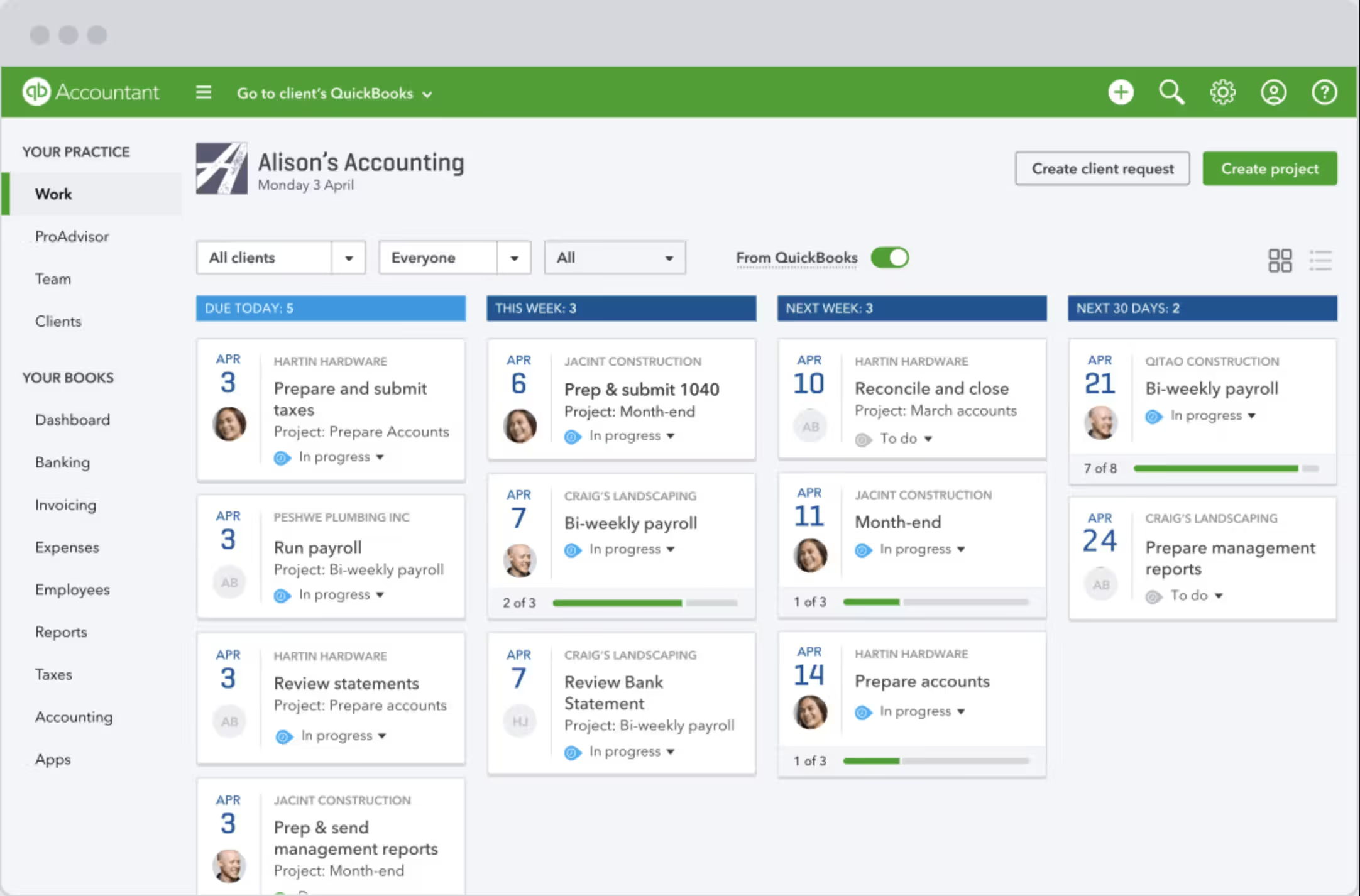
It handles core accounting, payroll, and basic reporting well, with a large ecosystem of integrations and accountant-facing tools. Larger or more complex firms will likely need additional software for compliance and audit requirements.
Key CPA Firm Features
- Bookkeeping and payroll management
- Cloud and mobile access
- Automated bank feeds and transaction categorization
- Customizable dashboards and financial reports
- Integration with a wide range of third-party tax and accounting apps
- Separate product for accountants and CPA firms
- Large network of certified ProAdvisors
Pros
- ✅ User-friendly interface with a short learning curve
- ✅ Excellent for bookkeeping and payroll management
- ✅Affordable pricing
Cons
- ❌ Not a dedicated tax or compliance solution
- ❌ Requires stacking with other tools for full CPA workflows
- ❌ Higher total costs when add-ons are needed
QuickBooks Online is best for small to mid-sized CPA firms where bookkeeping and payroll are the primary services. Firms moving into tax compliance, audit, or multi-entity work will typically need to supplement it.
6. Canopy
Canopy is a cloud-based practice management and tax resolution platform built specifically for accounting firms.
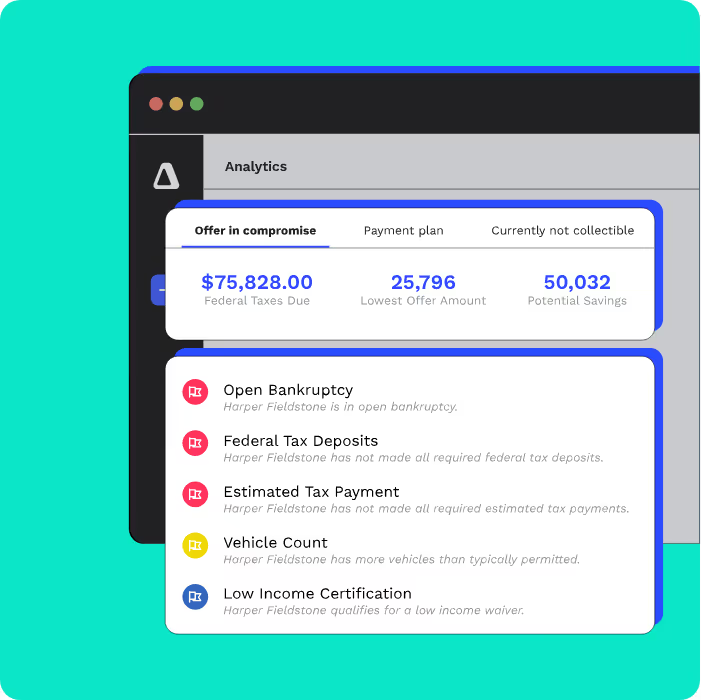
It provides a centralized environment for managing client records, tax preparation, case tracking, and workflow automation, alongside secure client portals for document sharing. Firms with advanced compliance requirements may still need supplemental tools, but for practices where client management and workflow efficiency are the priority, Canopy covers a lot of ground.
Key CPA Firm Features
- Tax resolution and preparation tools for client cases
- Client portals and document management
- Workflow automation and time/task tracking
- Built-in e-signature functionality
- Canopy AI
- Built-in CRM (highest plan only)
Canopy is best suited for small to mid-sized CPA firms that prioritize efficiency in tax preparation, resolution, and client management.
It’s especially valuable for firms that want to consolidate client communication, workflow automation, and document handling into one streamlined system.
Pros
- ✅ Practice management and workflow automation in one platform
- ✅ Strong client collaboration tools with secure portals
- ✅ Intuitive, easy-to-learn interface
Cons
- ❌ Lacks advanced compliance and reporting features
- ❌ May require additional tools for larger or more complex CPA firms
- ❌ Higher cost compared to basic practice management solutions
Canopy is best for small-to-mid-sized CPA firms that want to consolidate client communication, workflow automation, and document handling in one system.It's especially valuable for firms with significant tax resolution workloads.
7. Wolters Kluwer (CCH Axcess)
Wolters Kluwer's CCH Axcess is a cloud-based platform built for mid-sized to large CPA firms that need comprehensive tax compliance, audit support, and documentvmanagement at scale.
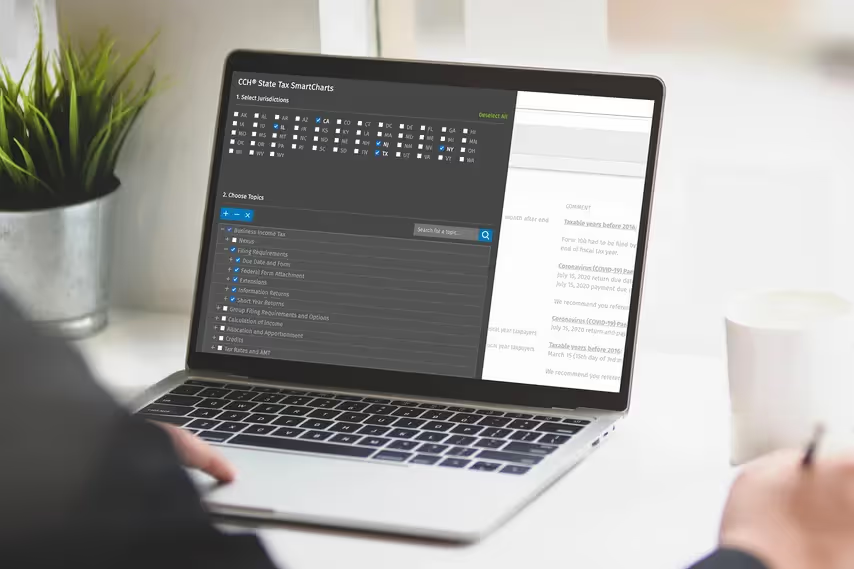
It integrates tax preparation, workflow automation,document management, and regulatory updates in one environment and is widely regarded as one of the most complete compliance-focused platforms available for firms with complex, high-volume client bases.
Key CPA Firm Features
- Comprehensive tax compliance and audit support
- Cloud-based platform (CCH Axcess) with secure document management
- Workflow automation across multi-staff environments
- Automatic regulatory updates
- Multi-entity and multi-jurisdiction filing capabilities
- Tax and accounting research tools
Pros
- ✅ Strong compliance and audit functionality
- ✅ Scalable for firms with large client bases or complex structures
- ✅ Frequent updates to stay aligned with regulatory changes
Cons
- ❌ Higher cost compared to lighter CPA software solutions
- ❌ Steeper learning curve due to advanced features
- ❌ May be excessive for small firms with straightforward compliance needs
Wolters Kluwer is best for mid-sized-to-large CPA firms that need deep compliance tools, advanced tax preparation, and robust audit support, particularly for US-based regulatory environments.
Accounting Software for CPA Firms: Side-by-Side Comparison
Here's how the seven tools compare on the dimensions that matter most for a CPA firm evaluation.
How to Choose Accounting Software for Your CPA Firm
The right platform isn't the most feature-rich or the most popular; it's the one that fits how your firm actually operates. Before committing, these are the questions worth asking:
- Does it provide encrypted document management and meet industry standards for client data protection?
- Are tax, audit, and compliance workflows built for CPA requirements rather than general accounting use?
- Can it handle multi-entity clients, high-volume transactions, and firm growth without requiring a new tool at every stage?
- Does it integrate with the tools your team already uses and automate the workflows currently eating your time?
- Is the interface practical for both staff and clients, and will onboarding create significant downtime?
- Can your team access it securely from anywhere, including remote or hybrid working environments?
If the answer to any of those is no (or not without an add-on that gap up in your workflow sooner or later.
Eleven was designed specifically to answer all of those questions for CPA firms and family offices. Encrypted document management, a universal tax engine, multi-entity and multi-currency support,automated compliance workflows, and secure client portals are all part of the core platform.
Want to see how it fits your firm's specific structure? A free trial is available at RunEleven — no sales conversation required. →
Frequently Asked Questions (FAQs)
What is the best accounting software for CPA firms?
There isn't a single best option for every firm. The right choice depends on your client base complexity, whether you need deep tax compliance tools, how many entities you manage, and your security requirements. Eleven is the strongest option for CPA firms and family offices that need compliance-grade security,multi-entity support, and a built-in DMS.
QuickBooks Online and Canopy are better fits for smaller firms focused on bookkeeping and practice management respectively. Larger firms with heavy compliance workloads typically use UltraTax CS or Wolters Kluwer CCH Axcess.
Do CPA firms need different software from regular accounting software?
Yes, in most cases. General accounting software is designed for business owners managing their own finances. CPA firms manage other people's finances across multiple clients, entities, and jurisdictions, with obligations around compliance, audit readiness, and document security that general tools weren't built to handle at scale.
What features should CPA firms prioritize?
The most important are compliance-grade security and encryption, a built-in document management system, automated tax calculation, multi-entity and multi-currency support, a universal tax engine for firms with clients across multiple jurisdictions, and advanced reporting that goes beyond standard financial statements.
Is QuickBooks Online enough for a CPA firm?
Fora small firm focused primarily on bookkeeping and payroll, QuickBooks Online is a capable and cost-effective starting point. As client complexity grows —multi-entity structures, tax compliance requirements, audit workflows), most firms find they need to supplement it with dedicated tools, which adds cost and integration complexity.
How much does accounting software for CPA firms cost?
Pricing varies widely. QuickBooks Online starts at around $38/mo. for the Simple Start plan. Canopy, UltraTax CS, and Wolters Kluwer CCH Axcess are generally price for mid-sized to large firms and are typically quoted on request. Eleven's pricing is structured for CPA firms and family offices managing multiple entities, and a free trial is available to test it against your current workflow before committing.
Was this article helpful?
Thank you! Your feedback has been received!
Oops! Something went wrong while submitting the form.