Full Xero Review With Updated US Pricing and Features (2026)
Home
/
Blog
/
7 Best QuickBooks Alternatives in 2026 (Compared by Use Case)
7 Best QuickBooks Alternatives in 2026 (Compared by Use Case)
Written by
Reviewed by
Managing dozens of entities in QuickBooks means manual consolidations, fragmented documents, and wasted time. This guide shows what modern alternatives do differently.

The best QuickBooks alternative isn't the same for every firm. Hitting the user cap is a different problem from hitting the multi-entity ceiling, which is a different problem from paying too much for features you don't use. This guide maps seven alternatives to the specific QuickBooks limitation each one solves, so you're choosing a replacement for the right reason, not just the most popular one.
QuickBooks is the most widely used accounting platform in the US for a reason. It handles single-entity bookkeeping, US tax compliance, and payroll well, and its ProAdvisor network means most accountants already know it.
However, users complain about cost pressure at scale, user caps that don't fit growing teams, the manual consolidation work that comes with managing more than one entity, and the architectural mismatch when a CPA firm or family office tries to use a single-business tool to manage dozens of clients.
Each of those problems has a different answer, and this QuickBooks alternatives guide points you to the solution you need.
If you’re looking for a QuickBooks review instead, we’ve got that covered.
Why Do Firms Look for a QuickBooks Alternative?
Before comparing platforms, it helps to name the actual problem. The right replacement for QuickBooks depends entirely on which limitation is driving the decision.
The 7 Best QuickBooks Alternatives at a Glance
Here’s a quick look at our recommendations, before we dive into the detailed reviews.
The 7 Best QuickBooks Alternatives in 2026
All of these QuickBooks alternatives target and solve one of the platform’s most limiting features.
1. Eleven — Best for CPA Firms and Family Offices Managing Multiple Entities
Eleven is the most direct answer to the specific limitation that matters most for professional accounting firms: no native multi-entity consolidation.
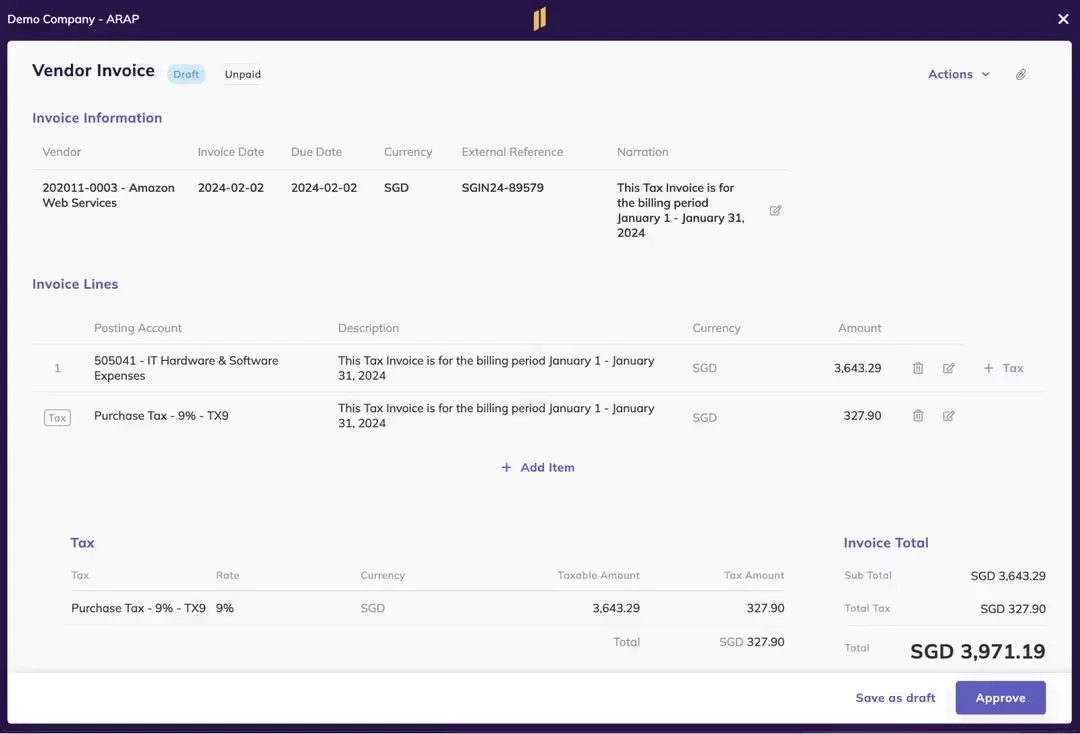
QuickBooks treats each company file as an isolated ledger. Eleven is built from the ground up for managing multiple legal entities under one platform, with native consolidated reporting, intercompany transaction support, and a unified dashboard across all entities.
When a client closes on QuickBooks, producing group financials means exporting reports from each entity separately and assembling them in a spreadsheet. On Eleven, consolidated reports are generated natively, in real time, with IAS 21-compliant FX handling for firms with international clients.
Who switches to Eleven from QuickBooks: CPA firms managing 10+ client entities who are spending many monthly-close hours on manual consolidation; family offices with multi-entity structures across different jurisdictions; and accounting practices where the QuickBooks ProAdvisor discount is no longer enough to offset the per-entity cost of isolated ledgers.
Note: Eleven uses per-entity pricing. The value difference from QuickBooks isn't the pricing model; both charge per entity. It's what you get per entity: native consolidation, a unified dashboard, 170+ currencies, and integrated DMS included on every Eleven plan vs. isolated ledgers on QuickBooks.
→ See our Eleven review for the full breakdown of the platform specifically built for multi-client professional practices.
2. Xero — Best for Growing Teams Hitting the User Cap
Xero's single biggest structural advantage over QuickBooks is unlimited users on every plan.
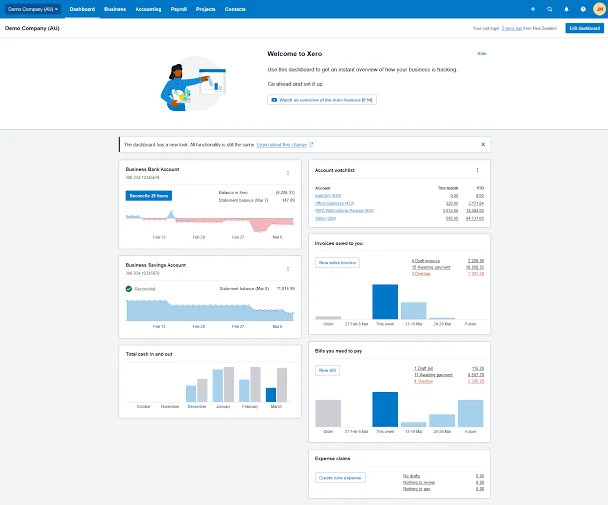
QuickBooks caps at 1 user on Simple Start and 25 on Advanced. Xero removes that constraint entirely; your entire team, plus external accountants, can access the same organization without a per-user cost.
Beyond users, Xero offers 160+ currency support from the Premium plan ($75/mo.), a clean bank reconciliation interface, and 1,000+ app integrations.
It's not dramatically cheaper than QuickBooks at comparable feature tiers, but the unlimited-user model makes the unit economics fundamentally different for larger teams.
Who switches to Xero from QuickBooks: Businesses with growing teams that are bumping against QuickBooks' user limits; firms outside the US where Xero's global reputation and international bank connections are stronger; and businesses that prioritize app ecosystem breadth over native payroll.
What to Watch For: Xero shares QuickBooks' core architectural limitation: each Xero organization is a separate subscription with no native multi-entity consolidation. If the reason you're leaving QuickBooks is the multi-entity ceiling, Xero doesn't solve that problem. It solves the user cap problem and offers better international coverage, but not group consolidation.
→ See our full Xero review and our detailed QuickBooks vs. Xero comparison for the full breakdown.
3. Zoho Books — Best for Price-Conscious Teams Wanting More Automation
Zoho Books offers more automation capability at lower price points than QuickBooks. The Professional plan at $50/mo. includes project accounting, multi-currency, purchase orders, and vendor credits: features that require QuickBooks Plus ($115/mo.) or Advanced ($275/mo.) to access.
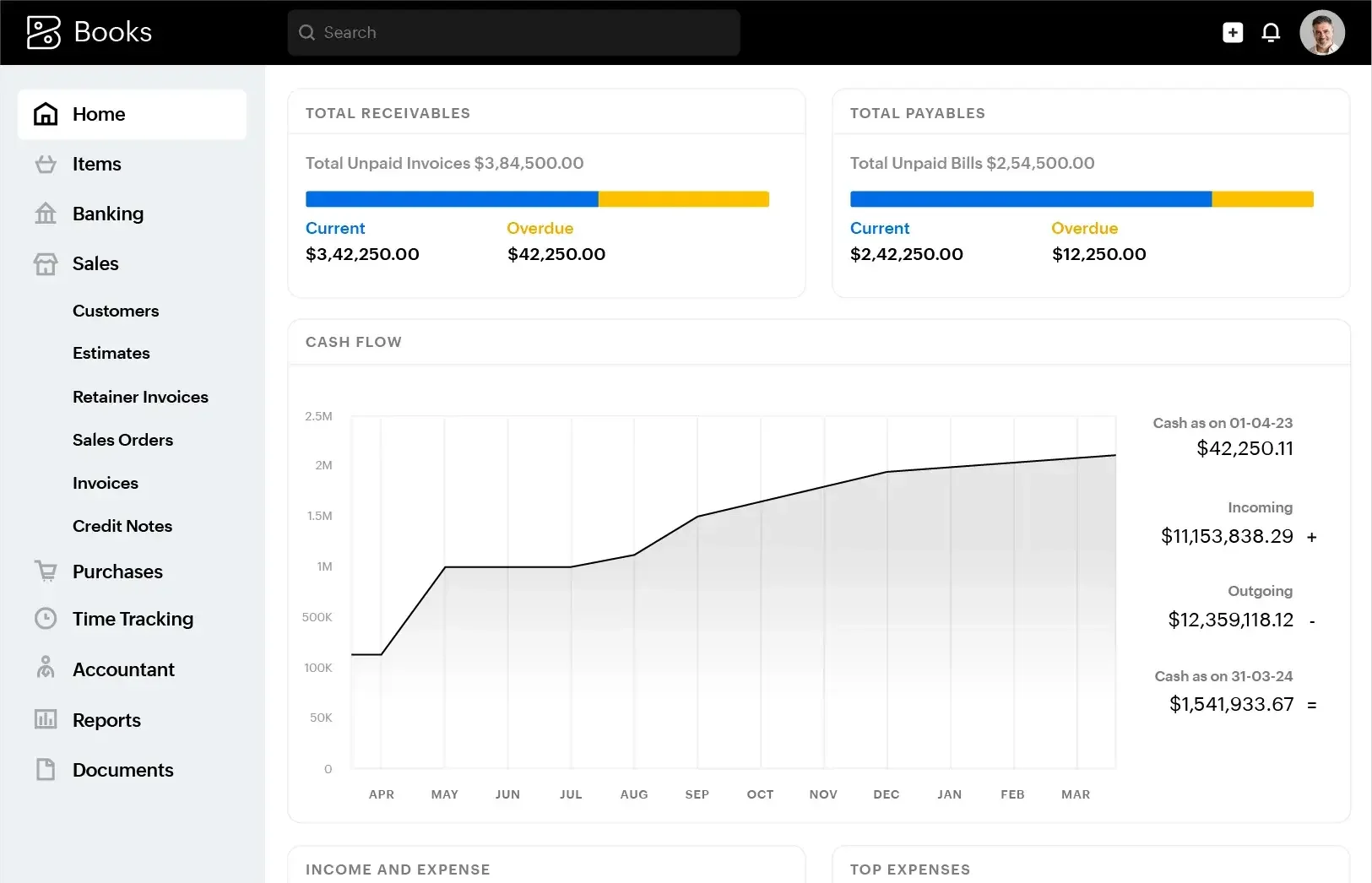
The automation tooling, including Zoho's scripting language Deluge and native integration with Zoho CRM, Inventory, and Analytics, is genuinely stronger than QuickBooks' equivalent.
There's a real free plan (for businesses under $50K annual revenue), which QuickBooks doesn't offer. The main tradeoffs are the invoice and transaction volume caps, no native US payroll, and narrower third-party integration breadth outside the Zoho ecosystem.
Who switches to Zoho Books from QuickBooks: Cost-conscious businesses paying for QuickBooks features they use a fraction of; internationally-oriented businesses where Zoho's VAT/GST tooling and multi-lingual invoicing are relevant; and businesses already using Zoho CRM or other Zoho products.
→ See our full Zoho Books review for the detailed feature and pricing breakdown.
4. Sage Intacct — Best for Mid-Market Organizations Needing ERP Depth
Sage Intacct is the right replacement when the problem isn't QuickBooks' price but its capability ceiling for complex internal finance operations.
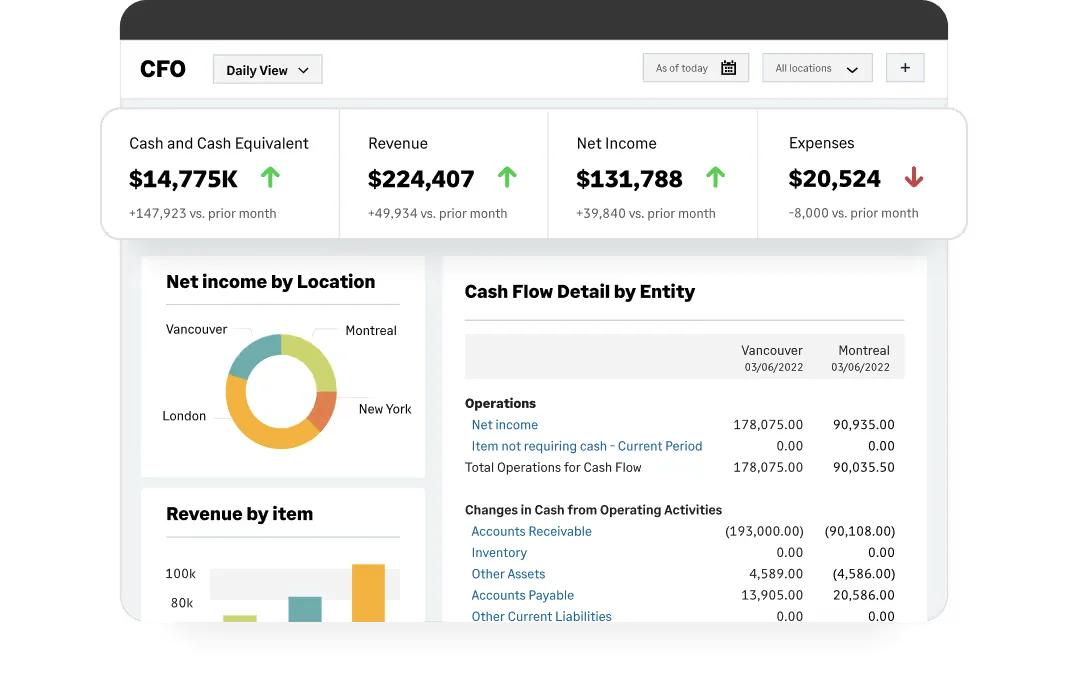
It's used primarily by mid-market organizations in nonprofits, SaaS, professional services, and healthcare that need dimensional reporting, multi-entity consolidation, and compliance-grade financial management without a full enterprise ERP.
It's AICPA-endorsed, supports both IFRS and GAAP with a 10-dimension general ledger, and produces consolidated group financials natively.
The implementation is heavier than any other option on this list and the price reflects that ($12,000-$75,000+/year depending on configuration), but for organizations that need what it does, it's the strongest option at this tier.
Who switches to Sage Intacct from QuickBooks: Mid-market organizations ($10M-$100M+ revenue) whose internal finance complexity has outpaced QuickBooks; nonprofits needing fund accounting; SaaS companies needing ASC 606 revenue recognition; and organizations needing multi-entity consolidation for their own internal operations (not for managing external client entities).
→ See our full Sage Intacct review for user feedback, pricing ranges, and implementation detail.
5. FreshBooks — Best for Service Businesses Focused on Invoicing
FreshBooks is the cleanest option for freelancers and small service businesses where invoicing, time tracking, and client communication are the core workflow.
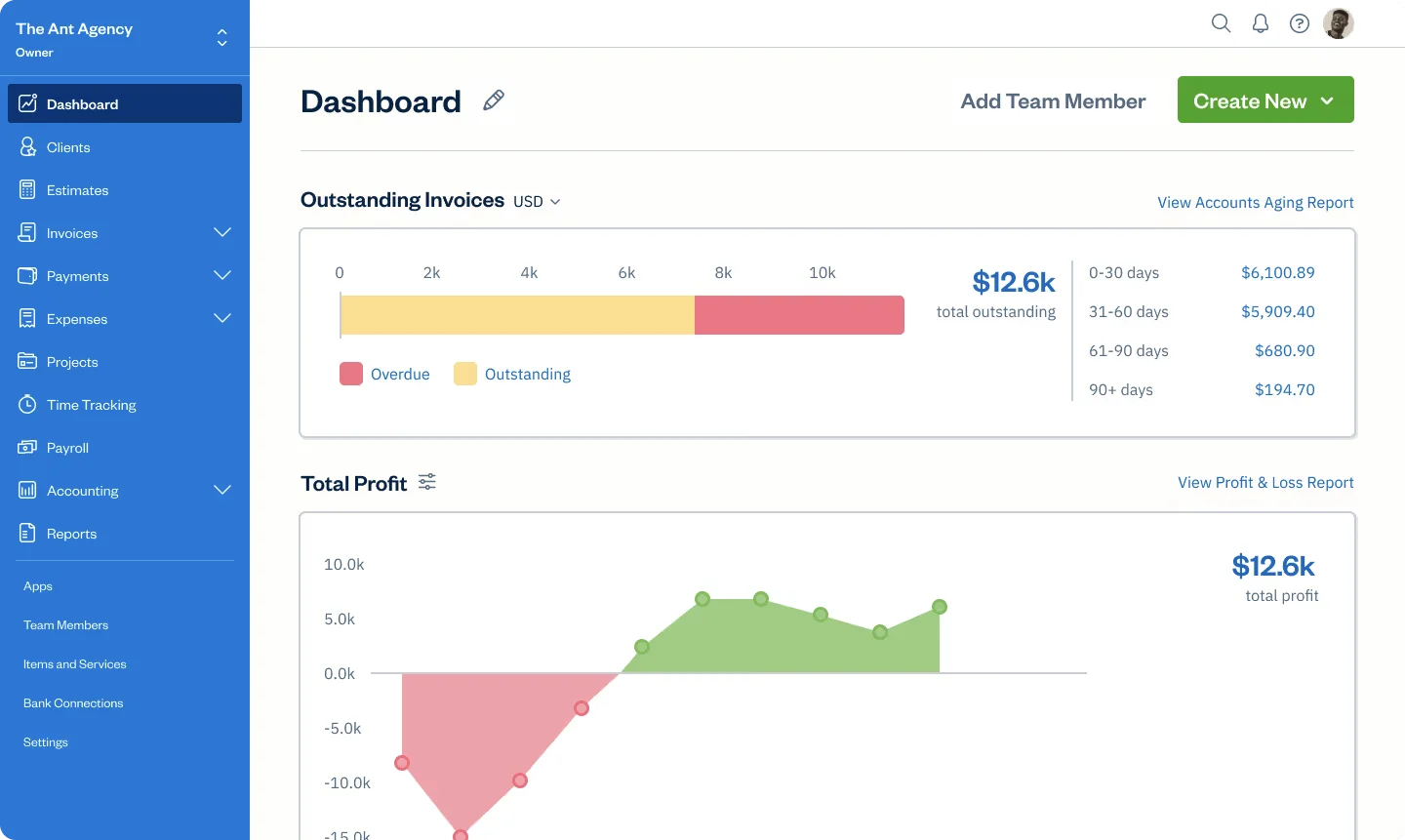
It's not trying to be QuickBooks; it's explicitly simpler, with a UI designed for business owners rather than accountants. If you've been using QuickBooks but only actually need invoicing, payment collection, and basic expense tracking, FreshBooks costs less and requires less.
The ceiling is equally clear: no inventory management, no payroll, no multi-entity support, and reporting depth that doesn't match QuickBooks at comparable tiers.
FreshBooks is a downgrade in capability and an upgrade in simplicity. Whether that trade makes sense depends entirely on which features you actually use.
Who switches to FreshBooks from QuickBooks: Freelancers and sole proprietors paying for QuickBooks features they don't use; service businesses for whom invoicing and time tracking are the primary accounting needs; and businesses that want an interface that doesn't require accounting knowledge to operate.
→ See our FreshBooks review for pricing ranges, user feedback, and platform features.
6. Wave — Best for Very Small Businesses That Need Free Accounting
Wave offers a genuinely free plan for accounting, invoicing, and receipt scanning. There are no invoice limits, no transaction caps, and no trial period. It’s permanently free.
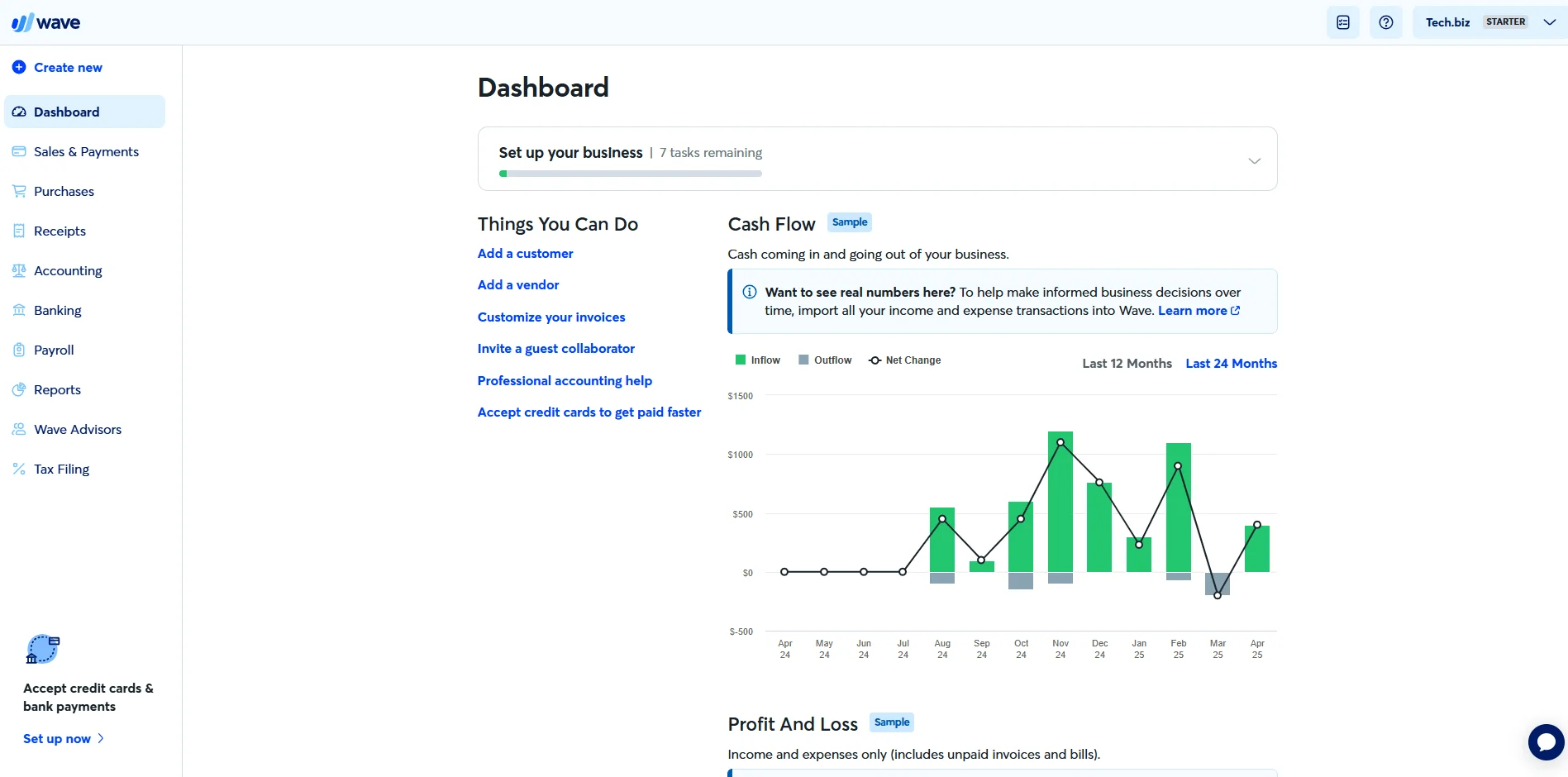
The business model runs on payment processing fees and optional paid services (payroll in the US and Canada, advisors). For a freelancer or very small business that's been paying QuickBooks Simple Start ($38/mo.) for basic bookkeeping, Wave removes that cost entirely.
The trade is obvious: Wave is much less capable than QuickBooks at every level beyond the basics. There’s no inventory, no project tracking, no sophisticated reporting, no multi-currency at the free tier, and payroll is a paid add-on.
It's not a replacement for anything QuickBooks Plus or Advanced is doing. It's a replacement for QuickBooks Simple Start when the feature set is more than you actually need.
Who switches to Wave from QuickBooks: Freelancers and sole traders using QuickBooks Simple Start who want to eliminate the subscription fee; very early-stage businesses with simple income/expense tracking needs; and businesses whose accountants are comfortable working with Wave's export formats.
→ See our Wave review for a full breakdown of the platform’s features, pricing, limitations, and user feedback.
7. Odoo — Best for Businesses Wanting Accounting Inside a Full ERP
Odoo Accounting is free forever if it's your only Odoo app and is genuinely capable at that price point, featuring 28,000+ bank integrations, 98% AI invoice recognition, unlimited invoices, and built-in expense management.
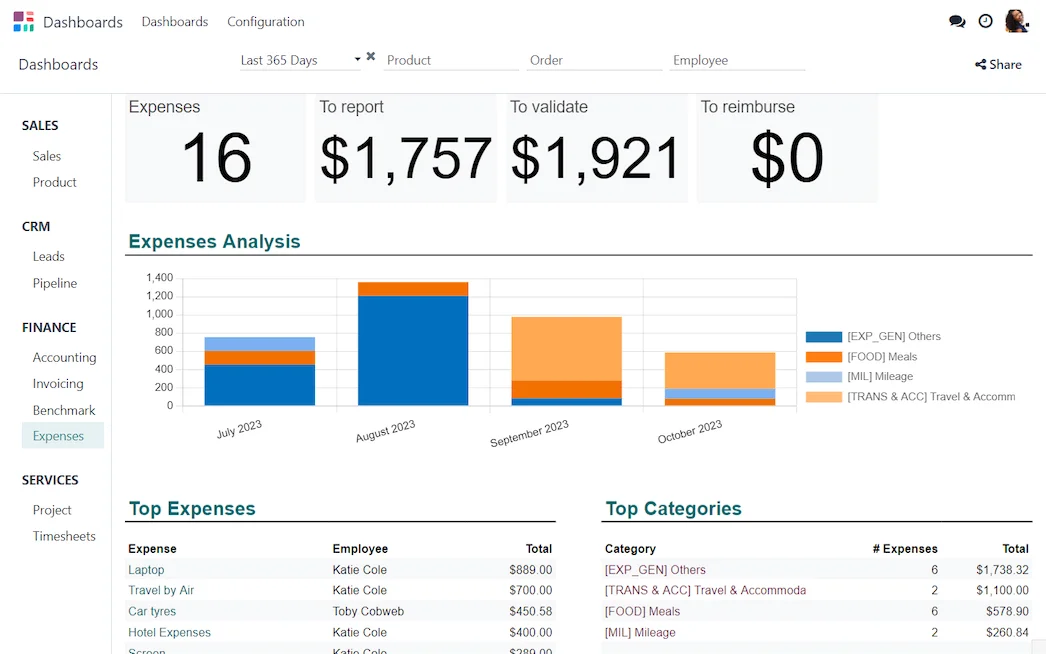
The real value proposition is what happens when you add the second and third Odoo app: CRM, inventory, manufacturing, HR, and project management all connect natively, eliminating the data silos that make most SMB software stacks inefficient.
The setup complexity is documented; Odoo rewards businesses that invest in proper implementation and punishes those that treat it as plug-and-play.
US tax localization is weaker than QuickBooks. But for businesses that want accounting embedded in a broader operational system and are willing to do the implementation work, the price-to-feature ratio is difficult to match.
Who switches to Odoo from QuickBooks: Businesses that have been paying separately for QuickBooks + a CRM + an inventory tool and want to consolidate onto one platform; businesses outside the US where Odoo's 160-country localization is an advantage; and technically resourced teams considering the free self-hosted Community edition.
→ See our full Odoo accounting review for the honest breakdown on setup, pricing, and who it fits.
How to Choose the Right QuickBooks Alternative
The single most useful question to answer before evaluating any alternative is, “What specific QuickBooks limitation is actually driving this decision?”
Pro Tip: The most common migration mistake is choosing an alternative based on price or interface preference before confirming it solves the actual architectural problem. Switching from QuickBooks to Xero because Xero is slightly cheaper doesn't help if the reason for leaving was multi-entity consolidation; Xero has the same limitation. Define the problem first, then find the platform that solves it.
QuickBooks Alternatives: Final Thoughts
QuickBooks is great for most single-entity businesses. It still does the job, and there’s no reason to switch if it’s meeting your needs.
If it isn't, the right replacement depends entirely on which ceiling you've hit. User cap, price, automation depth, or multi-entity consolidation are four different problems with four different answers. Match the platform to the problem, not to whatever's trending.
Running a CPA firm or family office and hitting the consolidation ceiling? Start a free 7-day Eleven trial and see what purpose-built multi-entity architecture actually looks like. →
Frequently Asked Questions (FAQs)
What is the best alternative to QuickBooks Online?
It depends on why you're leaving. For CPA firms and family offices managing multiple client entities, Eleven is the strongest alternative because it solves the multi-entity consolidation problem QuickBooks can't address. *
For growing teams hitting user caps, Xero's unlimited-user model is the most direct fix. For cost-conscious SMBs wanting more automation, Zoho Books delivers more features per dollar at comparable tiers.
There's no single best alternative; there's the right one for your specific limitation.
Is there a free alternative to QuickBooks?
Yes. Wave is permanently free for accounting, invoicing, and receipt scanning, with no invoice or transaction limits. Odoo Accounting is free forever as a single app with 28,000+ bank integrations and AI invoice capture. Zoho Books has a free plan for businesses under $50,000 annual revenue.
All three trade QuickBooks' US payroll integration and compliance depth for no subscription cost.
What do CPA firms use instead of QuickBooks?
CPA firms managing multiple client entities typically need a platform built for multi-entity management rather than a single-entity alternative to QuickBooks.
Eleven is purpose-built for this: unlimited entities from one dashboard, native consolidated reporting, 170+ currencies with IAS 21 FX handling, and entity-based pricing that includes consolidation value rather than just charging per isolated ledger.
Sage Intacct serves internal finance teams at mid-market organizations but isn't optimized for the outsourced multi-client model.
Why is QuickBooks losing customers?
The most consistent reasons are cost at scale (Advanced at $275/mo. per entity compounds quickly for firms managing many clients), the 25-user cap on the top plan, the absence of native multi-entity consolidation for professional practices, the Desktop discontinuation forcing migrations, and pricing increases that have pushed some SMBs to evaluate alternatives that didn't previously seem competitive.
QuickBooks remains strong for its intended use case (single-entity US businesses), but its limitations at the edges of that use case have become more visible as firms grow.
Is Xero better than QuickBooks?
For unlimited users and international coverage, Xero has structural advantages. For US payroll integration, domestic tax compliance, and the ProAdvisor network, QuickBooks leads.
Neither platform offers native multi-entity consolidation. The right choice between them depends on team size, geography, and whether you need payroll embedded in the same system.
Was this article helpful?
Thank you! Your feedback has been received!
Oops! Something went wrong while submitting the form.