8 Best Dunning Software for B2B and Professional Firms (2026)
Home
/
Blog
/
Full Xero vs Eleven Comparison for Growing Businesses (2026)
Full Xero vs Eleven Comparison for Growing Businesses (2026)
Written by
Reviewed by
A side-by-side comparison of Xero and Eleven covering features, multi-entity workflows, subscription costs, and switching considerations.
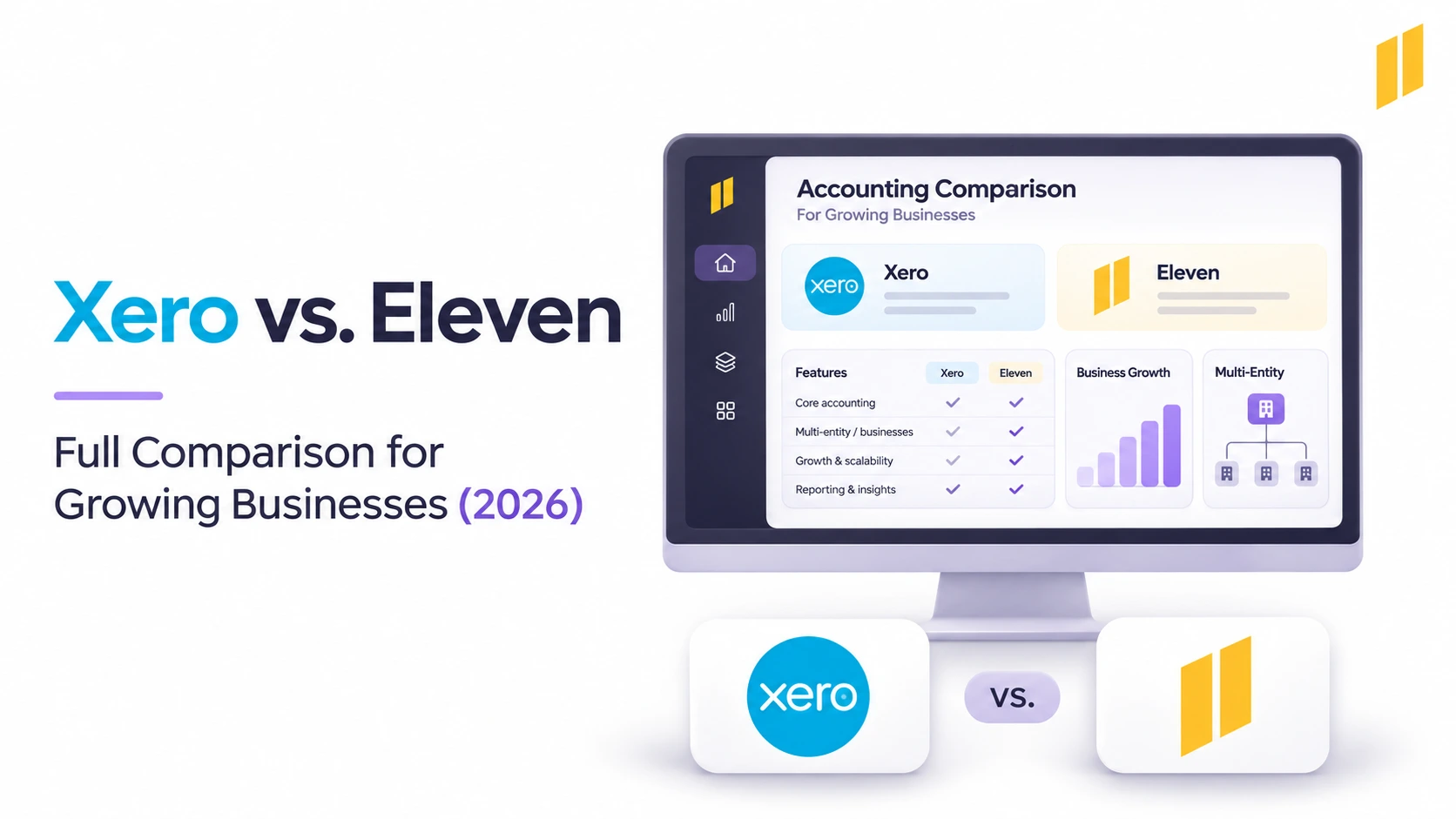
Xero and Eleven approach accounting differently. Xero offers established small-business features, unlimited users, and a large integration ecosystem, while Eleven focuses on managing many separate entity ledgers within one platform. This comparison examines their accounting capabilities, multi-currency support, reporting, US pricing, and potential subscription costs across portfolios of 10 to 100 companies. It also covers what accounting firms should consider before migrating from Xero to Eleven.
Xero vs Eleven comes down to how many companies you manage.
Xero is a strong accounting platform for a single business, with unlimited users and a huge app marketplace.
Eleven is built for accounting firms and family offices that keep the books for many entities, with one platform, unlimited users, and per-entity pricing that gets cheaper as you grow.
This comparison covers features, reporting, and 2026 US pricing, including what 10 to 100 companies cost on each, so you can see whether switching makes financial sense.
Before we start: Eleven publishes this comparison. To ensure complete transparency and fairness, we've used Xero's own pricing, user testimonials, third-party reviews, and product pages, and we point out where Xero is the better fit and where Eleven makes sense.
How we researched this: We used Xero's US pricing page and October 2026 price update, Xero's Syft and partner pages, and the platform’s third-party reviews and documentation. All information is up-to-date as of October 2026.
How Do Xero and Eleven Compare?
Xero charges a subscription per organization, while Eleven charges per entity with volume discounts. Here’s a quick breakdown:
Xero's biggest strength is its mature ecosystem: invoicing, bank feeds, a large app store, and a partner program for accountants.
Eleven is better when you have more separate companies you manage.
For a full look at Xero on its own, see our Xero review. We also fully cover Eleven in our Eleven review.
How Do Xero and Eleven Manage Multiple Companies?
Xero treats each company as its own subscription, and Eleven treats your whole portfolio as one platform.
In Xero, each set of books is an organization. You can access many organizations from one login, and Xero's Partner Program gives firms practice-management tools, training, and client oversight.
But every organization still needs its own subscription, and you work inside each one separately. A firm managing 30 clients is paying for and switching between 30 organizations. For a small client base that's fine. As the portfolio grows, the cost and admin add up.
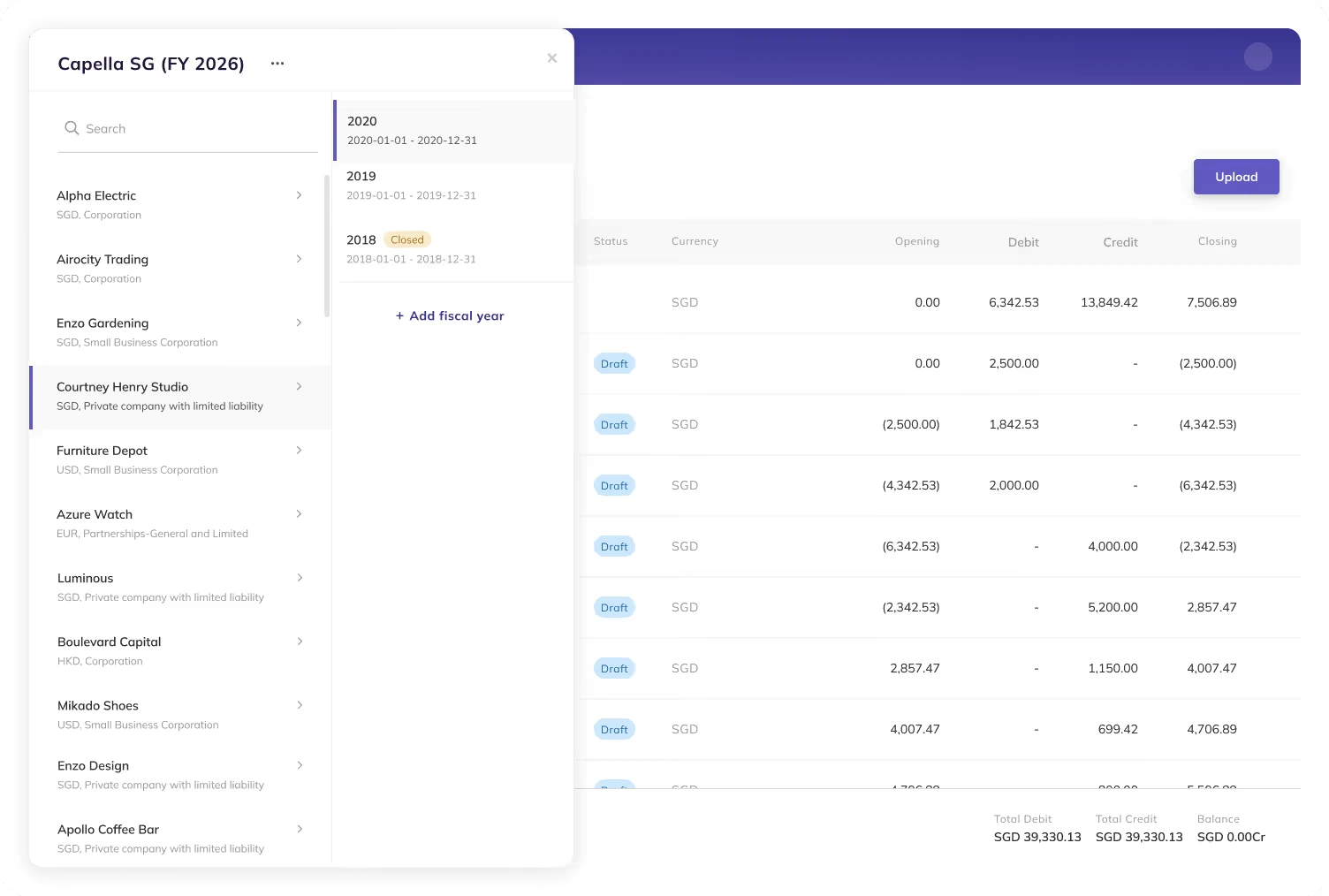
In Eleven, every client or legal entity keeps its own ledger, but they all sit in one platform and your team moves between them freely thanks to the platform’s multi-entity accounting capabilities.
Say your firm handles 40 companies: trading businesses, holding companies, and investment entities. Their ledgers, bank reconciliations, and documents all live in Eleven, and you pay per entity rather than per accountant.
Both platforms include unlimited users, but Eleven's per-entity rate also drops as you add companies, which makes growth easier to budget.
Which Is Better for Consolidated Reporting, Xero or Eleven?
Neither consolidates in its core ledger. Xero relies on Syft Analytics, and Eleven gives you API access to build group reports in your own tools.
Xero reports on each organization individually. For group reporting, Xero offers Syft Analytics, which handles consolidation across entities and currencies plus forecasting and management reporting.
Qualifying Xero partners can use Syft at no extra Syft subscription cost for clients on eligible Growing and Established plans. If your firm already runs on Xero's partner tools and Syft, that may be all the reporting you need.
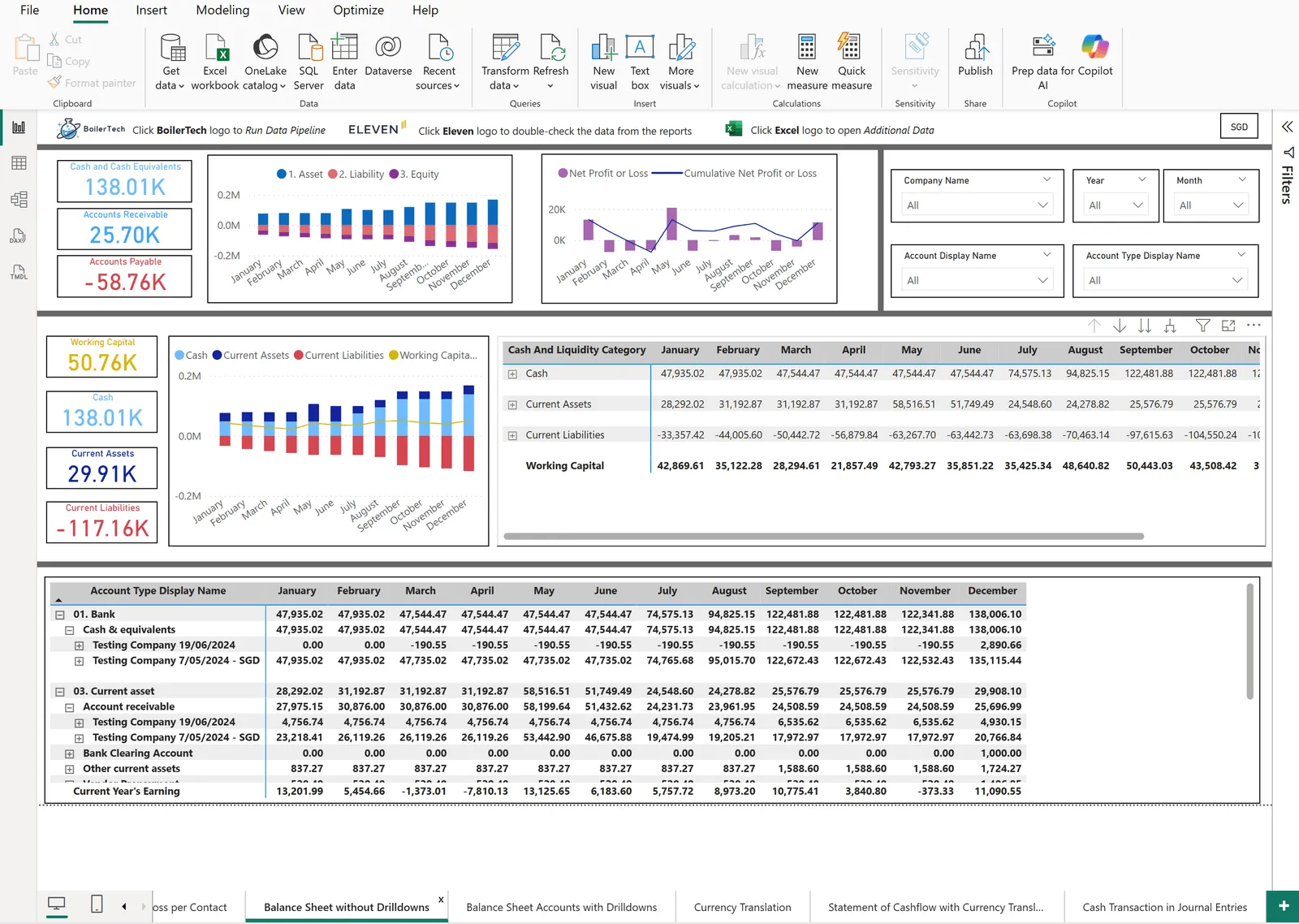
Eleven produces reports for each entity and lets you pull data from one or many entities through its API into Excel, Power BI, Tableau, Metabase, or Google Sheets.
If your family office already builds management reports in Power BI, you keep that workflow and feed it from Eleven.
Eleven doesn't currently automate consolidated statements or intercompany eliminations, so formal consolidations need those adjustments handled in your reporting tool.
Tip: If you want a ready-made consolidation app, Xero with Syft might suit you better. If you'd rather keep every ledger in one platform and use the BI or spreadsheet setup you already have, Eleven fits more naturally. Either way, intercompany balances and complex ownership still need an accountant's review.
How Do Xero and Eleven Compare on Accounting Features?
Both cover everyday accounting. Xero has the broader ecosystem, and Eleven focuses on processing many entities' books.
Which Is Better for Invoice and Document Processing?
Eleven is better for invoice and document processing. If you process documents across many clients. Xero's invoicing and payment workflow is mature, and its document capture cuts data entry for a single business.
Eleven's AI extraction is built for doing the same job across dozens of entities, which is where the time adds up.
In one published customer story, Alpadis reported that its accountants processed invoices 78% faster after ten months on Eleven. That's one firm's result, not a guarantee, but it shows why automation matters when the same task repeats across many clients.
Which Handles Multiple Currencies Better?
Eleven, on price. Xero only includes multi-currency on Established at $97 a month, so an international client often has to pay for the top plan even if it doesn't need the rest.
Eleven includes 170+ currencies and entity-level IAS 21 revaluation on every plan. Keep in mind that currency accounting within one entity isn't the same as translating and consolidating a whole group.
When Do Xero's Integrations Matter More?
When a client's accounting is wired into e-commerce, payroll, inventory, or payment apps, Xero’s integrations may be more helpful.
Xero's marketplace is much larger, so if clients depend on Xero-specific apps, check those before switching.
If your work is mainly general ledgers, bank reconciliation, invoice processing, and reporting, Eleven covers it without a stack of add-ons.
How Much Do Xero and Eleven Cost in 2026?
Xero costs $27 to $97 a month per organization, and Eleven costs $35 to $40 per entity per month before volume discounts.
How Much Does Xero Cost?
Xero has three main US plans, all with unlimited users:
Source: Xero’s US pricing, October 2026. Regular prices, excluding tax, add-ons, and promotions. Note that Xero has regional pricing.
Xero's October 2026 price update raised regular US prices and began phasing out the multi-organization discount.
Existing promo codes and discounts continue until they expire, so not every customer lost theirs overnight.
How Much Does Eleven Cost?
Eleven costs $35 per entity per month on Standard and $40 on Professional, with unlimited users on every plan.
Professional and Enterprise include implementation and migration; Standard charges for them separately. Enterprise is quoted.
The discount applies to every entity at that tier:
Based on pricing under an annual agreement. Excludes external reporting tools.
What Does Xero Cost for Multiple Companies?
At 50 companies, Xero Growing costs $16,200 more a year than Eleven Professional, and Xero Established costs $39,000 more.
Here are the annual subscription costs at regular list prices:
Xero at regular US list prices without discounts; Eleven at current volume rates; all companies on the same plan in each column. Excludes tax, add-ons, migration, and reporting tools.
Real portfolios are usually mixed. Say you manage 50 companies: 40 on Growing and 10 on Established because they need multi-currency.
- 40 Growing organizations at $708 a year each cost $28,320
- 10 Established organizations at $1,164 a year each cost $11,640
- Total Xero subscriptions sum up to $39,960 a year
Eleven Professional for the same 50 entities costs $19,200, a difference of $20,760 a year before switching costs and feature differences.
These are subscription differences, not guaranteed savings. Xero's partner plans, promotions, or Early subscriptions for very small clients can narrow the gap.
Do Xero's Partner Discounts Make the Platform More Affordable?
Xero’s partner discounts can help cut down the platform’s cost.
Eligible firms get access to lighter products such as Xero Ledger and Xero Simple, plus practice tools and Syft. Those may cost less for some clients, but they don't offer the full features of Growing or Established.
Before comparing, split your clients into those that need full accounting and those that qualify for a lighter plan. That's more accurate than assuming every company costs $97 a month.
How Do You Switch From Xero to Eleven?
To migrate from Eleven to Xero, plan it as a phased project, starting with one or two representative entities.
Eleven includes implementation and migration on Professional and Enterprise, and Standard customers pay for them separately. Work through these questions first:
- What data needs to move? Opening balances, open items, transaction history, and documents.
- Which integrations are essential? Bank connections, reporting tools, and any operational apps.
- Will the books reconcile? Test opening balances and compare financial statements before signing off.
- Who needs access? Plan how accountants and clients will work in Eleven.
- When should you move? A year-end or agreed reporting cutover usually makes reconciliation easier.
Your team still reviews and approves the migrated records, and the history and documents included should be agreed up front.
Xero's US subscriptions generally need one month's notice to cancel, so build that into your timeline. Our accounting system migration guide has a fuller checklist.
Should You Choose Xero or Eleven?
Choose based on how many separate companies you manage and what they need:
The strongest case for switching is a portfolio where many clients pay for Established mainly to get multi-currency. That's where a quick subscription audit usually finds the biggest savings.
For a firm-wide view, see our guides to accounting software for CPA firms and family office accounting software.
Still Paying for Dozens of Xero Subscriptions? Move Your Portfolio to Eleven
If you're paying a separate Xero subscription for every client, and the multi-organization discount is on its way out, it's a good moment to price the alternative.
We'd suggest pulling your organization list, noting which clients sit on Established, and running the numbers against Eleven's per-entity rates.
Eleven puts every client entity in one cloud platform, each with its own ledger, so your team works from one login instead of dozens.
Get unlimited users, AI capture for invoices and bank statements, 170+ currencies on every plan, and per-entity pricing that drops as your portfolio grows, as well as free implementation and migration from Xero on Professional.
Frequently Asked Questions (FAQs)
Can I manage multiple companies in Xero?
Yes. You can access many Xero organizations from one login, but each needs its own subscription and you work inside each one separately.
Is Eleven cheaper than Xero for multiple companies?
Often, especially for portfolios on Growing or Established. Fifty Xero Growing subscriptions cost $35,400 a year at regular list prices, while 50 entities on Eleven Professional cost $19,200.
Your actual savings depend on your Xero plans, partner discounts, and migration costs.
Does Xero offer multi-entity consolidation?
Not in core Xero. Xero's Syft Analytics adds consolidation and management reporting, and qualifying partners can use it for eligible subscriptions without an extra Syft fee.
Does Eleven have native consolidated reporting?
No. Eleven gives you reports for each entity and API access to one or many entities, so you can build consolidated reports in Excel, Power BI, or another tool.
Automated consolidation and intercompany eliminations aren't currently available.
Does Xero charge for additional users?
No. Xero includes unlimited users, and so does Eleven. The difference is that Xero charges per organization, while Eleven discounts its per-entity price as you grow.
Can I move all my Xero companies to Eleven?
Yes. Eleven supports multi-entity accounting and includes migration on Professional and Enterprise. Agree the scope up front, and for larger portfolios move in phases so your team can verify each group of entities.
Was this article helpful?
Thank you! Your feedback has been received!
Oops! Something went wrong while submitting the form.