

8 Best Bank Reconciliation Software in 2026 Compared by Use Case
Home
/
Blog
/
Family Office Accounting Checklist for Month-End and Year-End
Family Office Accounting Checklist for Month-End and Year-End
Written by
Reviewed by
A 15-task family office accounting checklist for month-end and year-end, with owners, completion evidence, and worked examples for multi-entity offices.
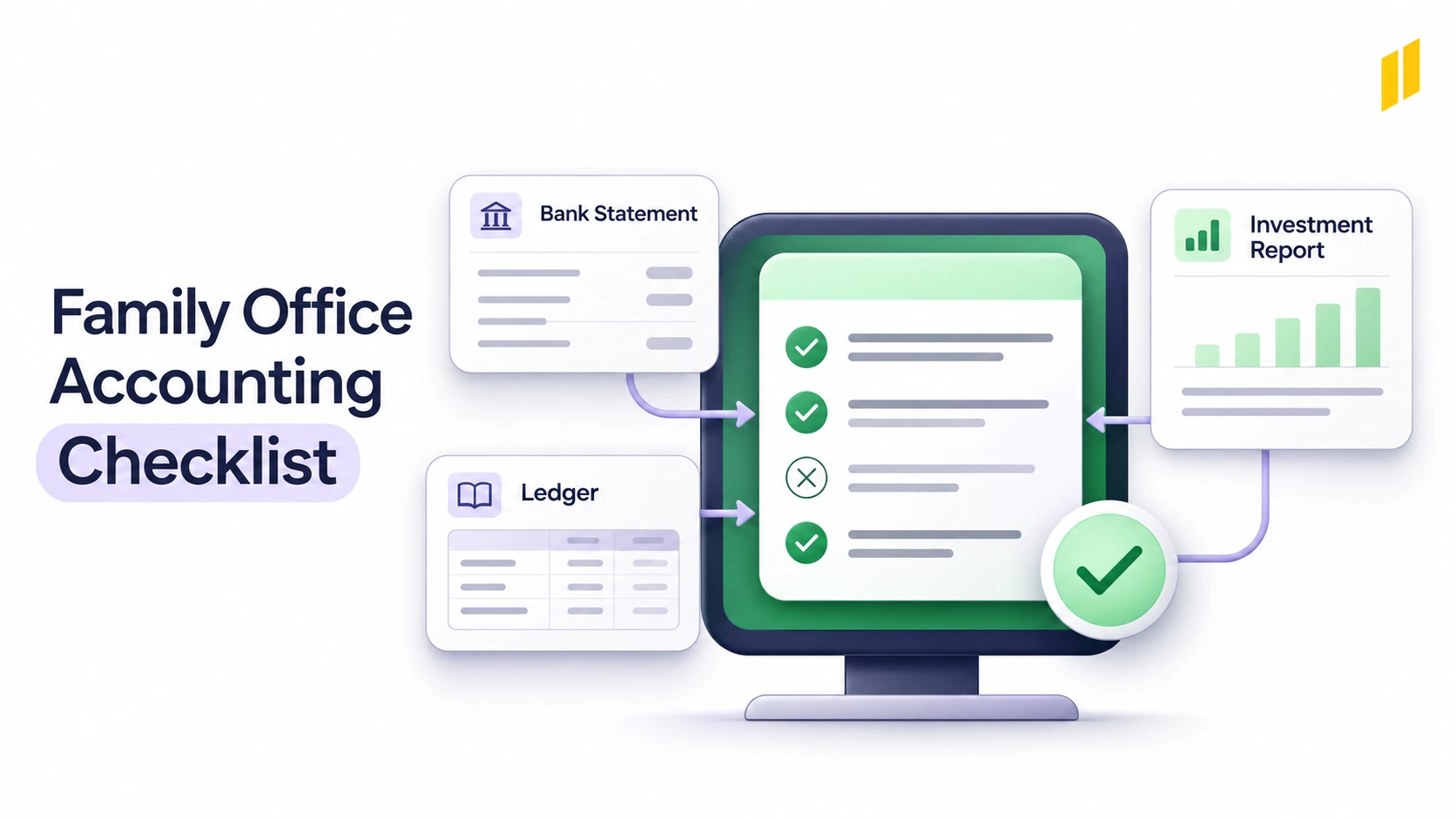
This checklist covers the 15 recurring tasks in a family office close, from confirming entities and collecting statements to reconciling intercompany balances and approving the final reports. Each step lists who should handle it and what evidence shows it's done, with worked examples for loans, capital calls, prepaid insurance, and foreign-currency balances.
The bank balances reconcile, then someone discovers a $12,000 payment recorded in the wrong entity, and the investment team is still waiting on a fund statement. Are the books ready to close? Not quite.
Family office accounting involves more than balancing individual accounts. Every entity needs accurate records, and the finance team must understand which figures are final before preparing reports for the family.
This family office accounting checklist covers 15 recurring tasks, from collecting source documents to approving the final reports. It also explains who should handle each task and what evidence confirms it's complete.
Family Office Accounting Checklist
Use the table below to organize your accounting close.
The suggested frequencies aren't universal requirements, so adjust them to your entities' activities and reporting schedules.
Need a checklist you can use every month?
Download our free, fillable Family Office Accounting Checklist (PDF) with all 15 tasks, responsibility fields, completion statuses, and a year-end review section.
A ticked box isn't necessarily a finished task. The accountant might have prepared a reconciliation, but someone still needs to review it.
For larger offices, give each task a due date and a status such as Open, Prepared, or Reviewed. Keep exceptions visible rather than marking incomplete work as finished.
How to Complete the Family Office Accounting Checklist
The steps below follow a typical month-end process. Investment statements and other records may arrive on different schedules, so you don't have to complete everything in a fixed number of days.
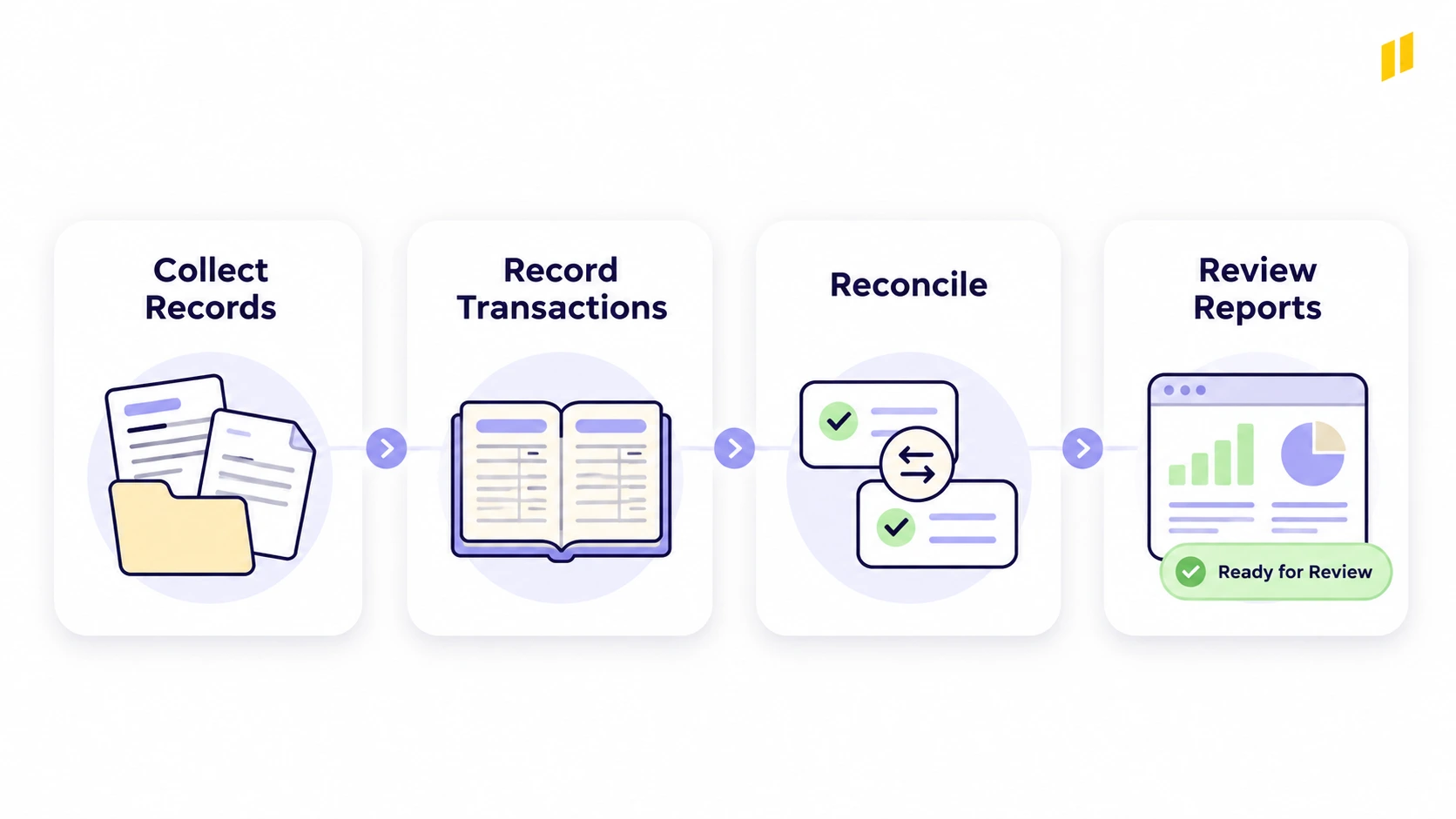
Step 1: Confirm Every Entity and Account
Start with an up-to-date list of legal entities and the accounts associated with them.
A family office might manage a holding company, several property entities, and a separate investment vehicle. Each needs its own accounting records, even when the same finance team handles the bookkeeping.
Record the legal entity, responsible accountant, reporting currency, and relevant financial accounts.
Also check for newly opened or closed accounts. An inactive bank account can still have a balance or a transaction that needs attention.
If your team manages several businesses, understanding multi-entity accounting will help clarify how the records remain separate.
Done when: Every entity and financial account is accounted for, with an assigned owner.
Step 2: Collect the Financial Records
You can't reconcile an account without knowing what its balance should be.
Collect bank statements, loan records, custodian statements, and relevant transaction documents. Check that each record covers the intended reporting period.
Some documents will arrive later than others, especially statements from private investment funds.
A simple receipt log keeps those gaps visible:
Keep source records linked to the correct entity. Eleven, for example, supports handling documents alongside accounting records, allowing accountants to refer back to the underlying evidence.
Done when: All expected documents have been received or assigned a follow-up action.
Step 3: Record Transactions in the Correct Entity
A payment appearing in a bank account doesn't automatically tell you how to classify it.
Review invoices and other supporting documents before recording a transaction. Check which entity incurred the expense, whether the amount belongs in the current period, and whether it's an expense, asset, liability, or transfer.
Pay attention to transactions involving family members or related businesses. A loan advance shouldn't automatically become an expense simply because money left the account.
This is also where Eleven's invoice extraction and journal-entry automation can help. The system extracts information from invoices and prepares corresponding records for accountant review before posting.
The accountant still decides whether the coding is correct.
Done when: Transactions are posted to the appropriate entity and supported by the underlying records.
Step 4: Reconcile Bank and Credit Card Accounts
Compare the general ledger against each bank or card statement.
Investigate transactions that appear in only one record. Common examples include payments still clearing the bank, duplicate entries, and bank charges that haven't been recorded.
Don't create an unsupported adjustment simply to force the balances to match.
Eleven's bank reconciliation workflow includes suggested transaction matches. Accountants review the suggestions and deal with exceptions rather than assuming every proposed match is correct.
Before signing off, check:
- Do the statement and ledger cover the same period?
- Are outstanding payments and deposits documented?
- Have unexplained differences been investigated?
Retain the reconciliation and the reviewer's approval.
Step 5: Reconcile Loans and Financing
Loan repayments often contain several accounting components.
Suppose a property company makes a $5,000 monthly loan payment consisting of $4,200 in principal and $800 in interest.
Recording the entire payment as an expense would leave the loan balance overstated.
Compare the outstanding principal with lender statements, and review changes to loan terms or repayment schedules.
Done when: The liability agrees with supporting records and the relevant interest has been accounted for.
Step 6: Review Investment Activity
A family's investment portfolio may include securities, managed accounts, and private investments.
The accountant needs to reconcile the activity behind the balances, not merely the total reported portfolio value.
Check purchases and sales against custody records. Review dividends, interest, investment fees, and any noncash transactions.
It's important to distinguish the value shown on a custodian statement from the amount recognized in the entity's accounts. The appropriate accounting treatment depends on the investment and reporting framework.
Keep the valuation date visible, especially when private asset information arrives quarterly.
Done when: Investment transactions and holdings agree with the available evidence, with unresolved differences documented.
Step 7: Update Capital Calls and Distributions
Private funds introduce another set of records. When a fund issues a capital call, the accountant should match the notice to the payment and update the unfunded commitment schedule.
Distributions also need careful classification. A payment from a fund isn't necessarily investment income, because it may contain returned capital or other components.
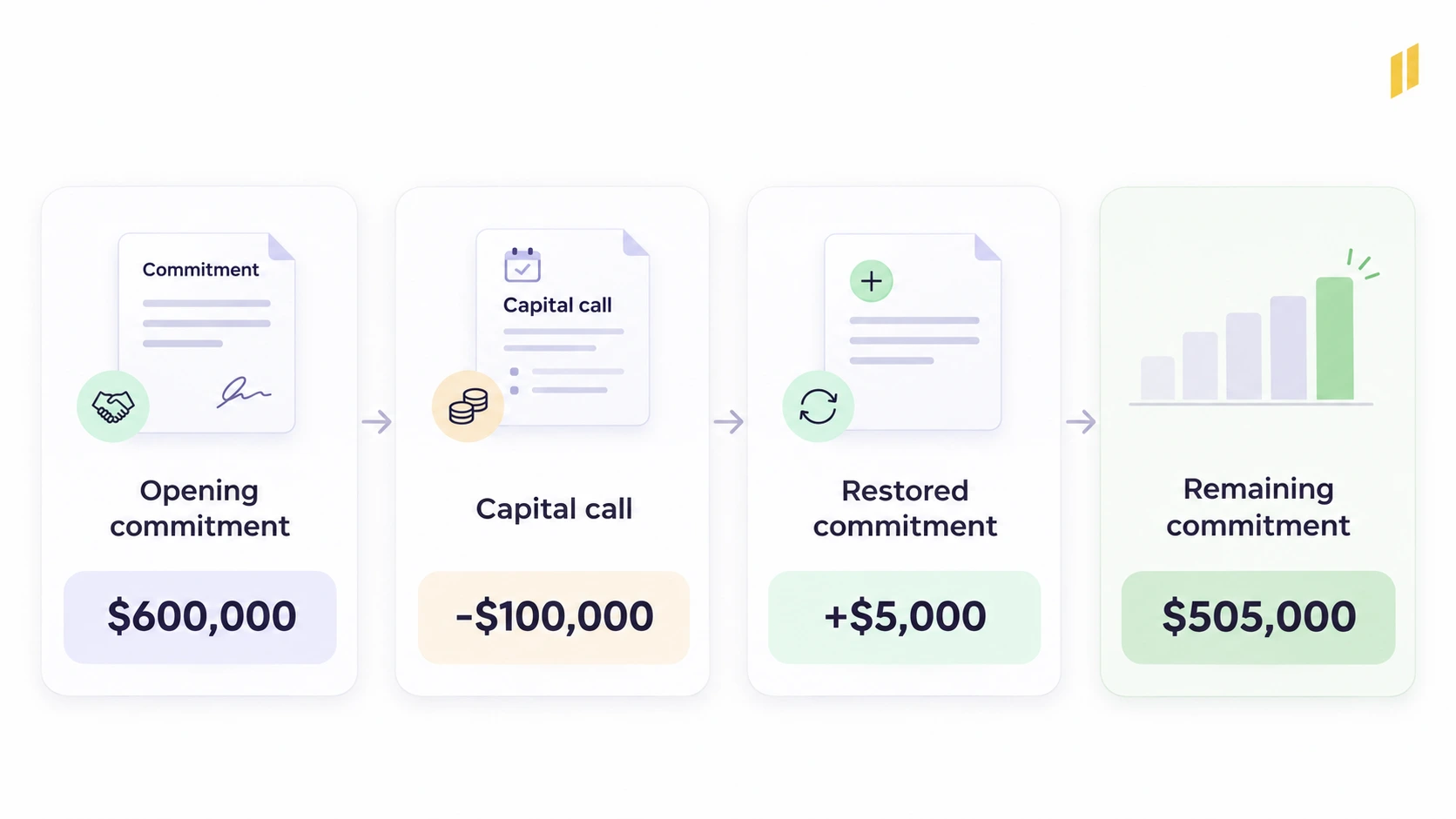
Consider this illustrative commitment calculation:
The $505,000 represents the remaining callable commitment under the example's assumptions. It isn't the fund's current market value.
The Institutional Limited Partners Association's capital call and distribution templates provide useful examples of the information fund managers may report.
Step 8: Reconcile Intercompany Balances
Family entities sometimes pay expenses or transfer funds on one another's behalf. These transactions must be recorded in both entities' books.
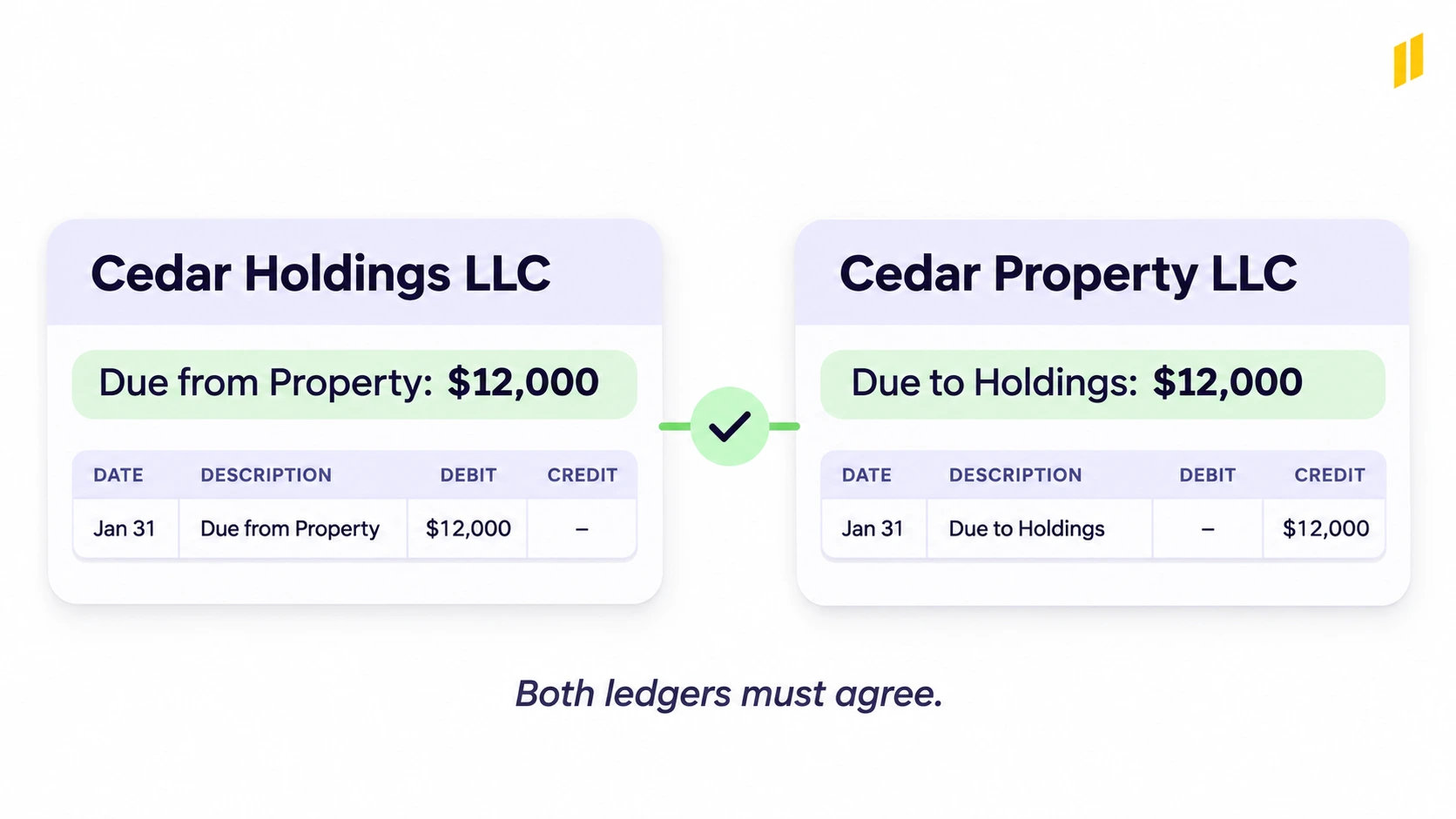
For example, Cedar Holdings LLC pays a $12,000 insurance bill for Cedar Property LLC.
Cedar Holdings records a $12,000 receivable from the property company. Cedar Property records a matching payable, assuming the payment is reimbursable.
At month-end, both accountants need to agree on the balance.
If one ledger shows $12,000 and the other shows $10,000, investigate the difference before approving the close.
Intercompany reconciliation isn't the same as consolidation. Matching balances may later require elimination in formal group reporting, but that doesn't remove the original transactions from each entity's books.
For the journal entries and reconciliation process, see how intercompany accounting works.
Step 9: Review Accruals and Prepayments
After reconciling transactions, check whether adjustments are needed for the reporting period.
Under accrual accounting, an expense may need to be recognized before the invoice is paid. A prepaid expense, meanwhile, may need to be allocated over several months.
Take the $12,000 annual insurance policy from the previous example.
If coverage begins on October 1 and lasts 12 equal months, the October adjustment would be:
- Insurance expense: $1,000
- Remaining prepaid insurance: $11,000
The accountant should retain the insurance policy and the adjustment schedule.
The same principle applies to other expenses that span several reporting periods, subject to the relevant accounting policy.
If your office manages entities using different reporting bases, learn the difference between cash and accrual accounting.
Step 10: Review Foreign-Currency Balances
Family offices with international holdings may maintain accounts in several currencies.
At the reporting date, review foreign-currency monetary balances and apply the appropriate exchange-rate treatment under the entity's accounting framework.
For example, suppose a company with a USD functional currency holds €50,000 in cash.
If the carrying rate changes from $1.10 to $1.08 per euro, with no other activity, the USD value falls from $55,000 to $54,000.
That produces a $1,000 foreign-exchange loss in this ordinary example.
Keep the currency amount and the rate used in the calculation. Not every asset follows the same revaluation rules as cash.
Eleven supports multi-currency journal entries and can prepare draft FX revaluation journals for review.
Step 11: Review Trial Balances and Open Items
Once the accounting adjustments are posted, review each entity's trial balance.
Look beyond whether total debits equal total credits. A balanced trial balance can still contain incorrect account classifications.
Pay particular attention to old suspense balances, unexplained changes from previous periods, and transactions involving owners or related entities.
Keep an exception log for anything that requires further investigation.
An unresolved item should have an owner and a next action. If an estimate is appropriate for the intended report, the supporting basis and the remaining uncertainty should be documented.
Step 12: Prepare Each Entity's Financial Reports
Use the reviewed ledger to prepare the reports required for each entity.
The relevant outputs may include a balance sheet, income statement, trial balance, and other reports required by the intended reporting framework.
Make sure the reports reflect the approved period and accounting entries.
Eleven lets accountants generate entity-level financial reports, with options to examine the underlying ledger information.
Don't confuse management reports with a complete set of formal financial statements. A balance sheet and income statement may be sufficient for a particular internal review without satisfying every requirement of US GAAP or IFRS reporting.
Step 13: Prepare Family or Group Reporting
Once the individual entity records are ready, the controller can prepare the information needed for family-wide reporting.
That might mean a summary of selected investments and liabilities, or a more formal reporting package.
But note the reporting method. A family-owned holding company may have investments in subsidiaries that also maintain their own assets and liabilities. Simply adding every balance together can double-count economic interests.
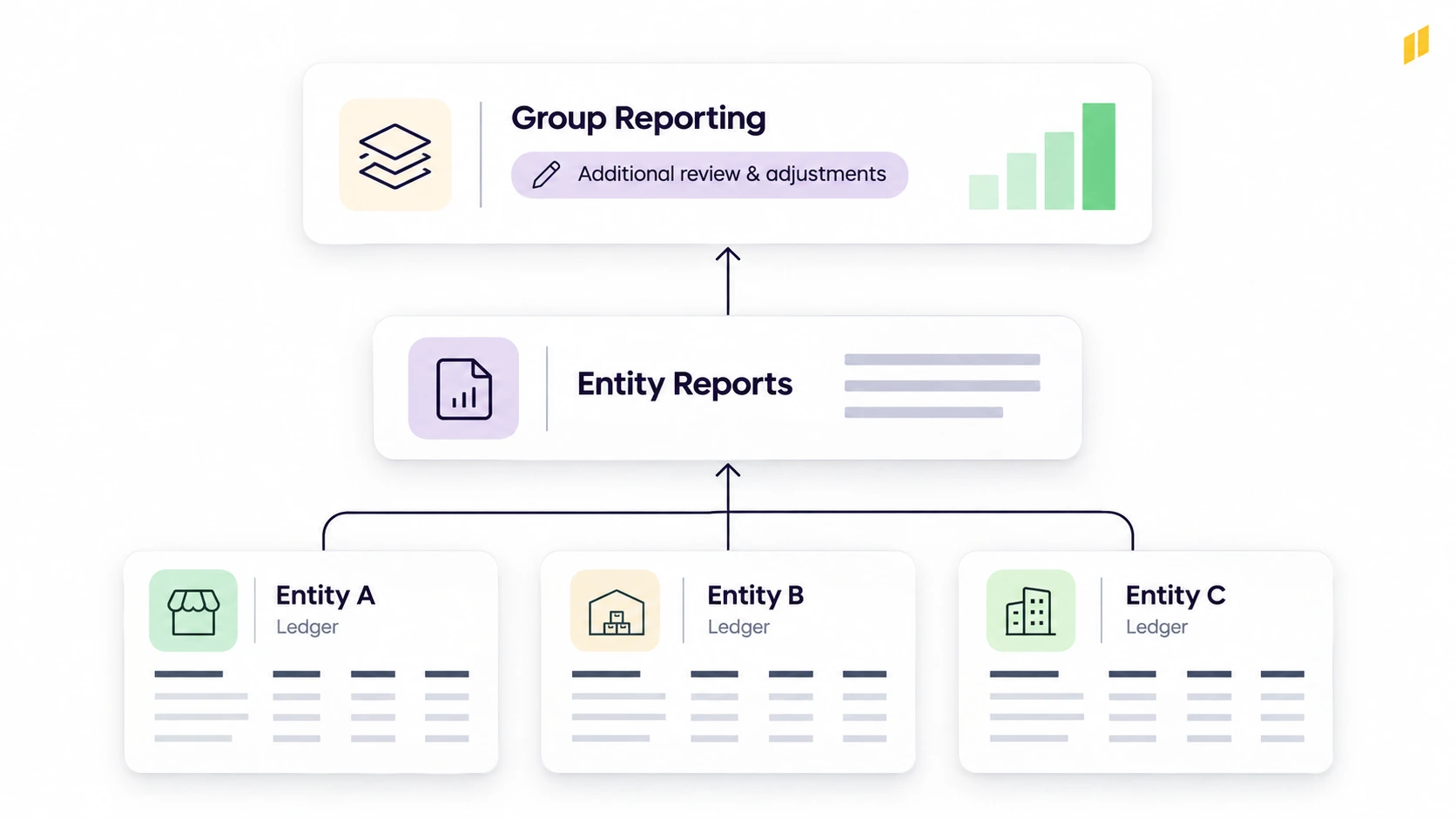
Formal consolidated statements require the appropriate reporting scope and adjustments. Shared ownership or administration doesn't automatically determine the consolidation requirements.
For context on different legal and operating arrangements, see how family office structures can vary.
Eleven supports entity-level reporting, but it does not currently automate formal group consolidation or intercompany eliminations. Those tasks require additional accounting work or external reporting tools.
Step 14: Complete the Year-End Checks
Year-end repeats the regular close procedures, then adds work needed for annual reporting and tax preparation.
The exact requirements depend on each entity's fiscal year and obligations.
For US entities, investment partnerships may issue Schedule K-1 forms. These can report taxable allocations that differ from cash distributions, so don't rely on cash activity alone.
The IRS recordkeeping requirements also help explain which source records should support the accounting and tax information.
Avoid treating December 31 as the universal year-end for every entity.
Step 15: Approve and Archive the Close
The final step is to document what was reviewed and which version of the reports was approved.
Record the preparer and reviewer for the key reconciliations. Keep supporting documents accessible to the people who need them.
For outstanding issues, use a simple status tracker:
Don't erase unresolved issues merely because the reporting period has ended.
If a closed period must be reopened, record the reason and preserve the changes.
Before starting the next period, confirm that the opening balances agree with the approved closing records.
Example: How the Checklist Works Across Multiple Entities
Consider a fictional family office managing four entities:
Although the same accounting team maintains all four ledgers, each entity has its own records.
During an October close, the team identifies three issues:
- First, Cedar Holdings paid the property company's annual insurance bill. Both entities need matching intercompany entries, and the property company must recognize the appropriate monthly insurance expense.
- Second, Cedar Investments received a private fund capital call. The accountant needs to reconcile the payment and update the unfunded commitment schedule without confusing that balance with the investment's market value.
- Third, the investment manager hasn't issued its latest valuation statement. The controller records the missing information and determines how it affects the intended reporting package.
The office can finish the supported accounting work while tracking outstanding information. Whether a report may be issued with provisional figures depends on its purpose and the applicable reporting requirements.
This is why the checklist needs more than completion boxes. It needs evidence, ownership, and an explicit record of unresolved items.
Bring Your Family Office Accounting Together With Eleven
Managing several family entities means keeping their records separate without making everyday bookkeeping unnecessarily complicated.
Eleven's family office accounting solution lets teams work with multiple entity ledgers in one environment. Accountants can review extracted invoice data, use suggested bank reconciliation matches, prepare draft FX adjustments, and generate financial reports for individual entities.
Those features support the recurring accounting tasks in this checklist while leaving financial review and approval with the accountant.
Try Eleven free to see how its bookkeeping and entity-level reporting features can support your family office's month-end close.
Frequently Asked Questions (FAQs)
How Often Should a Family Office Close Its Books?
Many family offices prepare monthly or quarterly internal accounts, depending on their transaction volume and reporting needs.
Each entity may also have annual financial reporting and tax obligations.
Monthly closes help teams identify reconciliation problems earlier, but there isn't one universal deadline for every family office.
What Should You Do If an Investment Statement Is Late?
Record the missing statement and contact the investment manager or custodian.
If the intended reporting process permits a provisional estimate, document its basis and the original valuation date.
Don't present an older valuation as current without assessing the effect of subsequent transactions or other relevant information.
Should a Family Office Consolidate All Its Entities?
Not automatically. Formal consolidation depends on the reporting framework and the relationships between entities.
A family office may also prepare an internal wealth report that combines selected financial information without producing formal consolidated statements.
The controller or technical accounting adviser should define the scope.
Who Should Approve the Month-End Checklist?
The accounting team prepares the entries and reconciliations, while a controller, CFO, or another qualified reviewer approves the completed work.
Smaller offices may need alternative review controls when employees cannot fully separate responsibilities.
The reviewer should have access to the supporting evidence, not just the checked boxes.
What Records Should Be Retained After Closing?
Keep approved financial reports and relevant supporting records, including reconciliations, adjustment schedules, and source documents.
Record review approvals and any changes to previously finalized entries.
Retention periods vary by document type and applicable obligations. The IRS guidance on how long to keep records explains why a single retention period doesn't apply to everything.
Was this article helpful?
Thank you! Your feedback has been received!
Oops! Something went wrong while submitting the form.