Full Xero Review With Updated US Pricing and Features (2026)
Home
/
Blog
/
6 Best Invoice Approval Software for Accounting Firms (2026)
6 Best Invoice Approval Software for Accounting Firms (2026)
Written by
Reviewed by
Invoice approval mistakes slow payments and create accounting risk. This guide compares the best invoice approval software in 2026, with a focus on tools built for accounting firms, CPA practices, and finance teams managing multiple entities.
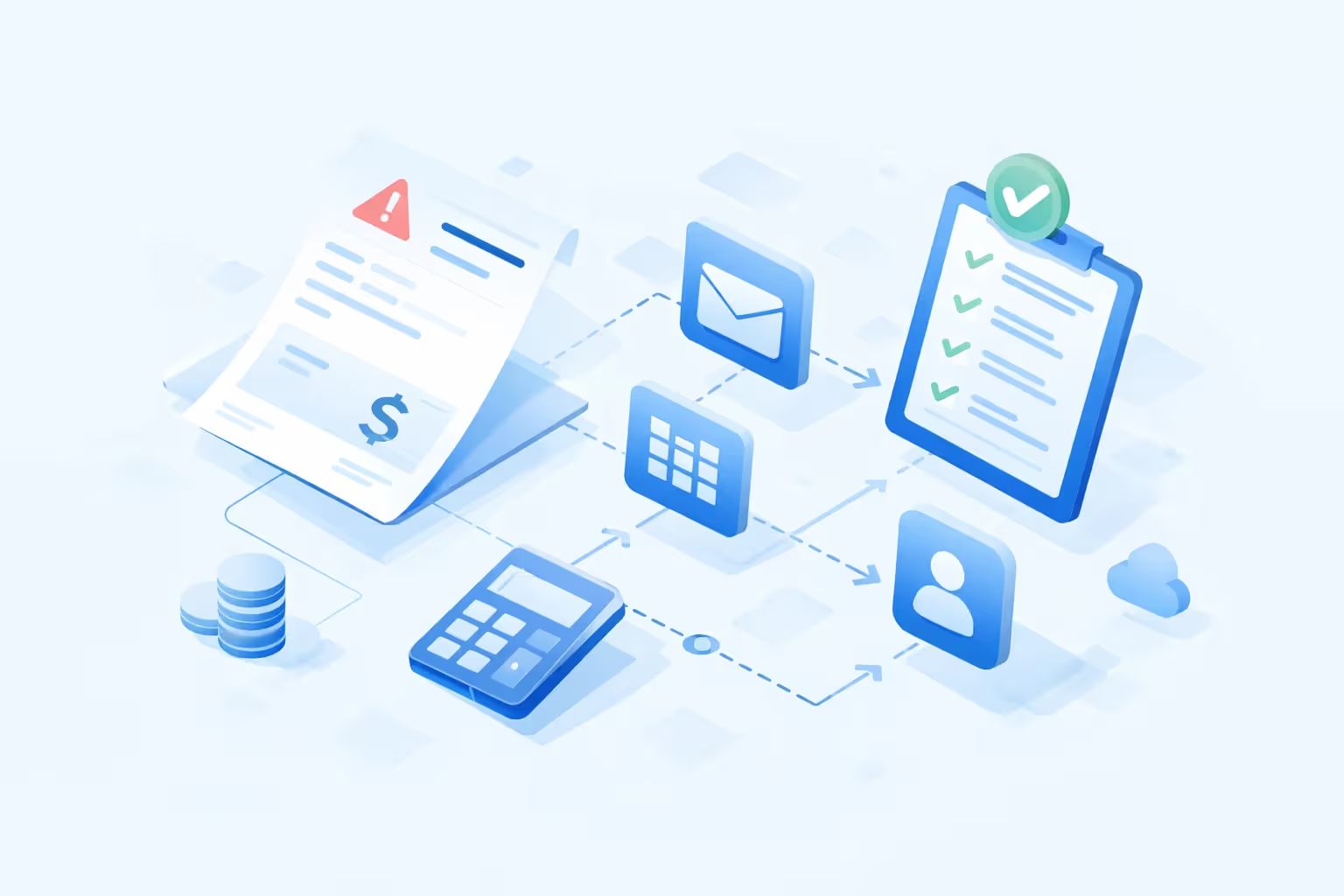
Invoice approval software brings structure, visibility, and control to how invoices are reviewed and approved. Learn how leading platforms work, what differentiates them, and which solutions best fit accounting firms, family offices, and growing finance teams.
Most invoice errors don't happen at entry. They happen during approval, when invoices sit in an inbox, get forwarded to the wrong person, or get approved without anyone checking against a purchase order. Research by DocuClipper puts manual workflow error rates as high as 39%.
For an accounting firm managing 20 client entities or a family office running intercompany transactions across three jurisdictions, that error rate is an audit risk.
This guide compares the six best invoice approval software in 2026, ranked by fit for professional accounting environments.
Why Invoice Approval Matters
Invoice approval software automates how invoices are routed, reviewed, and posted to your books, replacing email chains and spreadsheet sign-offs with structured workflows, audit trails, and direct accounting integration.
For accounting firms and family offices, the distinction is whether the tool handles invoice approvals standalone or embeds them inside a full accounting workflow.
Standalone tools require manual syncing to your general ledger (GL); integrated platforms like Eleven post approved invoices directly to the right entity's ledger without a separate step.
Best Invoice Approval Software at a Glance
Here's how the main platforms compare before the detailed breakdown.
What Is Invoice Approval Software?
Invoice approval software automatically routes invoices through a predefined approval workflow, ensuring every invoice is reviewed, approved, or rejected by the right people before payment.
Instead of relying on email threads, shared inboxes, or Slack messages, the software creates a consistent approval path based on rules you configure (amount, vendor, department, entity, or any combination).
Every decision is logged with a timestamp, and every approver sees exactly what requires action, giving finance teams a clear view of what's approved, rejected, or still waiting.
Here’s what happens under the hood:
- Invoice capture: the system extracts data from PDFs, emails, scanned images, or direct vendor feeds using AI and OCR.
- Validation: checks for duplicates, missing fields, and mismatches against purchase orders or contracts.
- Routing: invoices are automatically directed to the right approvers based on your rules.
- Approval action: approvers approve or reject from within the platform, via email, or on mobile.
- GL posting: approved invoices sync directly to your accounting or ERP system.
- Audit trail: every action is logged with a timestamp, user, and decision and is retrievable in one click.
Standalone invoice approval tools automate the workflow but still require a manual sync step to post to your GL. Platforms with native accounting integration, where the invoice approval is built into the same system as the general ledger, eliminate that step entirely and reduce the reconciliation risk that comes with data moving between two systems.
1. Eleven — Best Invoice Approval Software for CPA Firms and Family Offices
Eleven’s invoice approval isn't a standalone module; it's part of a complete accounting system built for multi-entity, multi-currency environments.
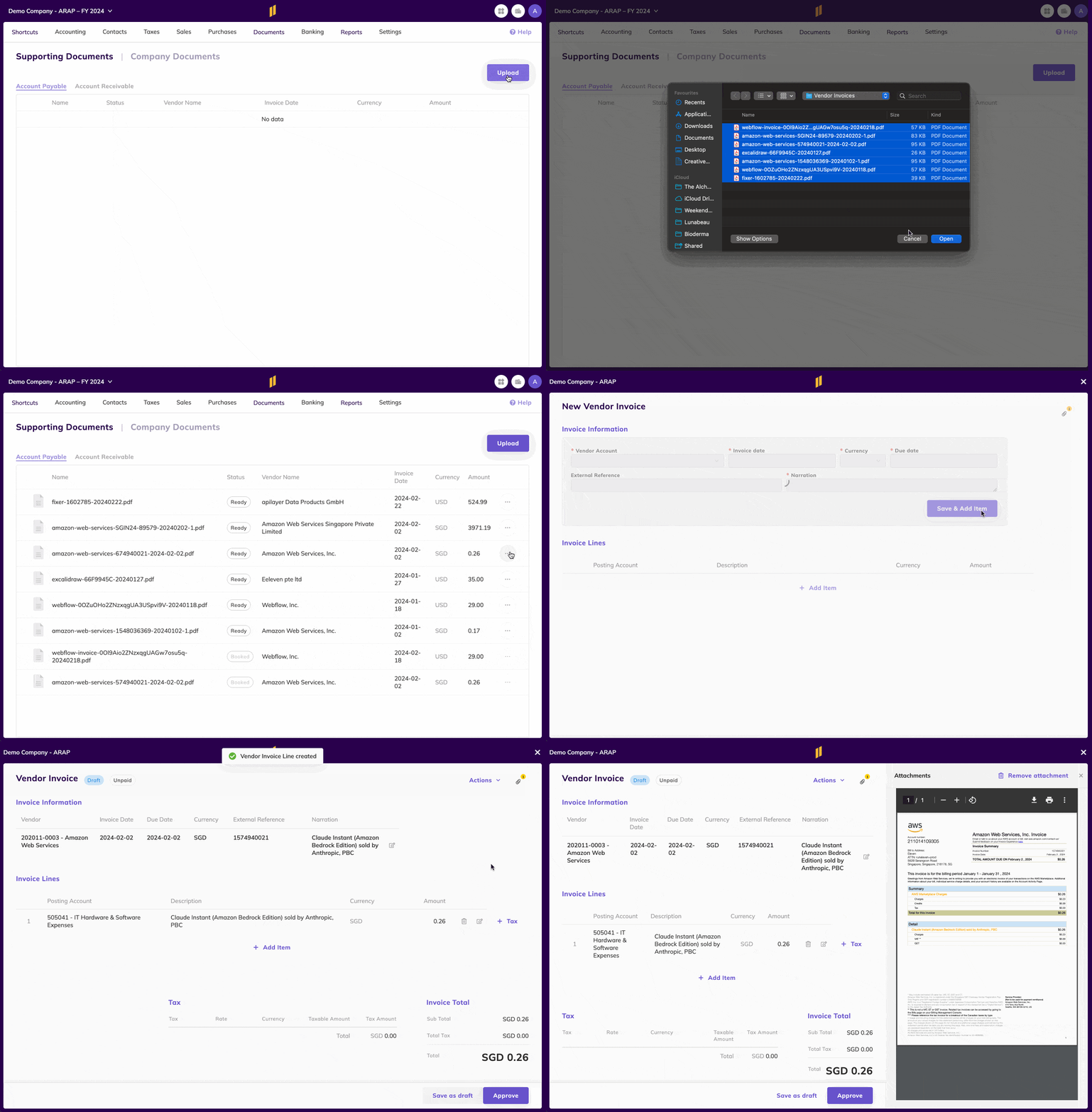
When an invoice is approved in Eleven, it posts directly to the correct entity's ledger. There’s no export, no re-entry, and no reconciliation between an approval tool and a separate accounting system.
For a CPA firm managing 30 clients or a family office running intercompany transactions, this architecture streamlines their processes. The approval workflow, the GL, the bank reconciliation, and the audit trail are all in one place.
→ Eleven is recommended for CPA firms, family offices, and multi-entity accounting practices where invoice approval is part of a broader accounting workflow, not a standalone process.
What Eleven Does Well
- Accounting-first architecture: Invoice capture, accounts payable automation, approval routing, and GL posting operate as one connected workflow. Approved invoices update AR/AP balances and feed directly into reconciliation.
- Multi-entity and multi-currency from every plan: Manage unlimited entities across 170+ currencies with IAS 21-compliant FX handling. Each entity has its own ledger, approval rules, and chart of accounts, and they’re all accessible from one dashboard without switching logins.
- AI-powered data extraction: Invoices in any format (PDF, scanned image, email) are processed with approximately 96% extraction accuracy. Vendor, amount, currency, and GL code are identified automatically; exceptions are queued for human review.
- Approval workflows with full audit trail. Multi-level approval chains configurable by amount, vendor, entity, or department. Every action is timestamped and stored with the transaction; auditors can pull the complete supporting history in one click.
- Native document management via Dokmee: Every invoice is stored and linked to its transaction. No separate DMS, no shared drive, no version control risk.
What to Watch Out For
- Eleven is built for professional accounting environments. It’s not the right fit for a single-entity business that just needs lightweight invoice routing.
- Advanced approval workflows (custom roles and multi-level chains beyond basic) are an add-on on Standard and Professional plans and are included on Single Family Office and above.
Eleven Pricing
Eleven uses per-entity pricing. All plans include unlimited users, implementation, migration, training, DMS, and AI automation.
2. HighRadius — Best for Enterprise Finance Teams
HighRadius is an enterprise finance automation platform. It uses AI to handle invoice routing, exception detection, GL coding suggestions, and approval chain management at the scale large finance organizations require.
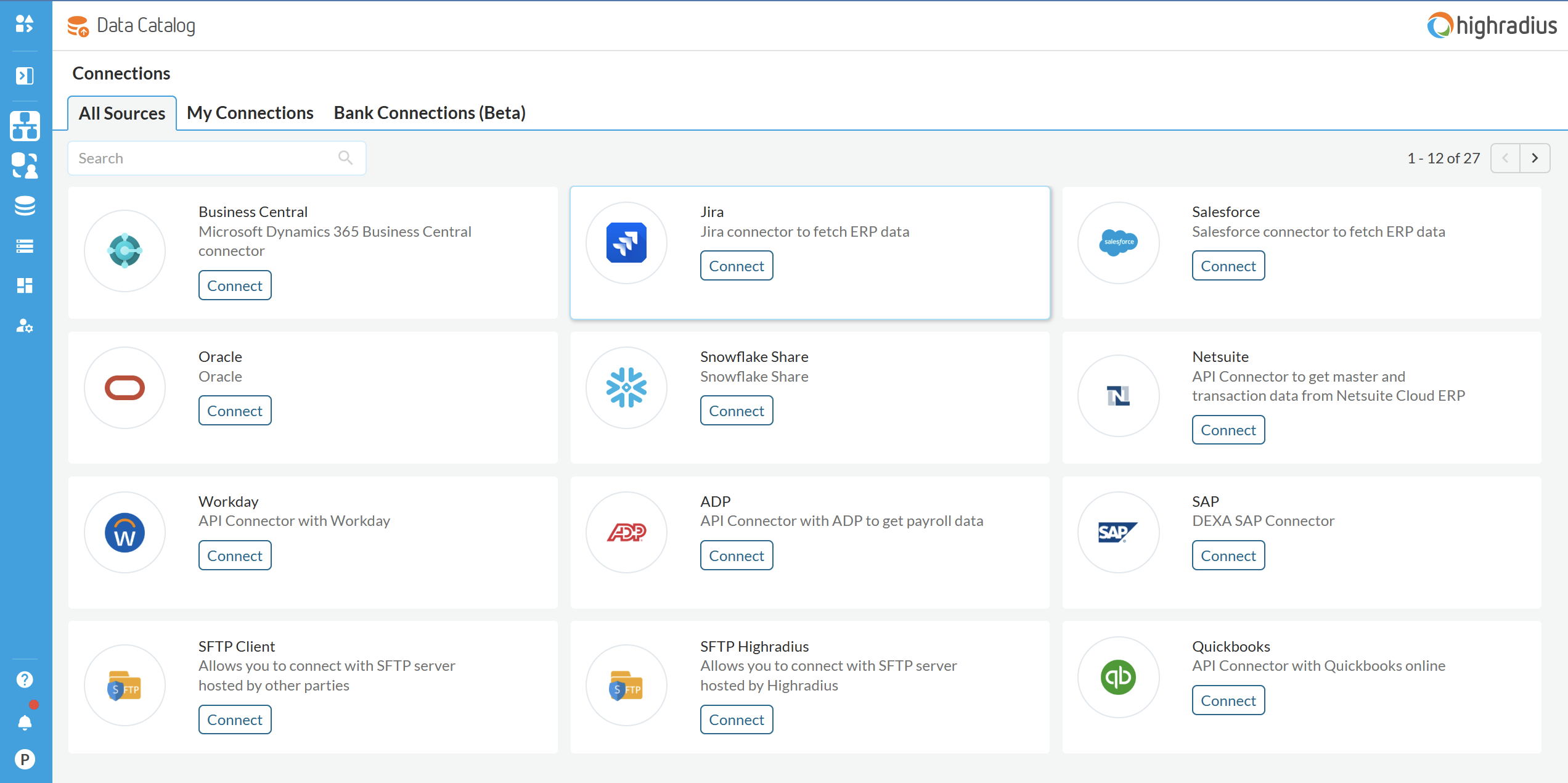
It's not an accounting system; it integrates with your existing ERP, but its AI-driven automation layer is among the most sophisticated on this list for pure AP workflow depth.
→ HighRadius is recommended for large enterprise finance teams that need AI-driven approval automation, real-time performance dashboards, and deep ERP integration across multiple business units.
What HighRadius Does Well
- AI-driven routing and exception handling: Routes invoices automatically, detects exceptions, and recommends GL coding based on historical patterns. It can auto-approve invoices that meet defined business policies without human intervention.
- Real-time dashboards: Live tracking of invoice status, approval bottlenecks, and cycle times across the AP function.
- Deep ERP integration: Connects with major ERPs to sync approved invoices cleanly into enterprise finance architectures.
What to Watch For
- Pricing is custom and enterprise-level. It’s not appropriate for accounting firms or family offices at a typical scale.
- Requires an existing ERP; not a standalone accounting system.
- Implementation timelines and complexity reflect the enterprise scope.
HighRadius Pricing
HighRadius tailors its pricing based on your enterprise’s needs.
3. Rillion — Best for Mid-Market AP Automation
Rillion specializes in accounts payable automation with configurable approval workflows.
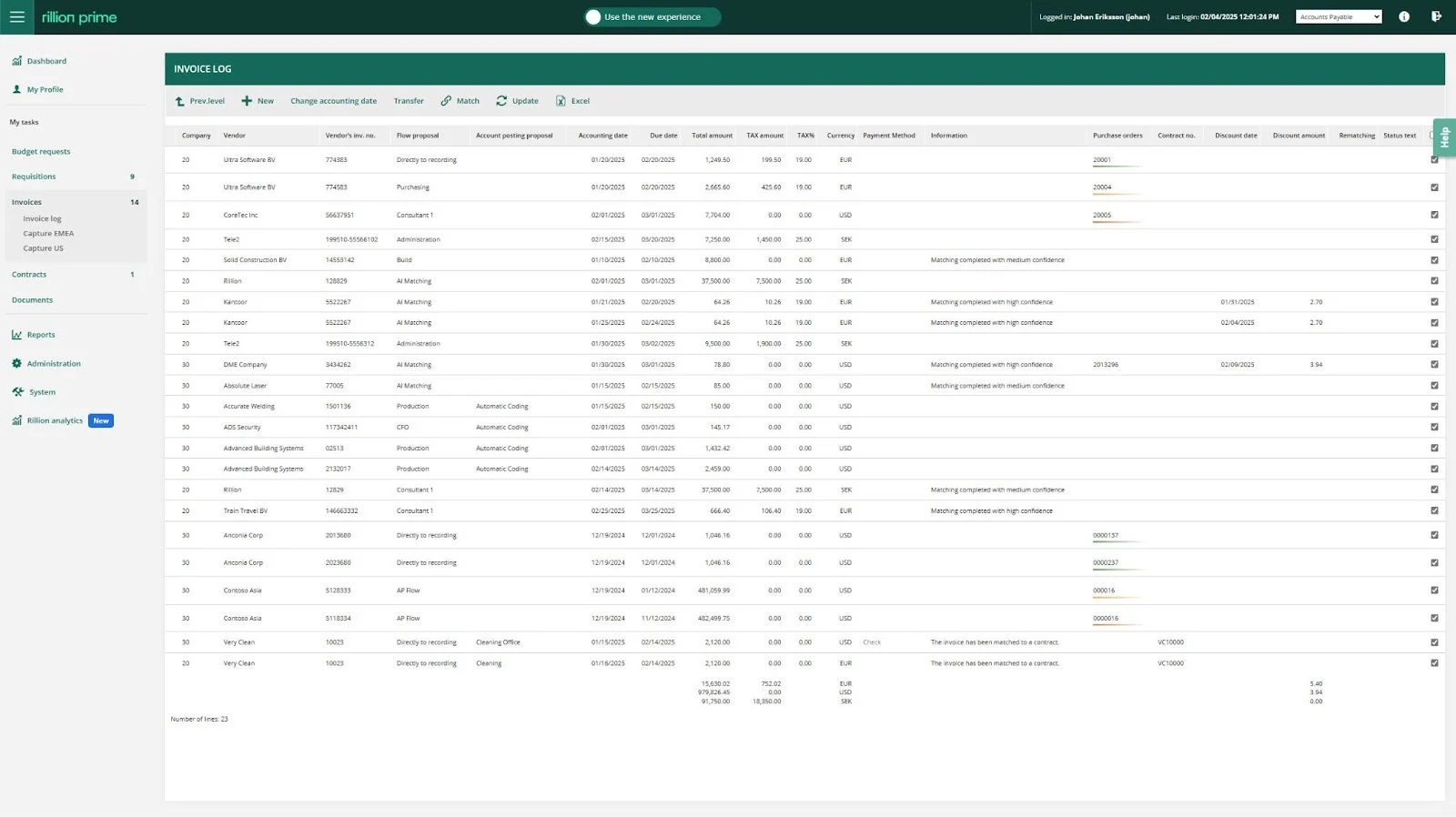
It replaces email and spreadsheet-based approval processes for mid-sized organizations, with flexible routing rules and a strong ERP connector library covering 50+ systems.
→ Rillion is recommended for mid-market finance teams that need structured AP automation with flexible approval chains, without the implementation weight of an enterprise platform.
What Rillion Does Well
- Configurable approval rules: Set routing by vendor, amount, department, or entity. Mobile and desktop approval with notifications to prevent delays.
- AI-assisted coding and routing: Learns approval patterns over time and predicts routing paths. Handles variable approval chains without heavy manual reconfiguration.
- 50+ ERP integrations: Connects with major ERP and accounting systems; unlimited users and entities on all plans.
What to Watch Out For
- AI-native invoice capture, PO matching, and document management are add-ons, not included in base plans, so model the real cost carefully.
- It’s not an accounting system; it requires integration with your existing GL.
Rillion Pricing
All plans include unlimited users, approvers, and entities. AI invoice capture, PO matching, document management, and payments are add-ons at every tier.
4. Tipalti — Best for Global Payables and Tax Compliance
Tipalti automates the full accounts payable cycle from invoice capture through to payment and tax compliance.
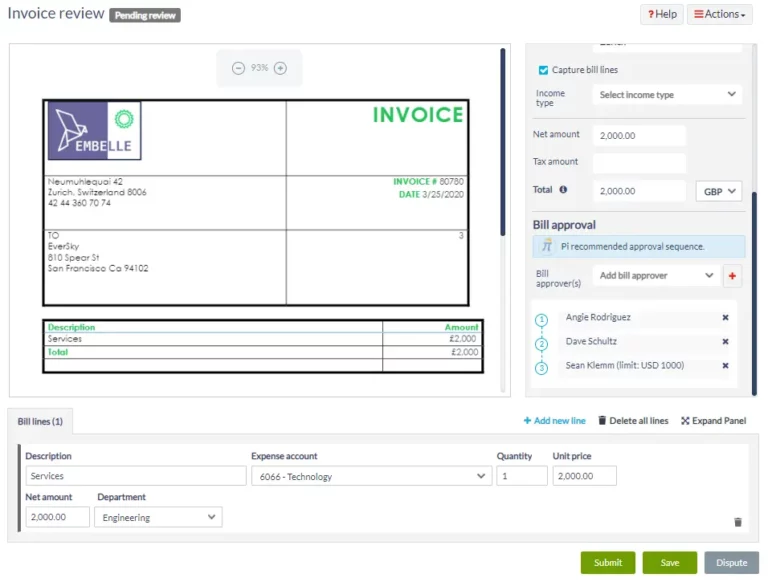
Its strongest differentiation is global reach: 50+ payment methods across 200+ countries in 120+ currencies, with built-in VAT/tax ID collection and regulatory compliance handling.
For organizations with global supplier networks, it covers compliance requirements that most AP tools leave to manual processes.
→ Tipalti is recommended for companies with global supplier networks, cross-border payment obligations, and multi-currency AP requirements where tax compliance across jurisdictions is a core need.
What Tipalti Does Well
- End-to-end AP automation: Invoice capture, multi-level approval workflows, vendor compliance, and global payments in one platform.
- Strong compliance controls: Automated VAT ID collection, tax ID validation, and regulatory compliance across borders. FX hedging available on higher tiers.
- Flexible bill approval rules: Configurable approval chains including 2/3-way PO matching from the Advanced plan.
What to Watch Out For
- Domestic multi-entity infrastructure is only available from Advanced (€219/mo); global multi-entity requires the custom Elevate tier.
- FX hedging and professional services for custom ERP integrations are Elevate-only.
- Mass payments and accounts payable are separate product lines with separate pricing, clarify scope before quoting.
Tipalti Pricing
5. BILL — Best for Small to Mid-Size Businesses
BILL focuses on AP and AR automation for smaller finance teams. It combines invoice capture, approval routing, and payment scheduling in a straightforward interface that integrates with QuickBooks, Xero, and other common accounting systems.
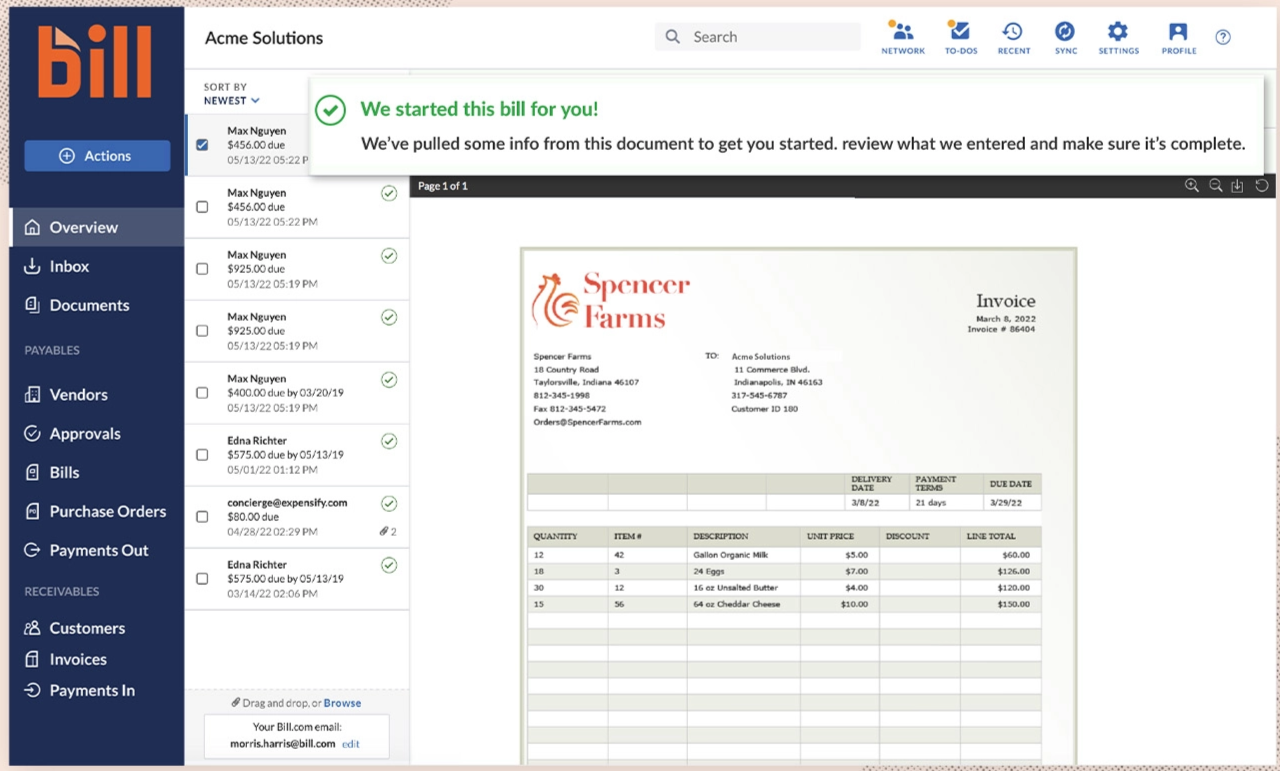
It's the most accessible entry point on this list for teams that don't need enterprise-grade complexity.
→ Small and growing businesses that want structured invoice approval with payment automation and don't need multi-entity architecture or a full accounting system may benefit from BILL.
What BILL Does Well
- Simple, fast setup: Approval routing, automated invoice capture, and payment scheduling with minimal configuration.
- Vendor network: Built-in vendor network reduces fraud risk by letting companies send payments directly within the network.
- Two-way sync with major accounting software: Connects with QuickBooks, Xero, NetSuite, and Sage for GL posting after approval.
What to Watch Out For
- Per-user pricing compounds quickly as team size grows.
- Multi-entity support is limited; it’s not designed for firms managing many client entities or family office structures.
- AP and AR are combined in the same plan tiers; model actual user count carefully.
BILL Pricing
6. Stampli — Best Dedicated Invoice Approval Software for Mid-Market Finance Teams
Stampli is one of the most recognized names in pure AP automation.
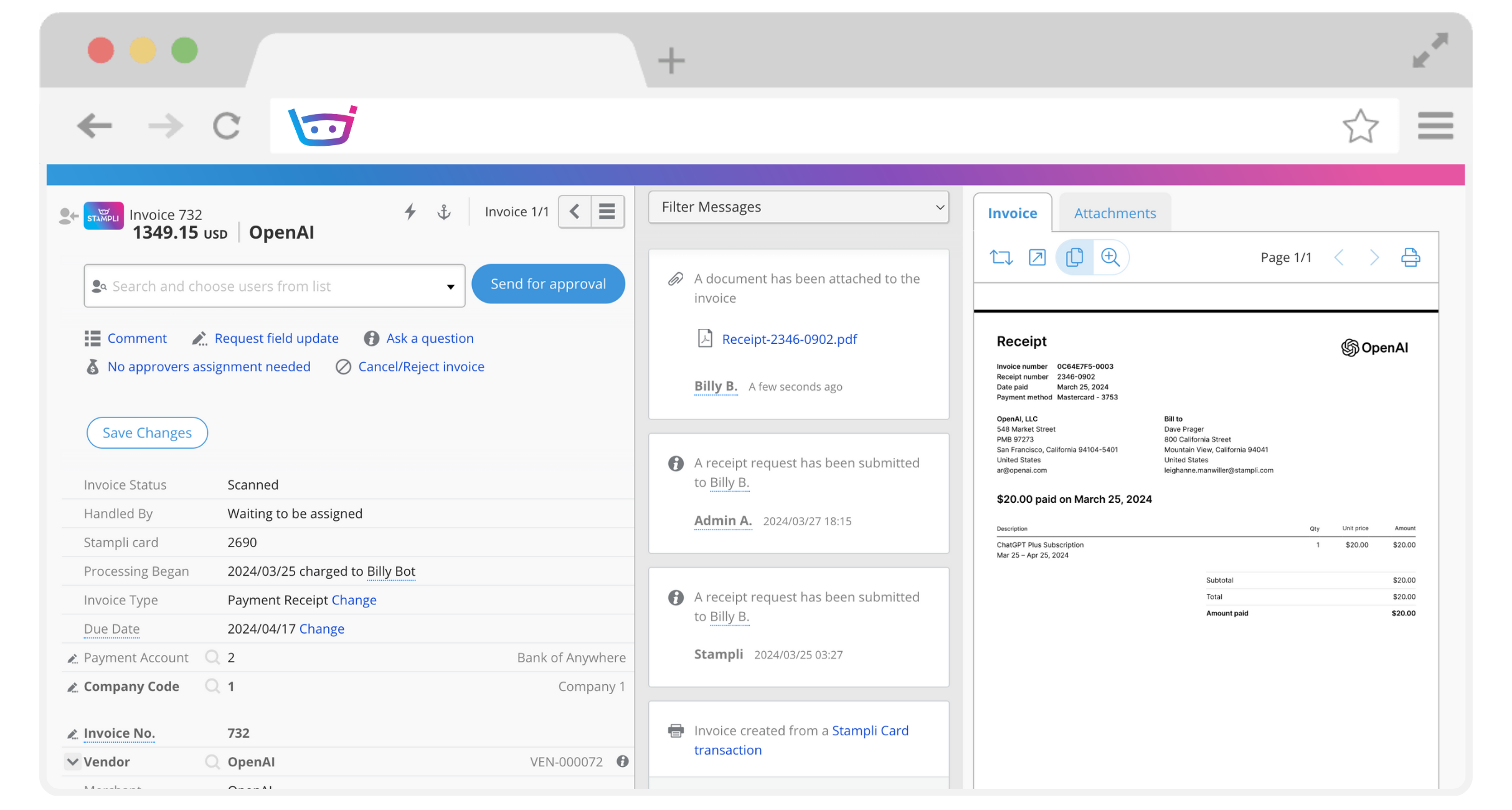
Where most platforms on this list either bolt invoice approval onto a broader ERP or accounting system, Stampli is built specifically around the AP workflow, and it shows in the depth of its approval tooling.
Its AI handles the day-to-day AP work: coding invoices, routing to approvers, matching against POs, and flagging exceptions.
Stampli claims Billy performs approximately 87% of finance work across 2,700+ unique fields on average, which is a meaningful reduction in manual processing for high-volume teams.
As for the integration, Stampli mirrors your ERP's structure rather than replacing it. Your ERP stays the system of record; Stampli layers on top of it.
It supports Sage Intacct, Sage 100, QuickBooks, NetSuite, and 50+ other systems with integrations built in-house rather than through third-party connectors.
→ Stampli is recommended for mid-market finance teams that want a dedicated, AI-driven AP automation layer that works on top of their existing ERP without replacing it.
What Stampli Does Well
- Powerful AI features: AI-driven coding, routing, and PO matching without manual intervention on routine invoices.
- Approval workflows: Dynamic approval workflows that handle simple and complex chains without rigid configuration.
- Complete audit trail: Complete, immutable audit trail on every action, built for audit readiness from the ground up.
- Seamless communication: In-app messaging between approvers, AP staff, and vendors, keeping all communication attached to the invoice record.
- Strong customer satisfaction: G2 Leader in AP Automation with strong customer satisfaction scores across mid-market deployments.
Watch to Watch Out For
- It’s not an accounting system; your GL lives elsewhere; Stampli is the workflow layer on top of it.
- Pricing is custom and demo-gated. There are no published rates, so you need a sales conversation to evaluate cost.
- Better suited to mid-market and enterprise teams than to accounting firms managing many client entities under one platform.
Stampli Pricing
Stampli’s pricing is custom and is based on invoice volume and ERP environment.
How to Choose the Right Invoice Approval Software
The right tool depends on where invoice approval sits in your workflow, as a standalone step or as part of a broader accounting process.
→ When evaluating any invoice approval platform, ask this specific question: “After an invoice is approved, how does it get into my accounting system?” The answer tells you everything about hidden manual steps, reconciliation risk, and whether the workflow is genuinely end-to-end or just the first half of a two-step process.
Final Verdict
For accounting firms and family offices, the right invoice approval software is the one where approval and accounting live in the same system.
Every additional hand-off between an approval tool and a separate GL is a reconciliation risk, a version control risk, and a manual step that compounds across every client and every month.
Eleven is the only platform on this list built specifically for that environment. The others serve their use cases well, but none of them were designed for the accounting firm or family office managing complex multi-entity structures as their core operating model.
Want to see invoice approval inside a full multi-entity accounting workflow? Start your free 7-day Eleven trial at eleven.run — no credit card required. →
Related Reading
If you're evaluating invoice approval as part of a broader accounting infrastructure decision, these guides cover the connected topics:
- Accounting Software for CPA Firms: How multi-entity accounting platforms compare for professional practices.
- Family Office Accounting Software: Features, tools, and architecture for family office environments.
- Best Accounting Billing Software: Billing platforms that integrate with accounting workflows.
- Best Cloud Accounting Software: Broader comparison of cloud accounting platforms for firms.
- Accounts Receivable Automation: Automating the AR side of the invoice lifecycle.
Frequently Asked Questions (FAQs)
What is invoice approval software?
Invoice approval software automates how invoices are routed, reviewed, and authorized before payment.
It replaces manual email chains and spreadsheet sign-offs with structured workflows: invoices are captured automatically, validated against purchase orders or contracts, routed to the right approvers based on configurable rules, and logged with a complete audit trail.
For accounting firms and family offices, the critical feature is direct integration with the general ledger so approved invoices post automatically without a separate manual step.
What is the difference between invoice approval software and accounts payable automation?
Invoice approval software focuses specifically on the review and authorization workflow: routing invoices to approvers, tracking decisions, and creating an audit trail.
Accounts payable automation is broader: it typically covers invoice capture, approval, payment scheduling, and GL posting as an end-to-end process.
Many platforms on this list offer both, but with different emphasis. Tipalti and Bill.com lean into full AP automation, including payments; Eleven handles the full cycle natively within its accounting system.
Do I need separate invoice approval software if I already use accounting software?
It depends on whether your accounting software has approval workflows built in. General-purpose tools like QuickBooks and Xero have basic invoice routing but limited multi-level approval chains and no real audit trail depth.
If you're managing multiple entities, need configurable multi-level approvals, or have audit and compliance requirements, a dedicated approval layer or an integrated platform like Eleven is worth evaluating.
The question to ask is whether your current tool logs every approval decision with a timestamp and makes that trail retrievable in one step, if the answer is no, that's the gap.
What should accounting firms specifically look for in invoice approval software?
Four things matter more than anything else for professional accounting environments.
- Does the approval workflow post directly to the correct entity's GL, or does it require a manual export step?
- Can you configure separate approval rules per entity or client, or is it a one-size setup?
- Is the audit trail immutable and retrievable per transaction, or assembled manually at year-end?
- Does the platform handle multi-currency invoices natively, or does FX conversion require manual adjustment?
Platforms that answer yes to all four were built for professional accounting environments. Most on this list answer yes to some.
How much does invoice approval software cost?
Costs range widely. Bill.com starts at $49/user/month for small teams. Tipalti's AP module starts at €99/month. Rillion, HighRadius, and Stampli are custom-quoted.
Eleven prices tiers per entity starting at $35/mo. with all features (including AI invoice extraction, approval workflows, and integrated document management) included across all plans.
For accounting firms managing multiple entities, per-entity pricing with native consolidation is more economical than per-user tools that scale with headcount but not with client complexity.
Was this article helpful?
Thank you! Your feedback has been received!
Oops! Something went wrong while submitting the form.