Full Xero Review With Updated US Pricing and Features (2026)
Home
/
Blog
/
Dunning Management: How CPAs Recover Cash
Dunning Management: How CPAs Recover Cash
Written by
Reviewed by
Dunning management stops being a friction point when you understand how it fits into receivables. This guide explains what works, why segment-based policies matter, and how clean accounting data enables better collection outcomes.

Dunning management is the structured process of following up on overdue invoices: consistent rules for when to remind, how to escalate, and when to stop, instead of ad hoc chasing. Done well, it segments clients by relationship and invoice value, times retries using real payment data, and depends entirely on clean, reconciled accounting records underneath it. Get the segmentation and timing right and you recover more cash without damaging the relationships that matter most.
Every finance team has seen it happen: an invoice goes out, the due date passes, and silence follows. On its own, a single missed payment looks harmless, but an unchecked pattern distorts aging reports, clouds liquidity forecasts, and forces staff into reactive, manual chasing.
Dunning management replaces that guesswork with structured, data-driven retry schedules, client segmentation, and a clean accounting foundation.
For the software side of this, comparing tools built for B2B invoice recovery, see our dunning software guide. This guide is the strategy underneath whichever tool you use.
What Is Dunning Management?
Dunning management replaces invoice-by-invoice chasing with a system: if payment is late, send reminder A on day X; if it's still late, send a different message on day Y; if it persists, escalate to manual review.
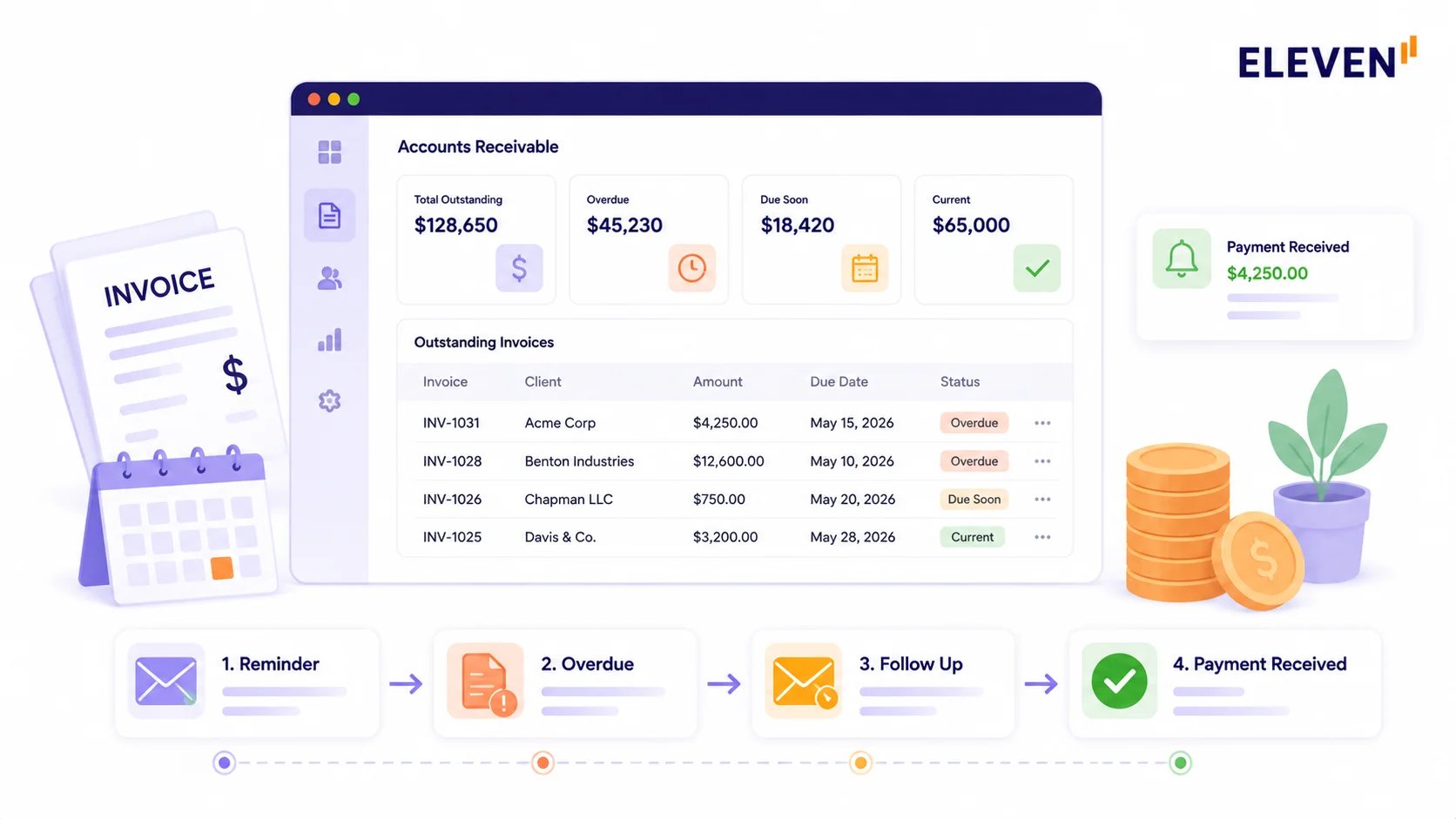
Unpaid invoices left unmanaged don't just sit idle; they distort aging reports, make cash flow harder to predict, and compound into bad debt risk.
Structured dunning catches them early, before they become write-offs.
Is Dunning the Same as Debt Collection?
Dunning is best understood as part of receivables and credit oversight, not debt collection. It’s a preventative process: surface overdue balances early, apply consistent reminders, and reduce the likelihood of invoices becoming uncollectible. This supports healthier AR aging and more predictable cash flow.
This connects directly to the broader receivables workflow. See our guide on accounts receivable automation and accounts receivable management for how dunning fits into the full AR picture.
Why Does Dunning Management Matter for CPA Firms and Family Offices?
Recovery rates fall off a cliff with age: invoices under 30 days recover well, recovery drops sharply by 60 days, and beyond 90 days most become write-offs.
Without structured dunning, your aging report drifts older every month, and older invoices don't come back.
Insight: These aren’t billing problems. They’re control problems that directly affect your cash flow and forecasts, which is exactly why dunning belongs in the accounting conversation, not the admin pile.
What Are the Components of Dunning Management?
Structured dunning rests on four elements. If you skip any one of them, the process degrades into generic reminders that annoy good clients and still miss the bad ones.
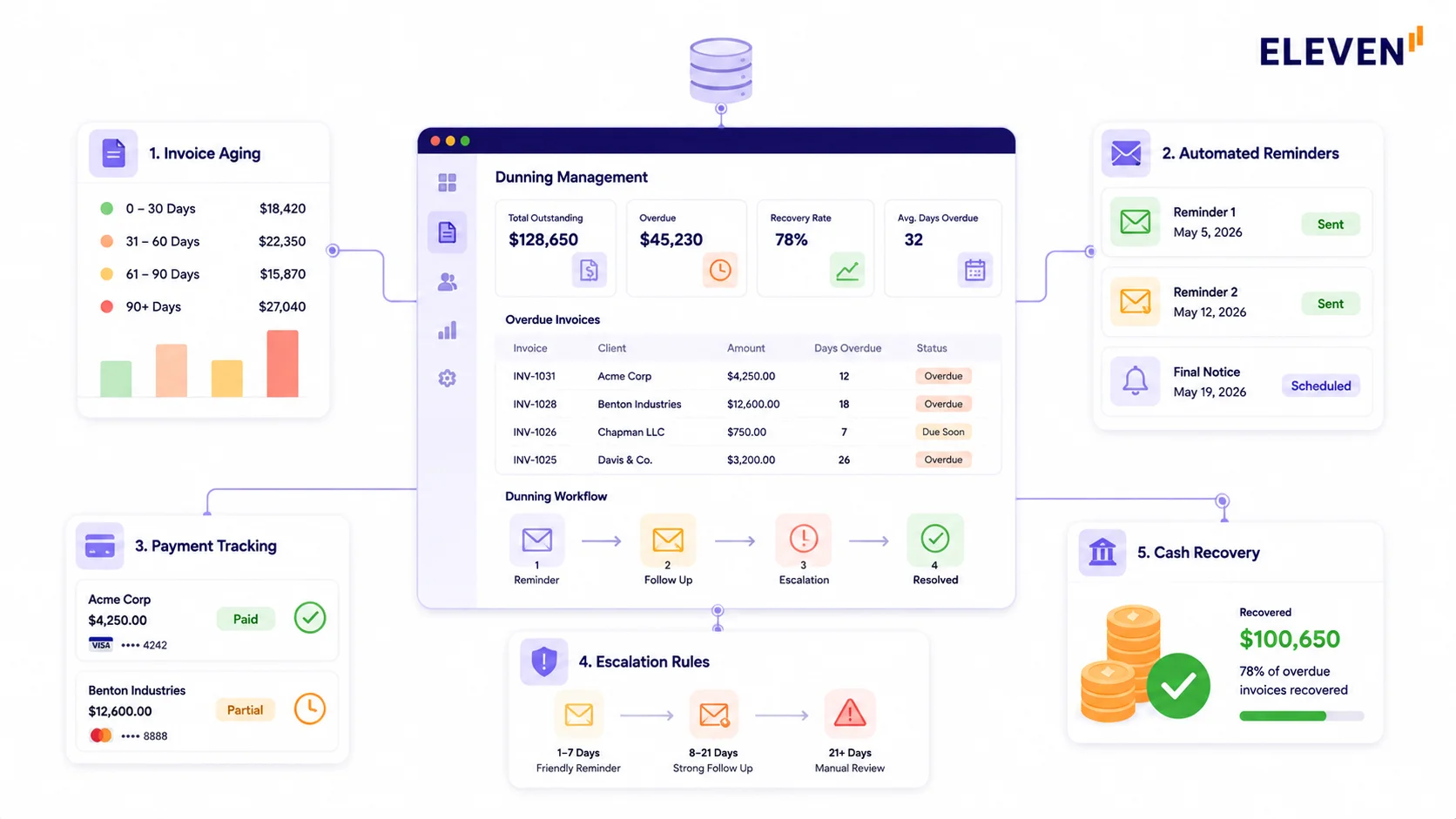
1. Payment Failure Identification
Not every late or failed payment means the same thing. It could be insufficient funds, an expired card, or a temporary bank processing glitch.
Knowing which one happened tells you whether to retry immediately or wait, instead of sending a redundant follow-up that frustrates a client who was already going to pay.
2. Retry Logic
Retry logic is your dunning schedule: how many times to retry and when. Automating this recovers more payments through consistency and frees your team from having to remember who needs a follow-up and on what day.
3. Pre-Dunning
Pre-dunning is dunning that never has to become dunning. Instead of waiting for a payment to fail, you send reminders before the due date, upcoming invoice alerts, payment method expiration warnings, and similar nudges that catch problems before they become overdue at all.
4. Communication Channels
How you reach clients matters as much as when. Email and client portals are standard, but clarity is what actually drives payment.
A client who can click "update payment method" directly from an email is far more likely to act than one who has to go searching for your portal first.
Why One-Size-Fits-All Dunning Fails
Rigid, universal outreach damages high-value relationships while over-allocating payroll to small, low-probability balances. A single aggressive automated notice sent to an institutional partner risks goodwill, while manually chasing a $200 transactional invoice produces negative ROI.
Segment-Based Dunning Rules
Segment-based dunning segments the ledger across four primary variables to match communication style to balance risk:
- Payment History: Reliable payers receive soft reminders; historically delinquent accounts face accelerated outreach.
- Invoice Value: Material balances justify direct partner outreach; immaterial amounts remain fully automated.
- Relationship Length: Retained advisory clients receive white-glove check-ins rather than system-generated collection notices.
- Billing Cadence: Predictable retainers trigger preventative pre-due-date notifications to catch expired payment methods before failures occur.
Pro Tip: In practice, a $5,000 invoice from a five-year client gets a phone call on day 45 overdue. A $200 invoice from a one-time client gets an automated email on day 30. These are two different playbooks, and both are correct for the relationship they’re managing.
Connecting Dunning Telemetry to ASC 326 (CECL)
For fiscal years beginning after December 15, 2022, ASC 326 requires all GAAP-reporting entities, including private CPA practices, holding companies, and family offices, to estimate current expected credit losses (CECL) over the contractual life of trade receivables.
Granular dunning data directly informs this calculation. Documented recovery rates across specific aging buckets provide the historical loss ratios and forward-looking support required to substantiate your allowance for credit losses under audit.
How Should You Time Dunning Retries?
Retries scheduled at appropriate intervals recover more than frequent or poorly timed attempts.
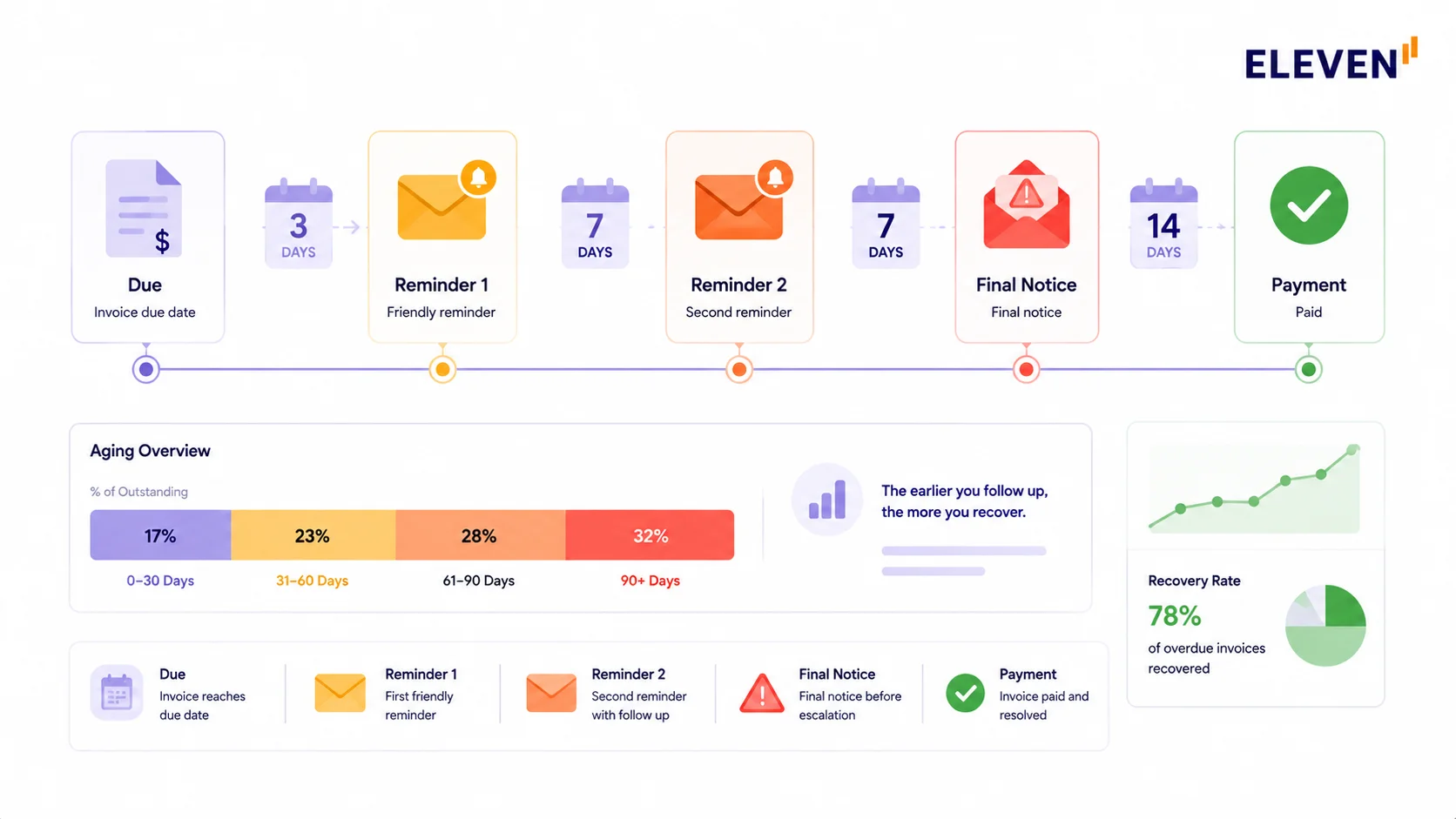
Your accounting and billing systems already have the inputs to time this properly: historical payment success patterns, client location and time zone, and actual invoice due dates.
How Do You Measure Dunning Success?
Recovered revenue is the obvious metric, but it’s not the whole picture. There are three additional indicators that tell you whether dunning is strengthening receivables health, not just solving isolated casts.
Time to payment recovery: Is the gap between due date and payment shrinking over time?
Changes in AR aging buckets: Is the overall portfolio skewing younger or older?
Resolution trends over time: Are the same clients recurring in your overdue list, or is it genuinely different accounts each period?
When Should You Escalate or Cancel an Overdue Invoice?
Not every overdue balance warrants the same response, and rigid cancellation rules can damage relationships unnecessarily.
Defined escalation paths matter more for CPA firms and family offices managing long-term relationships than for transactional businesses.
- Allow additional retries for trusted clients before escalating
- Escalate to manual outreach for higher balances regardless of history
- Define clear thresholds for service suspension in advance, not case by case
Accounting Note: Writing off an uncollectible balance under GAAP removes the asset from your balance sheet but does not extinguish the client's legal obligation to pay. If a previously written-off receivable is subsequently recovered, the recovery must be recognized as taxable income (or an allowance reversal) in the period received.
How Much Cash Is Tied Up in Your Overdue Invoices?
Before choosing a dunning approach, it helps to size the actual problem. This isn't legal or financial advice; it’s just a way to put a number on what's currently sitting in receivables:
Should You Use Standalone Dunning Software or Built-In Accounting Tools?
Dunning management systems generally fall into two categories, and the tradeoff matters.
What to Watch For: Both categories share the same failure mode: without clean invoice records, reconciled payment statuses, and up-to-date client information, even the most sophisticated dunning workflow produces inconsistent results. The tool is never the constraints; the data underneath is.
For a full comparison of dedicated B2B dunning platforms, see our dunning software guide.
What Accounting Foundation Does Dunning Depend On?
Dedicated dunning systems automate reminders and retries, but they depend entirely on accurate accounting data to be effective.
Eleven provides that foundation for CPA firms and family offices: centralized financial records, integrated document management, multicurrency support, and bank reconciliation.
- Clear visibility into genuinely overdue invoices (no assumptions)
- Payment status that reflects reconciled bank data, not guesswork
- Audit trails for all client outreach
- Consolidated multi-entity and multicurrency oversight
If you're managing entities across jurisdictions, our multi-entity accounting guide covers the consolidation layer that sits underneath receivables oversight at that scale.
Want dunning that runs on clean, reconciled receivables data instead of guesswork? Start a free 7-day Eleven trial today →
Frequently Asked Questions (FAQs)
What is dunning management?
Dunning management is the structured process of following up on overdue invoices through consistent, rule-based communication: reminders before and after the due date, escalating messages as an invoice ages, and defined thresholds for when to move from automated reminders to manual outreach or collections.
It replaces ad hoc, memory-dependent chasing with a repeatable system.
How is dunning different from debt collection?
Dunning is preventative receivables oversight, surfacing overdue balances early and applying consistent reminders to reduce the likelihood an invoice becomes uncollectible.
Debt collection begins after that process has failed, typically once an account has moved past 90 days or been referred for legal or third-party collection.
Well-run dunning reduces how often a receivable ever reaches the collections stage.
Why does segmentation matter in dunning?
Applying the same follow-up sequence to every client ignores the fact that relationship history, invoice value, and payment patterns all change what the right response is.
A long-standing client with an occasional late payment needs a different touch than a first-time client with a small, one-off invoice.
Segmenting by payment history, invoice value, relationship length, and billing frequency lets a firm recover more cash without damaging the client relationships worth protecting.
Does dunning software replace the need for clean accounting data?
No. Every dunning system, standalone or built into an accounting platform, depends on accurate invoice records, reconciled payment status, and current client information to function correctly.
A sophisticated dunning tool layered on top of messy books will automate the wrong outreach as reliably as the right outreach. Clean accounting data is the prerequisite, not an optional improvement.
What metrics show whether dunning is actually working?
Recovered revenue is the headline metric, but time to payment recovery, changes in AR aging buckets, and resolution trends over time give a fuller picture of whether the process is strengthening receivables health or just resolving isolated cases.
A firm recovering the same amount of cash but taking longer to do it, or seeing the same clients recur in the overdue list every period, has a process that needs adjustment even if the recovered-revenue number looks fine.
Was this article helpful?
Thank you! Your feedback has been received!
Oops! Something went wrong while submitting the form.